

Most stories disappear quickly.
We watch them. Read them. Finish them. Then move on to the next thing waiting for our attention. A few weeks later, many of the details are already gone. Characters blur together. Endings fade. Entire plots vanish from memory.
And yet every once in a while, a story stays.
Not just for days or months. Sometimes for years. Sometimes for decades. I’ve been thinking…
…about that a lot lately, especially while preparing for our local and online book club discussions this summer. What is it that causes certain stories to linger long after we finish them? Why do some books seem to permanently attach themselves to memory while others simply disappear?
I do not think it is simply about quality. Some technically well-written stories leave no lasting impression at all. Meanwhile, other stories carve themselves into us so deeply that we continue carrying pieces of them long after we can barely remember the plot itself.
For me, one of those stories was Lightning by Dean Koontz. I still remember what it felt like reading that book for the first time. I fell in love with this story, with its characters, and with just the feeling of it. Looking back now, it was probably the first story I truly and genuinely loved, not just enjoyed. Years later, I can still remember the atmosphere surrounding it more than individual scenes. I remember the emotional weight of it, the sense that the characters truly mattered, and the strange mixture of danger, mystery, melancholy, and hope woven throughout the story touched me and shaped me and my writing as well.
I experienced something similar while reading The Magic Cottage by James Herbert. That book carried a feeling I have never been able to completely forget. It felt isolated and dreamlike, as if the book itself were strangely alive. I still think about that cottage in lonely moments in life.
Then there was Nathaniel by John Saul. I remember this book gave me permission to not always end stories on a happy note. That realization sounds obvious now, but at the time, it fundamentally changed the way I thought about storytelling. It made stories feel more dangerous, less predictable, and somehow more brutally honest.
And when I was younger, Lord of the Flies by William Golding utterly captured me. It was probably my favorite book as a teenager. There was something so deeply unsettling about it, yet it felt so real, not because of monsters or supernatural horror, but because it understood something uncomfortable about the broken soul.
More recently, I felt some of that same lingering weight reading Dark Matter by Blake Crouch. The ideas in that story kept circling in my mind long after I finished it. I kept turning them over and over again without even realizing it.
And sometimes what stays with us is not even an entire story. Sometimes it is only a single scene.
There is one scene I still think about occasionally, even though I cannot remember what book it came from. A man was hiking in a California wilderness when he discovered several skeletons hidden deep in the woods. Eventually, he realized they were the remains of Native Americans who had been living in secret out in isolation from the rest of the modern world. A group of hunters had found them years earlier, though, and had gunned them down in the middle of the night and just left their bodies where they lay.
As I said, I do not remember the title of that novel. I do not remember the author’s name. But I do vividly remember the feeling of that discovery. I remember the horror of stumbling onto something hidden and forgotten deep in the wilderness. The silence surrounding it. The weight of it.
That stayed.
And I think atmosphere has far more to do with this than most people realize.
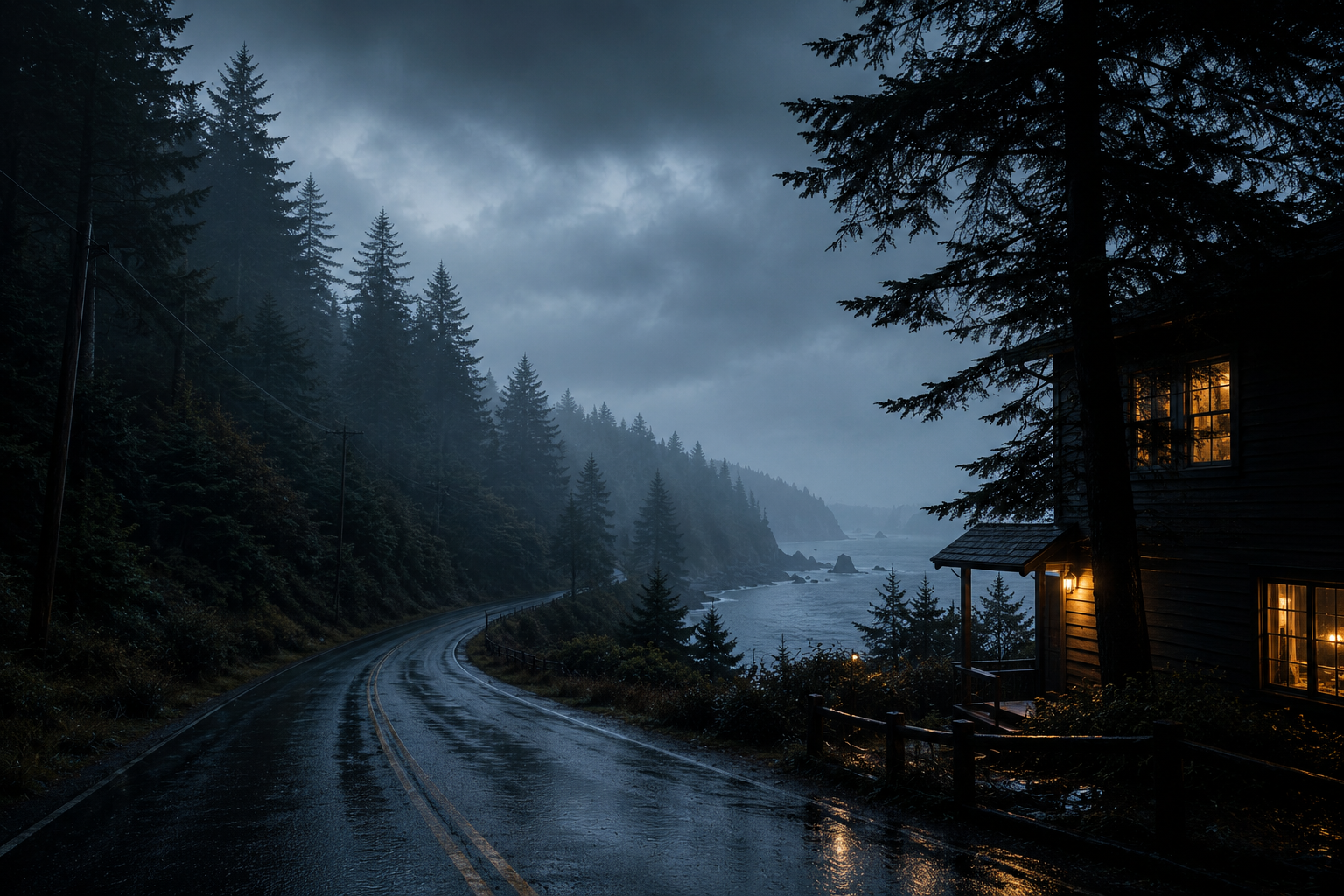
In the end, plot matters. It’s obvious. Characters matter too. But atmosphere is often what makes stories permanent. Rain. Silence. Forests. Isolation. An empty road late at night. A distant porch light in the middle of nowhere. Wind moving through trees. A house that feels wrong for reasons you cannot fully explain.
Those things create emotional memory.
Some of the stories that linger most powerfully in my mind are those where the setting itself almost becomes a character in its own right. The environment was not just a backdrop. It shaped the story’s emotional experience.
I think that is one reason atmospheric fiction affects me so deeply. Atmosphere slows stories down. It forces me to sit inside them longer. It creates tension through implication rather than constant explanation. It allows dread to build—quietly.
And honestly, I think that kind of storytelling is becoming increasingly rare.
Everything now feels optimized for speed. Faster pacing. Bigger twists. Constant stimulation. Stories are often treated as consumable products designed to hold attention for only a few hours before we move on to the next one.
But the stories that stay with us usually do something else entirely.
They linger. They leave emotional residue behind. And often they stay with us because somewhere inside them we recognize something real. And at times, we fear what we know is true. Sometimes a story unsettles us because it reflects something back at us that we do not fully know how to articulate.
That is part of why I believe conversations about stories matter so much. One of the best parts of running a book club and discussing stories with readers is realizing that no two people carry away the exact same experience from any given book. One person remembers a particular character. Another remembers a single line on the page. Another remembers a location, a feeling, or a scene that will surely disturb them for years to come.
Stories continue living through us, and, in some ways, that life becomes a part of the story itself. It also becomes who we are. And maybe that is the real reason some stories truly do stay with us, even long after the book is put down.
Not because they entertained us briefly, but because they became attached to us. Through our memory. To our emotions. To the seasons of our life. To places we once were when we first encountered them.
The older I get, the more I think the best stories are not simply consumed and forgotten.
They remain.
!! IN THE MEADOW !!
If you’re looking for a story built around mystery and ordinary people facing extraordinary circumstances, I hope you’ll consider stepping into the Meadow.

What do you think?