


This week, we’re continuing through Romans 15:20–33, where Paul describes his missionary ambitions, his plans to visit Jerusalem and Rome, and his desire to eventually carry the gospel into Spain.
As I approach the passage, I’m particularly interested in the relationship between personal ambition and God’s calling. Paul clearly has a purpose. He knows what he wants to accomplish, makes plans to achieve it, and asks others to pray for his success. Yet he also acknowledges that his plans remain subject to God’s will.
That raises several questions for me. How do we distinguish between our own desires and God’s direction? Can personal ambition express God’s calling? And what happens when the plans we’ve made, even for seemingly good purposes, don’t unfold as expected?
These are some of the questions I’ll be exploring as I work through this week’s passage.
RESEARCH NOTES
- Paul recognizes that ordinary believers can minister to one another (Romans 15:14–16).
- Paul acknowledges that the Roman believers are filled with goodness and knowledge and can admonish one another.
- Although Paul received the distinctive gift and calling of apostleship, he was also a member of the body of Christ, in which believers receive different gifts for mutual edification (Romans 12:3–8; Ephesians 4:11–16).
- Paul attributes the accomplishments of his ministry to Christ (Romans 15:17–19).
- Paul refuses to boast about anything except what Christ accomplished through him.
- He identifies his preaching, actions, signs, wonders, and the power of the Spirit as instrumental in bringing Gentiles to obedience.
- Paul’s missionary ambition was to preach where Christ had not previously been proclaimed (Romans 15:20–21).
- Paul describes this as his particular ambition, not a universal evangelistic strategy.
- His ministry reflects the different gifts and convictions God gives individual believers.
- Paul connects his ambition to Isaiah 52:15, concerning those who had not previously heard or understood.
- Paul’s missionary plans demonstrate both personal intention and dependence upon God’s will (Romans 15:22–24, 28–29, 32).
- Paul intended to visit Rome on his way to Spain, after delivering the collection to Jerusalem.
- His plans were subject to God’s will, as he explicitly acknowledges in verse 32.
- This raises a question: How should believers distinguish their personal ambitions from God’s direction when making plans?
- The collection for Jerusalem demonstrates believers’ responsibility to care for one another (Romans 15:25–27).
- The Gentile churches in Macedonia and Achaia contributed to the needs of impoverished believers in Jerusalem.
- Paul describes their contribution as an expression of indebtedness for the spiritual blessings received through the Jewish people.
- This particular collection does not establish a permanent financial obligation based on ethnicity. The broader Christian responsibility is to care for fellow believers without distinction (Galatians 6:10).
- Paul requests prayer for protection, acceptance, and fellowship (Romans 15:30–33).
- Paul asks the Roman believers to join him in prayer for deliverance from unbelievers in Judea and for his ministry to be accepted by the Jerusalem believers.
- He also desires to visit Rome with joy and find refreshment among them, according to God’s will.
- His request illustrates that even an apostle depended upon the prayers and fellowship of other believers.
FOLLOW THE INVESTIGATION
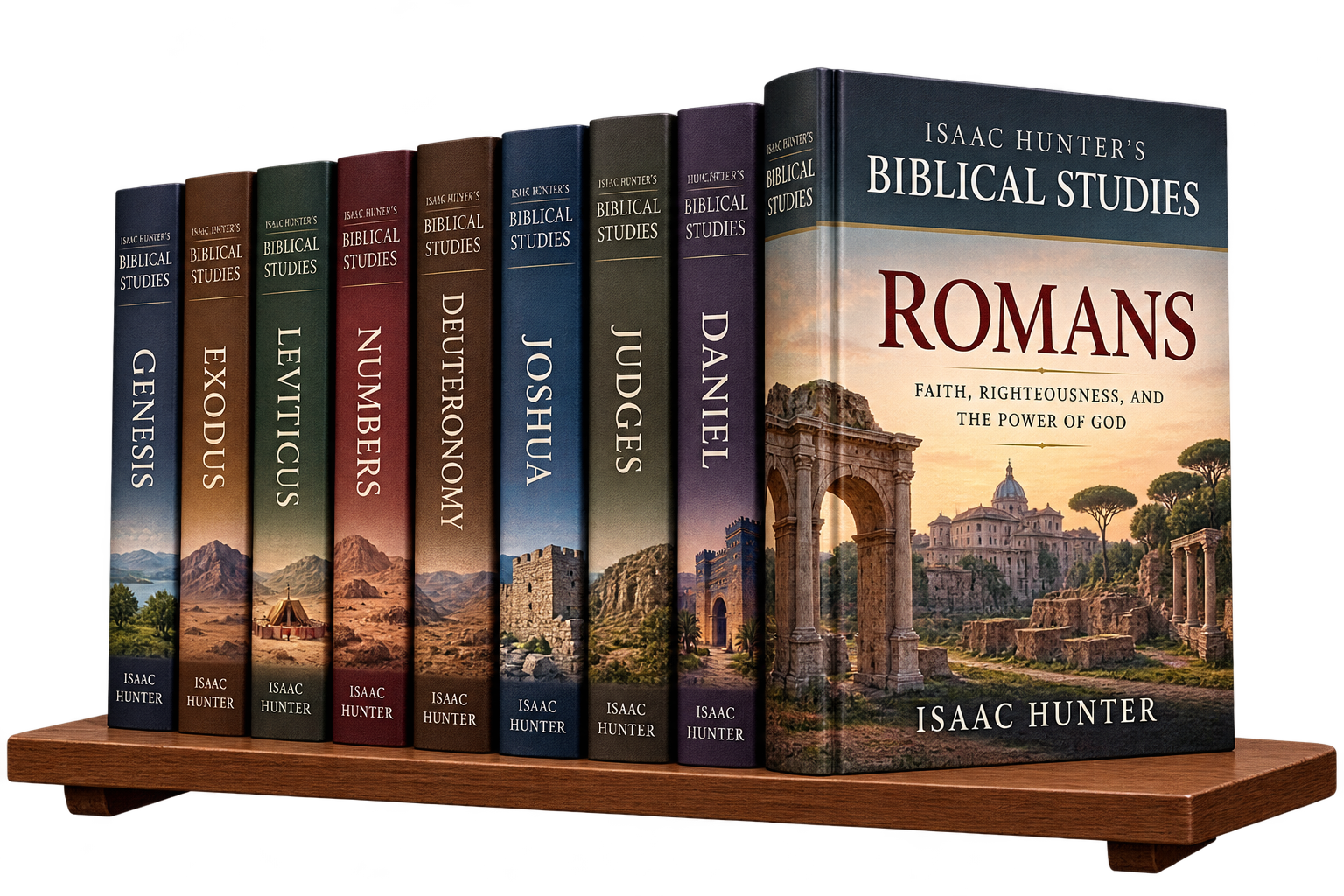
Isaac Hunter’s Biblical Studies is a comprehensive book series exploring Scripture, theology, history, philosophy, and the questions that emerge along the way.
Join the IHBS mailing list to follow the research, receive updates on upcoming volumes, and be among the first to know when new biblical studies are published.


I ALSO WRITE FICTION
When I’m not studying Scripture, I’m writing supernatural suspense and speculative fiction novels about ordinary people facing extraordinary circumstances. If you enjoy mystery, suspense, and stories where the unexplained becomes impossible to ignore, I’d love to introduce you to my fiction.
Start with In the Meadow—the first book in the Meadow Trilogy—free.

What do you think?