


In Romans 16:1–16, Paul concludes his letter with a series of personal greetings to individuals and groups of believers living in Rome. What might seem like a simple list of names offers a fascinating glimpse into the relationships, ministries, and fellowship that characterized the early church. Although Paul had not yet visited Rome, he personally knew many of these believers, demonstrating just how interconnected the Christian community had become.
This passage also raises several interesting questions about the organization and practices of the early church. What was Phoebe’s role as a διάκονος in the church at Cenchreae? How did Aquila and Priscilla come to be living in Rome after previously serving alongside Paul in Corinth and Ephesus? What can these greetings teach us about women in ministry, the gatherings of believers in private homes, and the practice of greeting one another with a holy kiss?
This week’s research explores these questions while considering what Paul’s personal relationships reveal about Christian fellowship and believers’ responsibility to one another.
RESEARCH NOTES
- Paul’s letters provide insight into the movements of early Christians throughout the Roman Empire (Romans 16:3–5).
- First Corinthians was written from Ephesus around AD 54–55, while Romans was written from Corinth around AD 56–58.
- In 1 Corinthians 16:19, Aquila and Priscilla send greetings to the Corinthians from Ephesus. In Romans 16:3–5, Paul sends greetings to them in Rome.
- Their movements demonstrate how interconnected the early Christian communities were, despite the geographical distances separating them.
- Was Phoebe a servant of the church or an appointed deacon (Romans 16:1–2)?
- Paul identifies Phoebe as a διάκονον of the church in Cenchreae. The word is accusative singular feminine in this context, but the same form is used for Jesus Christ in Romans 15:8, where it is masculine.
- The word διάκονος can refer generally to a servant or minister without necessarily identifying an ecclesiastical office. Its application to Christ in Romans 15:8 demonstrates this broader meaning.
- However, Phoebe’s association with a particular congregation provides stronger evidence that she may have occupied a recognized ministry position.
- Romans 16:1 does not conclusively establish whether Phoebe held the formal office of deacon.
- Did the first-century church possess formally established offices, or was its organization less structured and more pragmatic?
- Acts 14:23 describes the appointment of elders, Philippians 1:1 identifies overseers and deacons, and 1 Timothy 3 establishes qualifications for these positions.
- These passages show that recognized leadership and ministry roles existed, but they do not necessarily establish that early congregations operated under the institutional structures found in modern churches.
- Scripture does not explicitly prohibit women from serving as deacons. The decision to appoint female deacons may therefore rest with the elders of individual congregations.
- Eldership presents a different question because Paul restricts women from teaching or exercising authority over men, grounding his instruction in the creation account (1 Timothy 2:12–14).
- How did Paul know so many believers in Rome when he had never visited the city (Romans 16:3–15)?
- Paul’s extensive missionary travels brought him into contact with Christians who subsequently relocated throughout the Roman Empire.
- His greetings demonstrate the personal relationships and mutual involvement that characterized the early Christian community.
- The individuals mentioned appear to have been associated with the Christian community in Rome, although they were not necessarily all permanent residents.
- The early church commonly gathered in small household congregations (Romans 16:5, 14–15).
- Paul specifically mentions the congregation meeting in the home of Aquila and Priscilla.
- This example, along with other New Testament references, suggests that early Christian fellowship often took place in smaller household gatherings rather than the large institutional congregations familiar today.
- However, the existence of multiple household gatherings does not necessarily establish that each operated independently of broader congregational leadership.
- How closely does the structure of the modern church resemble the gatherings and fellowship described in the New Testament?
- What was the significance of greeting one another with a holy kiss (Romans 16:16)?
- Kissing was a recognized form of greeting in the ancient Mediterranean world, expressing affection, friendship, and respect.
- Paul instructed Christians to greet one another with a holy kiss, emphasizing the affection and fellowship that should characterize relationships within the church.
- Similar instructions appear in 1 Corinthians 16:20, 2 Corinthians 13:12, 1 Thessalonians 5:26, and 1 Peter 5:14.
- Although contemporary Christians may express these sentiments through handshakes or embraces, the underlying principle remains genuine affection and fellowship among believers.
FOLLOW THE INVESTIGATION
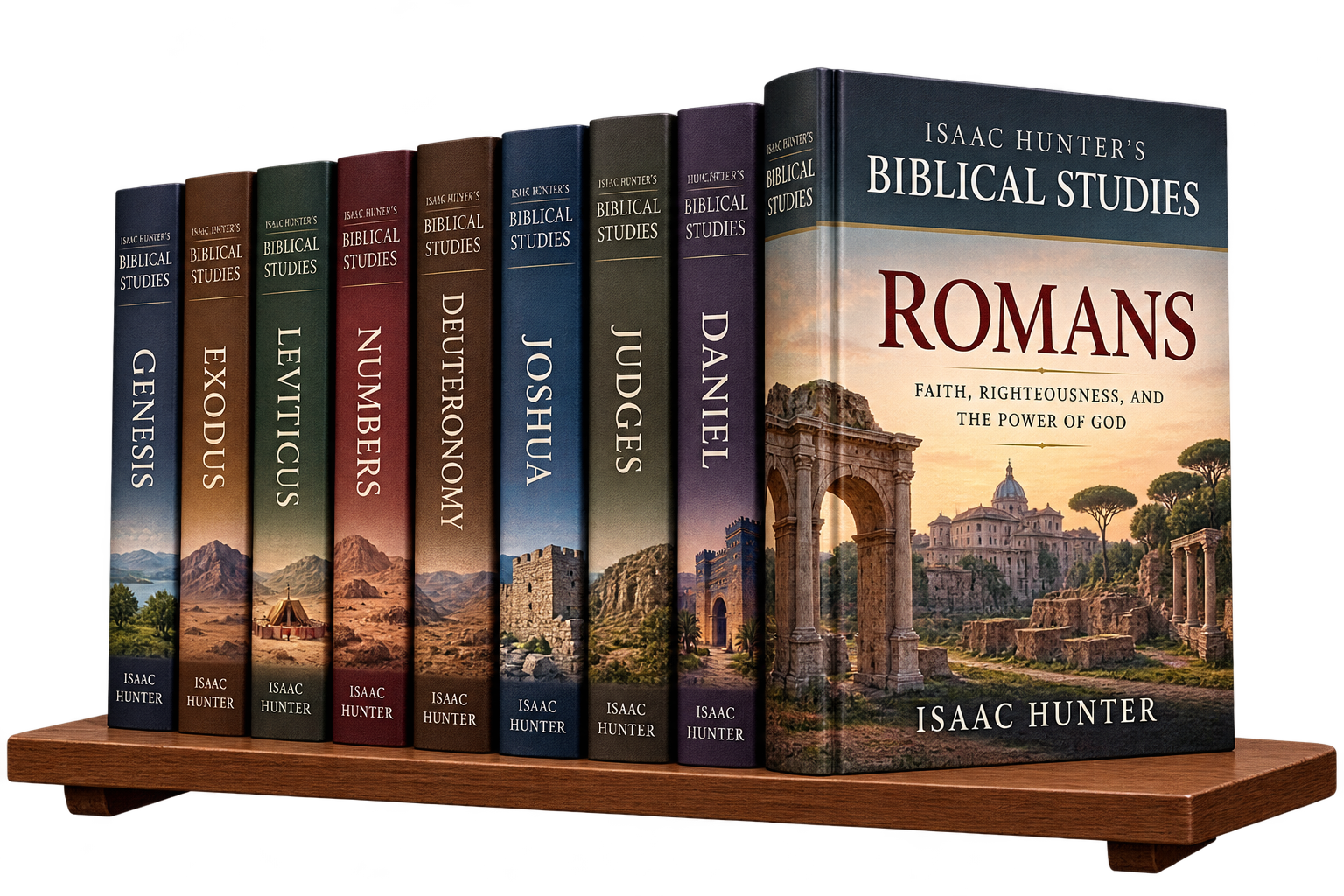
Isaac Hunter’s Biblical Studies is a comprehensive book series exploring Scripture, theology, history, philosophy, and the questions that emerge along the way.
Join the IHBS mailing list to follow the research, receive updates on upcoming volumes, and be among the first to know when new biblical studies are published.


I ALSO WRITE FICTION
When I’m not studying Scripture, I’m writing supernatural suspense and speculative fiction novels about ordinary people facing extraordinary circumstances. If you enjoy mystery, suspense, and stories where the unexplained becomes impossible to ignore, I’d love to introduce you to my fiction.
Start with In the Meadow—the first book in the Meadow Trilogy—free.

What do you think?