

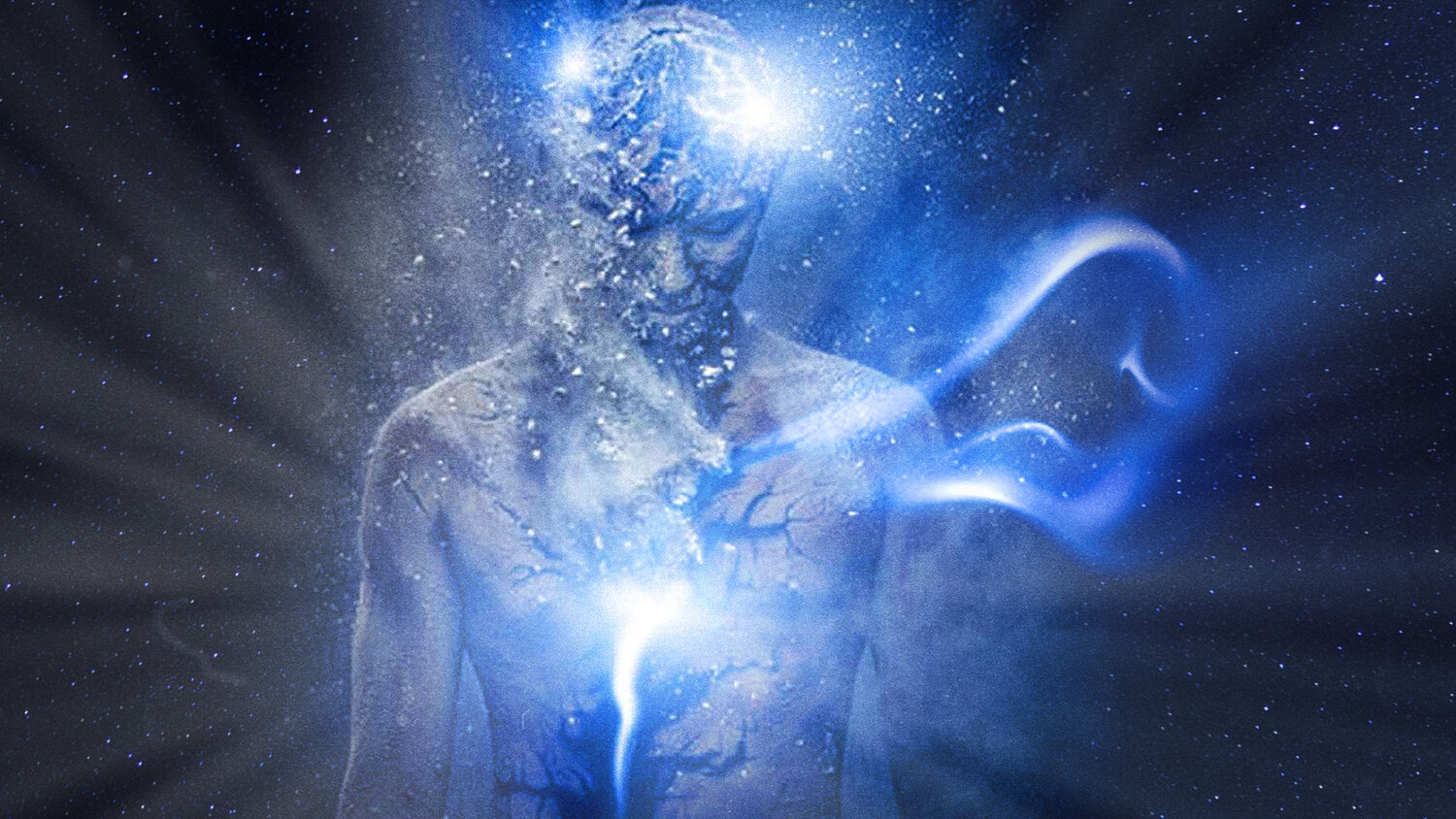
The next course I selected as part of my Unschooled Master of Theology program was the KI course, Architecture of Man, which is a topical study on the makeup of the human being.
As a reminder, you can all of my course assignments for the uThM here.
So, let’s get started….
KWL – What I Knew Before Starting This Study?
Ahh. A wonderful subject. One that I am quite passionate about. What is the makeup of the human being, the creature that God created first in Adam, then in Eve (though she is peculiarly different than the first man). This is the origin, the intended destiny for, we can only presume, all of us who now or have or will exist. We were meant to be human beings, living beings – those who indwell the bodies we have been gifted from birth, to endeavor in them for the rest of eternity, whatever that actually entails. But it was at the fall, when Adam and Eve disobeyed God (for whatever reason), and this brought disaster on the heads of all generations to come after. We were subsequently born with a defect, rather than in the perfection we were originally intended (though how perfect could we be, or for how long, if the capacity to sin is inherent in all of God’s creations?).
But, today, the argument is between three groups: 1. Materialism, 2. Dichotomism, and Trichotomism. I fall toward the 3rd, given all the Scriptures as a whole. Any other is impossible to include all references. You have to ignore those that don’t fit. Only Trichotomy fits best.
I’m not all that convinced about Dr. Missler’s theory that our internal makeup resembles that of the Temple, but it could not be said it is a far-fetched theory given all the types in the Scriptures already.
Of what I know: The human is made up of the body, the soul, the spirit. He is representative of God in three. The body is that which tethers the individual to the physical dimension. The soul is the residing component of the “I.” It represents the individual being, the personality, the consciousness, and within it resides the “heart,” the “mind,” contains all individual “memories,” and is the origin of human emotion and autonomous will. The soul is not necessarily ethereal (for I imagine it is in some way tangible), but it is also altogether not physical or material. Lastly, the spirit is that empowering spark from God which ignites the body and soul into what can be termed as “a living being.”
When an individual dies, suffering the fate of all things that are subject to the curse, it is the rending of the soul and body from each other, the divesting the living being of the “spirit” in which God has breathed into it. Upon death, the spirit returns to God, the body returns to the earth to wither and decay, and the soul is carried off to Hades or the underworld, where it is deposited and imprisoned until the Judgment. The souls that reside in Hades (in torment or paradise) are disembodied souls. They are no longer “living” but do still exist (for the soul is immortal). Likewise, though the lost individual must begin his separation from God at this point in torment, the saved individual does not fair much better. Though he is in the company of other believers, it is unclear what his experience is like. All we are told is he is being “comforted.” This leads me to believe that death is much more traumatic than we understand it to be, for both lost and saved alike. There is no guarantee that the intervening time between death and judgment will be at all positive.
After the resurrection, the soul of every living being will once again be united with a physical body (of what kind we do not know), and presumably the spirit of God will again indwell us and will animate the individual to life. We will then enter into the state we will inhabit for eternity: condemnation or redemption.
KWL – What I Want to Find Out in This Study?
I would like to get a grand picture of the Architecture of Man.
I would like to work out the details of my own biblical anthropology.

Session 1
The “heart” is euphemistic. Not the organ but the seat of our desire. Jeremiah 17:9-10. I’ve always found this to be quite insightful. Not only is the heart a euphemism for the actual soul or the mind or the core of the consciousness that represents the “I” of the individual, but that this core is, in fact, “deceitful above all things, desperately wicked, and no one can know it.” My question would be: is this the natural state of the soul before the fall or only after? I can only assume after. But, is this likewise the same for non-human beings? Angels? What is it in them and in us that drives us to the propensity to sin? Is salvation, glorification the cure for this defect? If so, will this extend to, does it extend to the angels? Are they then without a heart or a soul or an inner essence that is apparently corrupted without cure?
The heart is always replaced, not repaired or healed. If this is the case, then there is simply no solution to the problem of fallen man, save for the saving work of Jesus.
Hebrews 4:12 – piercing even to the division of soul and spirit. This verse has always been the last nail in the coffin, along with 1 Th 5:23, “may your whole spirit, soul, and body be preserved blameless at the coming of our Lord Jesus Christ.” First, if the soul can be divided from the spirit, this would require that the soul is a different thing than the spirit. They are separate. How they differentiate is not clearly or entirely or wholly understood, but there is in Scripture here a clear distinction between the two (or three). Second, if Paul is hoping that all of us – our spirit, soul, and body – which constitutes the whole of the living being, would be preserved for the second coming, then this three – trichotomy – would represent most accurately that which is the living being.
Ro 7:14ff – what I want to do I do not do, what I hate that I do. It’s a provocative issue, how despite the spirit indwelling us at our confession and belief, we still find ourselves doing the things we do not want to do and not doing the things we want to do. As he stated, throughout the rest of our lives, we embattle the flesh against the spirit, striving with our best efforts (which always fail) to keep the law of Christ, yet it is Christ who again and again forgives us, who forgave us before we existed. May God have mercy on us all.
We are software (soul and all that resides within), not hardware (body). I think this is a pretty accurate depiction. It’s not exact in that the physical body is not mechanical, it is biological. The software is not necessarily just energy or information, but is salient of its own nature and substance. It has it’s own tangibility. But this is at least a close approximation.
We talk about our fallen selves residing in the flesh, but it is more than this, it must be also in the soul, otherwise death would free us from the curse (which death is actually the consequence of the curse). I personally think the soul is what has been corrupted by sin, by the curse, and the subsequent punishment handed out by God. If not, the gnostics would be correct and all flesh would be evil and all things spiritual would be good and holy. We would simply need to escape the physical dimension to be justified and glorified and we could do that simply by dying and becoming disembodied spirits. But, if we did so only, then we would be imprisoned forever in hades and would not have victory in Christ or in our own merit. We would be condemned. It is only by the work of Christ, somehow, by grace through faith that we can be transformed, be given a new heart, and put to death the old man of sin that we were born as.
You cannot infer software through the behavior of hardware. Psychology attempts to do this very thing. Eve did not come from a dysfunctional family and did not have a loving father, for the same could be said of Satan. Psychology is limited. I would agree with this assessment. Psychology has always been faulty in its assessment. It is actually guessing in the dark, trying to determine the human condition and the issues that occur within that context through observation of behavior alone. This is why psychology as a science can only go so far and the theologian must take the individual the rest of the way. It is only through the Bible that we can solve for the plight of man.
Dr. Missler states that the lost person does not have freedom of choice. He is under the power of sin and Satan. It is only by a miracle of God that the blindness is lifted and he can recognize and respond to what God has done to him and for him. I think this was a quite provocative statement. He is, essentially, stating that there is no free will, at least with the non-believer. That the individual is incapable to please God (total depravity). And only by a miracle of God (the drawing of the Father) can any of us acknowledge and accept what God has done for us. It is a finished work of God. Not by our own merit or our own works. We cannot be saved by being good enough. We can never satisfy by our own effort God’s justice or righteousness. It is only by the grace of God that we might be saved.

Session 2
Jesus quotes Deuteronomy 6:5 “you shall love the Lord your God with all your heart, with all your soul, and with all your strength” but he adds “and with all your mind” and removes with all your strength in Matt 22:37. In Mark 12:30 he includes heart, soul, mind, and strength. In Luke 10:27 it includes all four, but in slightly different order: heart, soul, strength, and mind.
Dr. Missler states that these are additions or alterations by Jesus, but in reality he combined the Masoretic with the LXX. If we go to Deut 6:5 in the LXX, it reads, “And you will love the Lord your God from your whole mind and from your whole soul and from your whole strength.” They must have been quoting from the source document that the LXX and Masoretic both drew from but the different veins in which they had direct connection had dropped one or the other “strength” or “mind.” It’s quite fascinating that Jesus reunites them together again.
I find it interesting that there was no ark of the covenant in Nehemiah’s temple or Herod’s Temple (these are really one in the same temple – the 2nd temple). So the only temple the believer is modeled after would be Solomon’s temple with the indwelling of the spirit of God and the two pillars (Yakim and Boaz) since these are missing in the 2nd temple. Also missing are the exterior secret compartments that the priests used to lock away their possessions (such as idols).
The Holy Spirit indwells the individual in the holy of holies (soul) we receive a new spirit and a new heart. The hidden chambers are the subconscious. The Inner court is the psychi or soul, and the outer court soma or body. Everything inside was gold and this equaled holiness. Everything outside was bronze and is in need of judgment.
Getting the new heart puts God’s love, his thoughts, and a whole new life in us. We also receive a new mind, a new will power, where we can choose God’s life for us (edit: looking back on this, I’m not entirely certain we receive a new mind and will power. We do receive the indwelling of the Holy Spirit which acts on our behalf as a will within us. I’m not certain we receive a new mind but are instructed to “renew our mind” (Ro 12:2) which would be the process of sanctification during this life). Within the soul (which has not been renewed) resides our thoughts, our desires, our emotions. This is our self-life as opposed to god’s life. It is always resolved on the porch. Love is not an emotion but a commitment. (1 co 6:17) – we are one with God in spirit.
Psalm 51:10, Mark 7:20ff – from out of the heart (the old heart). There is no remedy other than to be born again. The soul life needs to be transformed. It is the porch, the dianoia, the mind, where we are also given the two pillars: in his counsel, in his strength.
Conclusions
Looking over this course after several month having passed, it’s interesting to see what I was working through at the time. It is a good course, highly recommended if someone has never been exposed to this information or the layout of the human being before.
Until my next assignment….
Please consider supporting my writing, my unschooled studies, and my hermitic lifestyle by purchasing one or more of my books. I’m not supported by academia or have a lucrative corporate job – I’m just a mystical modern-day hermit trying to live out the life I believe God has called me to. So, any support you choose to provide is GREATLY appreciated.
Excerpt from Sacred the Circle:
There was a knock at the door.
Campbell got up from the chair and crossed the small distance so he could open it.
A young man stood in the doorway, probably in his early twenties.
Campbell could tell he looked a little disheveled.
Confused.
He had deep rings around his eyes, as if he hadn’t been sleeping much, and he kept checking the hallway in both directions, as if half expecting someone to be stalking him.
“Hey,” Campbell said.
“Uhm….is…this….?”
The kid was stumbling over his own words.
Campbell leaned out into the hallway, checking to make sure there was no one else listening.
This guy wasn’t the only one who was becoming paranoid.
There were two students hanging out at the foyer, near the stairs, but the rest of the floor was clear.
“I’m sorry,” the kid said. “Must be the wrong place. I’m mistaken.”
He started to leave.
“Wait,” Campbell said, putting a hand out. “Hold on a second.”
The kid paused.
“What’s your name?”
“Uh, I’m….Lloyd…”
He fidgeted with his collar.
“I know it sounds crazy, but – ”
“You’re not crazy, Lloyd,” Campbell said, grinning.
“Did you – ? ”
The kid paused, as if unsure if he should continue.
He looked back toward the stairs, then at Campbell.
“Did you know I was coming?” he finally asked. “I mean, that’s not possible, but, were you expecting me?”
Campbell chuckled to himself.
“What’s so funny?” Lloyd asked.
“Well – “
Campbell pushed the door open all the way so Lloyd could see inside his dorm room.
The entire room was full of them, students, non-students, ranging from what looked like eighteen to even a few middle-aged men, scattered about the room, sitting wherever they could find a comfortable spot.
Lloyd’s mouth dropped open.
“I wasn’t really expecting them, either,” Campbell said. “So, I hope you don’t hold it against me when I tell you, I had no idea you’d be showing up here. Do you care to join us, anyway?”
Buy my book Sacred the Circle to find out what these men are hearing from the supernatural realm. Will they answer the questions tugging at them? What are the visions saying? Who are the Multitude? Why are all these men being brought together? By whom? And why, above all else, are they being convicted….to pray?
Get your copy of Sacred the Circle today! Get the upcoming sequel, Sacred the Sent as well so the story never ends !
But, trust me when I say, you’ll be white knuckling this one with every turn of the page!
What do you think?