


The next course I selected as part of my Unschooled Master of Theology program was the KI course, Proverbs, which covers the book of Proverbs, plus has an accompanying log book or journal. I have included both here in this post.
As a reminder, you can find all of my course assignments for the uThM here.
So, let’s get started….
What Do I Already Know?
To be honest, I don’t know much about Proverbs. I know it was written by Solomon, the one purported to be the wises man ever. Yet, at the same time, he had over 700 wives and 300 concubines and later in life his pagan wives lured him away from the faith and toward idols and false gods and false religion. I’m not certain I understand how this could be wise. Maybe he was the wisest man at one point in human history but then fell from that status later on.
I know the book is divided up into 31 chapters so it lends nicely to devotional reading. It is also a collection of sayings, proverbs, if you will. It is also difficult to ascertain how authoritative the contents of the book is. There is a tendency today to say that Proverbs is a book of sayings not a book of promises. This is because of a few things within the book that do not seem to ring true, especially in our given culture and our age today. But, then what do we make of the inspiration of Scripture? Is all of it inspired except for Proverbs? Should we limit Proverbs to suggestions but the rest of the Bible as gospel truth? Is the Bible truly without error or is it simply infallible or does it give a good try but sometimes falter.
I know there is one particular verse in Proverbs that is a great issue for most Christian parents. Proverbs 22:6, “Train up a child in the way he should go, and when he is old he will not depart from it.” This verse has two major problems, one countless Christian parents know all too well, and one that most people fail to recognize. The first one is: it does not ring true. There are countless children who are raised in Christian homes who later depart or abandon the faith of their parents. There are a multitude of reasons for this, but it is a desperately tender wound for many parents. So, in many instances, this is an issue, a thorn in the flesh, a prick of the conscience that makes people wonder, “why them?”
What many or most people do not know is that this verse is bizarrely missing from the LXX. It is simply not present. Gone. Disappeared. Yet, the LXX came before the Hebrew Masoretic that most modern day evangelical Bibles are based on. Unfortunately, an appeal to the Dead Sea Scrolls (earlier than the LXX) does not make a distinction, as that portion of the Proverbs has not survived for us.
So we are left to make the decision for ourselves if this portion of Scripture is contained in the Bible, if it even should be in the Bible. Unfortunately, I’ve found it is a two edged sword, for while some parents are scorned by the message of this verse because they have children who have left despite their instruction, there are other parents who cling tightly to this verse in almost futile hope that their children will one day return to the faith in which they were brought up in. To take this last opportunity from them is to crush their hopes of ever having their children with them in heaven. But to deny the reality of this verse is to whitewash the truth of Scripture for the sake of feelings and emotions.
I do know that Proverbs was for me a great comfort as a new believer. I was allowed only a Bible while in basic training and I carried with me an orange student pocket NT with Psalms and Proverbs. I read that tiny book from cover to cover again and again while in Basic Training. It served as a bridge for me from my old world of Buddhism to this new world of Christianity. I found great pleasure in its pages.
What Do I Want to Learn?
I would like to discover the major themes, if such exists, of Proverbs and how they connect to other parts of Scripture. I’m not certain how much of this I will be able to accomplish given that I will be teaching this book simultaneously while taking it here at KI. Unlike the Book of James, though, I’m not constrained by time, so I will simply need to be one lesson ahead each week (the students at Sunday school want the handout a week ahead to work on before class).
I would like to uncover any other variant textual issues that exist in the book, and also what kind of controversies the text holds.

Lecture 1
Were the Proverbs “God-breathed?” Why?
This is taken from 2 Timothy 3:16, which states that “All Scripture is given by inspiration of God, and is profitable for doctrine, for reproof, for correction, for instruction in righteousness, that the man of God may be complete, thoroughly equipped for every good work.” The Greek word θεόπνευστος literally means “God breathed” and it is useful in four ways: for doctrine (what is right), for reproof (assess what is not right), for correction (correct what is not right to get it right), and instruction in righteousness (how to stay right).
For us, today, all of Proverbs has to be “god-breathed” or directly from God because of our assumption that Scripture is correct and from God, being of no “private interpretation, for prophecy never came by the will of man, but holy men of God spoke as they were moved by the Holy Spirit” (2 Pe 1:20-21). We could not say the Scriptures (all 66+ books) are inerrant in the originals and infallible in the copies if Proverbs is not included, simply because providence, ultimately, through the early church, concluded that Proverbs was part orthodox.
Today we rest on the decisions that were made centuries ago. We assess and conclude that each book of the 66+ books are inspired by God because they were considered so important to early, mid, and reformational believers that they painstakingly preserved them for us, and for those who come after us. There were even those who died to get copies of the Bible to us.
Give some examples of people in the Bible who fit the description of:
The Scorner was someone who mocks God’s wisdom, who know everything and are unwilling to admit their error or that biblical wisdom is out of their reach. Dr. Missler claimed this word literally meant “to make a mouth,” but I could not find support for this. But, they never do profit from the correction of Scripture and as a result they will one day be judged. The list of these kinds of people in the Bible is surprisingly quite long. Those who mocked Elisha (2 Kings 2:23); Sanbalat, Tobiah, and Geshem (Nehemiah 2:19); God’s enemies who mocked Ethan (Psalm 89:51) ; as well as those of Judah who rejected God’s prophets and ultimately brought judgment on the nation (2 Chronicles 36:15–17).
We can also see this today, increasingly in our own culture. These were (we can only assume) were talked about in 2 Peter 3:3, “scoffers will come in the last days, walking according to their own lusts, and saying, “Where is the promise of His coming? For since the fathers fell asleep, all things continue as they were from the beginning of creation.” This we see as established wisdom is rejected outright and replaced with emotion and human opinion and myth. Pagan ideas are now being recirculated as vogue or something new. We murder the unborn with abandon. We view the marriage union as antiquated. We encourage though entertainment and education all form of abomination and promiscuity and the indulgence of fleshly desire. Biblical Christianity is increasingly met with hostility at every corner of our society.
The Fool is the person who is dense, sluggish, careless, and self-satisfied. He hates instruction, is self-confident, talks without thinking, and mocks at sin. A perfect example of this is Nabal in 1 Samuel 25. I would also argue that another one is Human, who assumed the queen and the king actually liked him, but was unaware that he was being set up. Another example in the Bible was Belshazzar, who lost everything he had, including his life, because he thought it would be fitting to disgrace the God of the Israelites by using their sacred implements from the temple.
The third is the Simply who believe everything and everyone and who lack any kind of discernment. These are easily led astray by others and have no actual understanding (despite continually learning). They cannot see what is ahead and, subsequently, continually and repeatedly fall into trouble. Examples of this would be Simon in Acts 8:18 who thought he could simply buy the power of the Apostles. Also Acts 17:22-31 we see those sitting on Mars Hill willing to hear anyone’s account or claim to new philosophies or ideas. Always accepting, always hearing, but never committing to actual truth.
Lastly, we have the Wise, who actually listen to instruction, obey what they hear, stop up what they learn through repetition, win others to the Lord, watch what they say, and are diligent in their daily work. Solomon, of course, would be an example of one of these, at least in the beginning of his life. All those listed in the Hall of Faith in Hebrews 11, would they not be considered? The apostle Paul and the other apostles? Would not faithful Christians throughout human history?
Give a real-life example of “Decision determines destiny.”
The idea that decision determine destiny is seen in the game in which we are thrust into at birth. We do not have a choice to play or not play. We cannot rest in indecision, as indecision is actually a decision in and of itself. Our choice in this life concerning Jesus will determine, ultimately, our fate. It drives our destiny toward condemnation or mercy, toward judgment or grace.
My question would be: what of those who are never given the opportunity to choose? Those who are born, lived, and died in a culture that was absent the knowledge of the Christ? If those who were in hades were preached to by Jesus in the spot between death and judgment, this is fine. But what of those who are so born into ignorance today? Still same category? I would be hard pressed to find someone today who didn’t know the gospel, or, at least, who hasn’t been given the opportunity to know who Jesus is.
Discuss both the greatness and the weaknesses of Solomon.
Solomon (also known as Jedediah) was the son of David and successor to the Davidic throne. He wrote over 3,000 proverbs and over a 1000 psalms (1 Kings 4:32). He was considered to be the wisest person in the world or anyone who was to come (1 Kings 4:29-44). He reigned from 971 to 931 B.C., and his proverbs were dated to the 10th century.
He was a man of all knowledge and wisdom, he pursued both as well as his God. He built the first temple to God (something his father desired to do but was not allowed to). But, unfortunately, he did not finish the race well. His downfall, ultimately was that he failed at the measure of a man: women. He had 700 wives and 300 concubines in his life (1 Kings 11:3). The wives were described as princesses, including Pharaoh’s daughter, women of Moab, Ammon, Edom, Sidon, and Hittites. He clung to them in love. These women were allowed to practice their pagan religions despite being the brides of Jewish royalty (which was prohibited). He even built temples for them to Ashtoreth and Milcom, a goddess and god alike.
One issue he had was his desire and love for “dark sayings” or “hard sayings.” In the end, he did not finish well his race. Women were his weakness and ultimately his downfall.
Use your own words to define wisdom. Besides Jesus, who is the wisest person you know? Why?
Wisdom is the ability to use knowledge in the right way. There are, in actuality, two kinds of wisdom. There is the wisdom from below, or earthly wisdom, which is, according to James, “earthly, sensual, and demonic” (James 3:15). But then there is wisdom from above, which is everything that earthly wisdom is not (James 3:17; 1 Co 2:1-8). Interestingly, Jesus “became” wisdom for us (1 Co 1:30; Prov 8:22–31; Col 2:3) and indwelled and embodied the perfectness of heavenly wisdom. Wisdom is eternal (Pr 8:22-26), the creator of all things (Pr 8:27-29), and beloved of God (Pro 8:30-31).
Oddly, Proverbs 8 states that it was wisdom that created the earth, but we also know from Col 1:16-17 that it was through Jesus and for Jesus that all things were created. This is an interesting distinction, but I do not necessarily agree with Dr. Missler that “wisdom” is actually Jesus personified. I think Wisdom in Proverbs is a separate entity, but that Jesus “became” wisdom, meaning he embodied the attributes of wisdom perfectly when he died on the cross and was resurrected from the dead.
Who are the three losers in Proverbs and what are some of their characteristics?
There are three loses in the book of Proverbs: the scorner, the fool, and the simpleton. These three manifest all who are not the “wise” which are those who are essentially believers (at least for us in this age of the church and the age of grace).
The Scorner mocks God and his wisdom. He recognizes that God’s wisdom is foreign to him (Pr 14:6) but will not acknowledge it to others or even to himself because he is convinced he knows everything (Pr 21:24). They do not profit from rebuke, and will one day be judged for their derision (Pr 9:7-8; 13:1; 19:29).
The Fool is dense, sluggish, careless, and self-satisfied. He is deceived by his own knowledge, by his lack of knowledge, and does not see the trap when adversity overtakes him. He, likewise, hates instruction, is self-confident, talks without thinking, and mocks sin (Pr 1:7, 22; 12:15; 29:11; 14:9).
The Simple are those who believe everything and everyone. They lack discernment and are easily led astray by others and have no conception of understanding. They also cannot see the warning signs ahead and are continually walking into trouble (Pr 14:15; 7:7; 22:3).
K-W-L Self Assessment: L- Describe what you LEARNED from this session.
It’s interesting that this is the book our pastor chose from those remaining of my Silver level at KI, since this is one of the books I’m responsible for teaching at Forge. This book, along with Ecclesiastes, Song of Solomon, Job, and Psalms are considered Wisdom Literature in the Bible. Interestingly enough, three out of the five book of this category were written by one man: Solomon.
I did not know before this lecture that Solomon was given an additional name besides Solomon. According to 2 Samuel 12:24-25, he was initially named Solomon by his father. But when Nathan the prophet received word from God, he was was given the additional name of Jedediah.
Dr. Missler states it succinctly: the book of Proverbs is a manual on how to wise up and live.
It is interesting to think about it: those who had Proverbs collected and written down in the beginning did not have a printing press. They did not generally have printed copies of the Scriptures to refer to. Instruction was done verbally, behaviorally (by example), and was done from father to son, mother to children. The sayings in Proverbs are short sentences formed from long experience. So, the best way to study the book is taking a section, summarizing it, and consuming it again and again. Then applying the universal truths from it.
Benjamin Franklin stated, “When the well runs dry, we know the worth of water.”
Pr 25-29 were written by Solomon but compiled by the men of Hezekiah, the king who reigned from 729 to 686 B.C.
We know that the real author of Scripture is the Holy Spirit, who moved the prophets and the 40 authors to write what was God breathed. It is perfect in its autographs, infallible in our copies. Though Bibles today might contain errors of transmission or interpretation, it still is capable of achieving its ultimate goal – there his enough of Jesus in the NIV or the NLT to save a soul. God superintends every part of every point of Scripture.
The word “my won” appears 15 times in Proverbs 1-7. It appears twice in Proverbs 19:27; 27:11. Five times it appears in the sayings of the wise men and once by Lemuel’s mother proverb (Pr 31:2). It is used four times by Solomon. This means that the context of Proverbs is parental instruction to children in the home. This was a book, at least in part, given to parents, to fathers, to mothers, to instruct their children.
The NT quotes Proverbs extensively (Ro 3:15; He 12:5-6; RE 3:19; James 4:6; 1 Pe 5:5; Ro 12:20; 2 Pe 2:22). Its theme throughout the book is “wisdom.” Wisdom is the use of knowledge in the right way. We probably know countless numbers of people who have an abundance of knowledge but little to no wisdom. They often have the incapacity to draw relevance from the data, or the ability to put knowledge into practice.

Lecture 2
Discuss the seriousness of sexual sins in our society.
We find in Pr 5 a treaty on sexual purity or the avoidance of the immoral woman. This is indicative of the age we live in, though, it seemingly has been a significant issue throughout human history.
The reality is, God, who made everything, wrote on a tablet of stone in Ex 20:14, “you shall not commit adultery.” Jesus not only upheld this command (Matt 19:18-19), but he extended the practicality of it much further than what we would have presumed (Matt 5:27-28).
Paul, likewise, takes a very severe position on sexual infidelity, sexual sin, and the state in which one lives this life. In 1 Co 7, he addresses the reality that singleness in devotion to God (counterpoised to the single life that is inherently consumed by casual sexuality) is the “preferred” state above and beyond the state of marriage. This is difficult for much of Christianity today, especially the evangelical culture that has no predisposition to the church fathers, to the desert fathers or to monasticism as a whole. In this situation, the only option is marriage or the oddity and most often misunderstood, disjointed, and bizarre state of singleness.
Everything that is not within the confines of marital union is considered adultery against God and even against one another (Lev 18; Ro 1:18-32; 1 Co 6:9-20; Eph 5:1-14; Matt 15:19). Matt 5:28 states that just looking at a woman with lust is the same as committing adultery. Just as hatred is the same in God’s eyes as murder (1 John 3:15; Matt 5:21-26).
Of course, marriage as an institution in our given age is not really a solution in and of itself without a multitude of preconditions. My wife and I have experienced what we have later learned is a kind of unicorn situation in our drawing by God to the marriage life, our subsequent meeting and courtship, and ultimate (and quick) marriage. We are now creeping up on our two year anniversary and we are doing exactly what we had stated God was calling us to do. We are now in full time (not vocational) ministry, and are gearing up slowly for the launch of a full time (vocational) ministry in the future. But, our experience has not translated well for others. Several of our children have expressed a desire to be married, but our efforts to help them find biblical, devoted, Christian spouses has fallen flat. We have purchased them subscriptions with eharmony (where we met) to no avail. We hear continually from them that there are simply no options available to them in their age group. No one wants to get married. No one wants to have children. There is an elder man in our church who is experiencing the same kind of thing. He desperately wants to be married again, but cannot seem to find a decent woman.
I was fortunate, after my divorce, God gave me the ability to remain single and not compromise with casual relationships. This lasted for some 13 years before he finally said to me that I was ready to be married and have kids again. By this point, I did not want to reengage with the married life, with family life, but would have rather remained single. I was happy single. But God had other plans for me.
The reality is, God did not put a marital wall around sex to rob us of pleasure, but instead to increase and protect the authenticity and sensitivity of pleasure. When you violate the laws of sexual purity you typically create a toxicity in your life. It cheapens both the pleasure and the intimacy, and it in some way (unknown) does lasting damage to the soul. It might be this that causes, at least in part, the searing of the soul and heart to the reception of God’s word. The more we walk down the road of sexual sin, it becomes habitual, and then it leads us astray to the point that we become shipwrecked and maybe even a castaway.
Marriage was designed by God. All the attacks on marriage in our culture are attempting to break down the home, the marital union, and the way in which children are raised. For the single person, there is an attempt by our culture to eradicate marriage and the family altogether. As already mentioned, so many single people today either bemoan the lack of genuine prospects available to them for marriage partners or conclude they can do without marriage altogether for the rest of their lives (of course, few claim they can forgo sex for this duration, but would rather replace a marital commitment with casual sex). This produces a self-centric individual, focused on pleasure, and reduces sex to personal gratification, often leaving procreation completely off the table in a futile nod to overpopulation or feminist rebellion.
Many women who were sold a bag of goods by the feminist movement of the 70’s and 80s chose to forgo marriage and children in their 20s and early 30s only to find that in their mid 30s and early 40s it was too late and the opportunities to find a mate and have children had passed completely. Many now are left bitter, broken, and disillusioned. Many men who reach their 40’s either remain married to their teenage sweethearts (their first marriages) or, after a divorce, begin shopping for a new bride, not from the pool of available 40 year old women (who typically struggle to have children), but select from pools of young women in their late 20s and 30s who are more able to produce offspring and also offer more in the way of attractiveness and vitality. In addition, many women in their 40s tend to insist on their husbands making the same or more than they do in their particular career field, and those women who spent their 20s and 30s pursuing career over family find there are few if any available men who have outpaced their career advancement. This leads to settling and ultimately disillusionment in their choice of spouses. This feminist agenda tricks young women into thinking they can have it all, that they are owed a career and family and spouse, only to leave them abandoned and in wreckage when it does not work out for them.
Sin, and especially sexual sin, is contagious. It touches more lives than we can imagine. It is something that should be avoided at all cost, which is why Solomon spends so much time on its deceptiveness and negative outcome in Proverbs.
How do you counsel young people concerning chastity?
I’ve struggled with this throughout my adult years. Having been raised as a non-Christian and the only talking to I received from my parents was “don’t get a girl pregnant and ruin your life,” I’ve gone back and forth on the idea of cultural purity in evangelical Christianity.
Currently, I understand Scripture to clearly illustrate marriage differently than the world today views it. Today, in the secular world, it is seen as something to covet, a natural expression of who we are as animals, and should not be condemned but condoned if not outright celebrated as a right of passage. This, of course, has spelled disastrous for the general populous and culture, culminating from the free love malarky of the 60s and 70s into the toxicity of critical race theory and wokism and intersectionality and the rise of the abominable delusion of “furies,” transgenders, and the longstanding abomination of same sex pairing. More recently it has sprouted renewed interest in polygamy and more so polyamory and open marriages and relationships that have no commitment or sustainability, having only transitory properties.
It can be said that young people today should simply abstain because the Bible says to do so, is disingenuous or outright libel. Nowhere does the Bible say that a pair of individuals who are of opposite sex need to strike a contract agreement with the secular state in order to engage in marriage. It does state that you are to have one wife and one husband and you are to “cling to one another” and to “become one flesh.” This would, inherently, preclude any kind of casual sexual encounter or dating. Relationships with the opposite sex should be serious, sober, and always with an eye leading (sooner than later) toward marriage. Two people who find themselves in a sexual relationship but are not in at least discussions with each and hopefully their elders and families should seriously consider their relationship and should separate if they are acting improperly toward each other. It is wise, from a practical position, given our day and age with sexually transmitted diseases and the potentiality of pregnancy, to abstain from sexual intimacy before the relationship has been established and their is financial, emotional, physical stability (very much like there is for monastics amongst the order – stability, chastity, and poverty).
But, there is no statement in the Bible that proclaims the purity culture that exists today in many Christian circles (especially evangelical). This statement (or lack thereof) does not in any way condone casual sex, multiple sex partners, or adultery or infidelity. But, I would be hard pressed to find an issue with a couple who lived together monogamously who did not get a marriage license as concluding they were not legitimately married because they hadn’t entered into a contract with a secular state government. There are, of course, downsides and positives with not getting and getting such a contract. It comes with some protections for each spouse, as well as privileges.
But, with that, it cannot be said a lack of a modern day certificate of marriage negates a union between two heterosexual people. This does not condone same sex unions or polygamous or polyamorous ones either.
It is interesting that Solomon spends so much effort on teaching his sons in particular about the susceptibility of the immoral woman that seems predominate in the lives of young men. Of course, the counter could be said to the young woman concerning the “bad boy” or the “hoodlum.” They are exciting. They are full of possibility and hope and wonder. But, 9 out of 10 times, they are unpredictable, unreliable, will not support you or your children you give them, and will most likely wander away from you at the least provocation.
My wife and I have determined to raise our children in this manner (not that this is at all foolproof or without issue – we are well aware of the deceptiveness of improperly interpreting Pr 22:6).
1. We have purposefully chosen to fellowship with a bible centered church, that has serendipitously another family of children approximately the same age as ours. These children will grow up together, and we have our eye on pairing already, for we believe it is important that parents have a say and influence in who our children ultimately marry (but these pairing choices both sets of parents keep close to our vest so as not to poison the pool amongst the kids. None of them are yet at the age where they are even looking or interested in relationships with the opposite sex, and we are staunchly in favor of children being able to be kids and not be pressured by the world into sexual ideology).
2. We are trying our best to build authentic relationships with each of our children, so that they will later in life (hopefully) value our opinion and advice.
3. We are monitoring their intake of and exposure to the world while they are young. I believe it is a mistake to isolate children from the world completely, since they will inevitably come face to face with all the temptations associated with our current and future cultures. But, they do not have to experience in doctrinarian or be seduced by delusion, either. In their school, I am intentionally preparing a curriculum where they must develop critical thinking skills, have to use logic and reason, but also will need to leave room for the mystical, supernatural, and God’s inherit leading in their lives (if, indeed, he is drawing them to himself). This way, they can tackle and wrestle with this issues (sexuality, marriage, culture, atheism, belief, etc) in a safe environment that is not hostile to one side or the other. I do think it a mistake to do the opposite of the secular society and just impose to our children a “christianized” worldview that is replete with good ideas and great notions but empty of any real meat of the world. This kind of indoctrination (because it is no different than what secular schools do to children) will fold as soon as our children begin classes in college or seminary and are poised the questions by critical scholarship and an atheistic worldview that is hellbent on them losing or abandoning their faith (if, indeed, they have been called to a saving faith in Christ).
4. I frequently comment that God has determined that our children be biblically literate and philosophically and logically trained by the time they turn 18, expressly because they were, by providence’s hand, delivered parents like us. I am an academic, a scholastic, and theologian. My children are 3, 10, and 11 and are already reading from the Greek Bible. They are studying the Bible a chapter a day as part of their regular studies. They are pursuing mathematics, science (empirical, as well as the worldview theories and hypotheses that are purported to be science but are really the religion of scientism). By the time they leave our home, it is my hope and aim that they will be more educated and more equipped than a typical college or seminary professor.
I do not presume to know what God has planned for our children. This is never guaranteed and raising children is predominately a thankless job. They are a stewardship we are given, but there is no guarantee to know if they are vessels of wrath or of mercy. But we trust that God works all things for the good of those who love him. This could be our children, but we are confident that he will work all things for our good (and by extension our children we pray) because of our love for him.
We do not desire to indoctrinate our children. We wish to educate them. We wish to equip them. This includes how to navigate sexual temptation, ethics, philosophical quandary, theological investigation, and biblical literacy. Our children will know the Bible inside and out by the time they leave home. They will also be well equipped in mathematics, science, history, and technology. We will not shelter our children. But we also will not turn them over to be raised by the state either.
What can be done concerning immorality in the church?
This is the responsibility of each individual person in the body of Christ, in the local assembly, and also the corporate responsibility of the leadership (the elders), and the congregation as a whole. We are to guard the assembly, the body of Christ, and need not only confess our own sins, but we are to confess them to one another and in turn, God will forgive us (1 John 1:9).
It is difficult, given that church discipline has been all but abandoned in the modern iteration of the church. An elder man at our church once served as a deacon (this position has been misinterpreted to be titled as a deacon but the role functions as elder in this particular denomination), but he resigned after a situation with a family occurred. A woman in the church had a teenage daughter who had a baby out of wedlock. The family seemed to accept and condone this pregnancy without any correction, seemed to celebrate the fact that their daughter was having a baby without being married. The deacon (elder) went to the deacon board (the men who are tasked with the wellbeing of the church) and suggested that something be said, that the family and especially the young woman be counseled in some way. He was concerned that the downplay of this situation would spread to other teens in the church.
His concerns were met with abnegation from the other deacons (elders). They did not want to deal with a difficult situation (which is typical of church discipline today) and he was told to just ignore it. For conscience sake, he had to resign his position in the church because he could not abide by the approval and condoning of such public sin, and especially sexual sin.
The church must deal with difficult situations. But, it should not do so without grace, love, and mercy.
My wife relayed an account of church discipline to me that I found appalling. There was a young man attending a church she was a part of years ago, and he was outwardly gay. He had a boyfriend and could be seen regularly around town with him. This was relayed to the elders of the church numerous times. The young man did not exhibit his predilections in the assembly, or demand his lifestyle be condoned by the congregation. But, he did show interest in serving in the youth ministries.
One day, unbeknownst to the congregants of the church, the young man was asked to come up on stage. As he stood there, one of the elders gave a self-righteous soliloquy about the sins of homosexuality and perversion and the like. They then turned to the young man and essentially excommunicated him from the church. He was told he could no longer attend the assembly and would never be welcomed back. This was a painful attack not only on the young man, but also on his extended family who had a long-standing in the assembly.
Instead, the church (the elders), upon receiving the accounts about the young man’s behavior, should have come along side him privately, and counseled him, struggled with him, given him ample grace and given the Lord the opportunity to change the man. He should have been, instead of condemned, counseled concerning the possibility that God had given this out-of-bounds attraction as a test to his faithfulness to God, and that it was very possible God was calling him to a celibate life in full devotion to God. Of course, this is not proffered today because the evangelical church has no appetite for the monastic call or the contemplative ministry.
If it came to the point that the young man remained unrepentant, continued in his predilections with no conviction of sin, then at that point it would be required of the elders to disassociate him from the assembly in order to protect the assembly. But this should not be done as a public spectacle to prove a point or to make a political or cultural “stand.” It should remain in grace, heartfelt love, and tough love as the eldership continue to pray earnestly for the soul of the man who is in jeopardy.
It reminds me of the account I read one day of the church board that was deciding on a direction to go with the church. There were two prominent families in the church, and each decision would alienate one of the families. If they went with choice A, family B would most likely leave. If they went with choice B, family A would leave. When this was presented to the board, one of the elders remarked, “this is an easy choice. What is the giving record of each family. We should pick the choice that offends the family that gives less.”
This is one of many problems with the modern evangelical church today. Because we have separated the church from the home fellowship, because we have isolated the meeting and the festivities and the body life from the life of the congregants, because we have a paid clergy class with a separate class of congregants, it has become a corporation based and focused on money. Many of the churches today have little to do with Christ and everything to do with the god, Mammon, that Jesus warned us about. His conclusion, we cannot serve both God and Mammon.
It would be impossible to resolve completely immorality in the church, because we are a fallen people filled with sin. But, we must continue to shine a light on what sin is, how it affects us, and what the antidote is for it. We must not be complacent, cannot give way to sin, and must be vigilant, but always tempered with grace and love for the other.
Is homosexuality a sin or a judgment? Explain each possibility.
Same sex attraction can be viewed as a multiplicity of conclusions. It can be viewed as a testing by God. He, of course, never tempts us, but God can and does give people struggles in all areas of life to see if they will trust him with it. Abraham with Isaac is the perfect example of this. Some can be drawn to polygamy or polyamory, and God is potentially asking them: are you willing to fulfill your own passions and desires over the wellbeing and sensitivities of the church? The argument goes, the Bible is rife with examples of multiple wives. But, hypothetically, if my wife and I were to bring a third person into our marriage, it would not only damage our walk with our children (most likely irreversibly), but we would certainly be removed from any kind of ministry position or leadership position at our local church, if not be asked to leave outright. The damage would be incomprehensible. Sometimes God gives us a desire to do something that is wrong, or something that is not inherently wrong but is in our current society viewed as wrong. The only exceptions for this are when the society demands we stop speaking about God or Christ, and when we are convicted to do or abstain from something. But, this is a weighty conviction, for Paul says, do not let yourselves be condemned by what you approve.
Same sex attraction is clearly prohibited in several places in the Bible. There is really no way around it. But, it is not any more grievous a sin than the husband who steps out on his wife or the pastor who lures a 14 year old girl into a sexual relationship. Sin is sin before God. In the spirit of the Law of Moses, once you fall at one point in the law you have become a lawbreaker and you have violated all the law. It is interesting how the sexual appetite of the heterosexual is often excused while the appetites of the same sex attracted is considered an abomination. They are both abominations before God and should be dealt with in the same way in the church.
Lastly, though, homosexuality is a curse upon our culture. It is the result and consequence of the 60s and 70s liberation movement, the rise of feminism, and the throwing off of God’s reigns on the lives of the masses. From the very beginning, these inflicted peoples have sought justification, acceptance, and glorification concerning their predilections by the church. They want to be not only heard and accepted, but they want to be celebrated for their sin. Sometimes people are given a test to see what it is they will do. Others are given testings to seal their fates. If one is a vessel of wrath, he is given over to his own desires, to his own futile thinking, so that his condemnation will not only grow but will be complete, so that there is no excuse, no rationalizing, no negotiating at the throne of the King at Judgment day.
It is a terrible thing to fall into the hands of the living God.
For you, what does it mean to “fear the Lord?”
This occurs in Proverbs 1:7; 9:10; 15:33; Job 28:28; Ps. 111:10; Eccl. 12:13, but can be exemplified best and is so most often in Proverbs 1:7, “the fear of the Lord is the beginning of knowledge.” It is attached to the second part of this verse, “fools despise wisdom and instruction.”
So, firstly, it is important to set one’s willingness to submit and surrender to wisdom and instruction. Secondly, it is important to recognize, that without God there is no knowledge. There is wisdom that is from below, that is earthly, sensual, and demonic. But then there is wisdom that is from above and it is pure, peaceable, gentle, willing to yield, full of mercy, and of good fruits, without partiality or hypocrisy.
The kind of wisdom we seek is that which is from above, and this can only be obtained, possessed by the one who fears God. It is the individual who understands his place in the universe, in the created order, and his standing before the throne of grace.
Proverbs, in general, is a call to an aggressively spiritual life, one devoted to God, and repeals iniquity. Dr. Missler claims that it is not a call to monastic order, and I would agree with this in the generality. But, I would not say this prohibits the contemplative call, as most evangelicals do today. The wholesale rejection of monasticism among evangelicals is a knee jerk reaction founded in the reformation and based on the disagreement with the abuses of the Catholic Church. When one explains that monasticism is a call to isolation, they reveal their ignorance of what that call truly is.
Monasticism is a call to separateness. There is, in no way, especially in the cenobitic expression of monasticism, an isolation from all people. It is a separation from the world while remaining in the world. It is outwardly a declaration and a lifestyle that does just what Dr. Missler is claiming Proverbs is calling people toward: the leading of an aggressively dynamic life. Monasticism is soaked in daily, moment by moment prayer. It is saturated by the Word of God, daily, often officially seven times a day, with additional time in private reading and contemplation. It is an individual who has sacrificed his own desires for family, for spouse, for career, for aspiration, and has offered those up on the altar of Christ and has declared that he would rather serve the Lord.
In the ancient past, monasteries served a tremendous purpose in providing shelter and aim for the poor, for the destitute (especially women and children), and the incalculable preservation and passage of the Scriptures themselves is a testament to the providential nature of monasticism. If it were not for the monks who painstakingly labored over parchments and scrolls for long hours, at candlelight, to bring us 6000+ manuscripts of the NT and the Masoretic text, and the LXX of the OT and all the apocryphal writings, we would have in the Bible the likes of the Oddyssey or other ancient, classical documents where there are only a few copies remaining. Rather, we have a rich and varied history of textual translation, where we can see the errors, we can see the confusion, and also the truth shining through. We are indebted to the monk and the nun, if for no other reason than this. Yet, evangelical Christianity has all but forgotten and refuses to acknowledge this very important vocation.
It is true, what Dr. Missler states, “every day God finds a new way to ask the question, Do you trust me?” Obedience to God, surrender to his will, to his plan, to his good purposes, this is the fear of God and it leads to true and genuine and full knowledge of who the Christ is and what he represents and why it is at the foundation of everything and everyone in existence.
He opens the doors he wants us to go through, but he will also align our desires to be that which he would have us desire. This is spelled out for us by Paul in Phil 2:3, “it is God who works in you both to will and to do for His good pleasure.”
Comment on God’s “Hate List.”
I know this is an issue for many in evangelical Christianity, for those who contend that God is God of love, and that he cannot hate. This kind of dialectic is a delusion, and one not found or based in Scripture. It is true. God hates things. Many in fact. In Ecc 3:8; Deut 16:22; Ps 45:7 and Re 2:6, we see a laundry list of things that God detests and hates.
We see in Ecc 3:8 that God declares there is actually a time for hate. Even a time for war. And we see in Eph 4:26, we are to be “angry and not sin.”
Deut 16:22 – God hates sacred pillars.
Deut 12:30; 18:10-12 – God detests and hates how the nations worship their false gods, in burning their sons and daughters in the fire.
Mal 2:16 – God hates divorce.
Pr 8:13 – God hates a perverse mouth.
Isa 61:8 – God hates robbery for burnt offering
Jer 44:4 – God hates abominable things.
Re 2:6, 15 – God hates the deeds of the Nicolaitans.
Pr 11:1 – God “hates” dishonest scales, and he sees them as an abomination.
Pr 15:8-9; Deut 23:18 – God “hates” the sacrifice of the wicked and their way, or the wages of the harlot.
Pr 17:15 – God “hates” those who justify the wicked and condemn the just.
Pr 20:10, 23 – God “hates” diverse weights and dishonest scales.
Pr 6:16-19 – Lastly, we are given a list in this passage that represents the list of things that God hates. There are 6 things he hates, 7 that are an abomination to him:
1. A proud look
2. A lying tongue
3. Hands that shed innocent blood
4. A heart that devises wicked plans
5. Feet that are swift in running to evil
6. A false witness who speaks lies
7. He who sows discord among others
I would proffer also that God hates sin and the first “emotional” response, the first “instinctual” response God has when seeing a sinner is hatred because this satisfies his sense of justice, his sense of holiness, and his inherent righteousness. A woman who is divorced, who is involved in an extramarital affair, who has children out of wedlock, who chooses her own pleasures over the wellbeing of her children – this woman is instinctively seen as an abomination before God. He is angered at her. And he hates her actions and what she stands for and what she represents. Everyone God sees (apart from the work of the cross) is seen by God with hatred because of what we ultimately have been made in, the image of man, the fallen state. This concept, when presented to two other believers at a Bible study, was received with great hostility. They claimed it was impossible for God to hate the sinner, to hate the individual, because God loves everyone. While it is true, God does love everyone (John 3:16), we also know that sin is never tolerated in his midst and there are those who are considered by God, were created by him to be “vessels of wrath” to serve as examples to the “vessels of mercy” to show his mercy on those he is sparing in this existence.
K-W-L Self Assessment: L- Describe what you LEARNED from this session.
I would argue against Dr. Missler, in that Chapter 8 is the “wisdom chapter” since Psalm 40:7 tells us “in the volume of the book” is Christ. Likewise, beginning at the start of Proverbs, we see that Wisdom takes center stage in Solomon’s discussions with his sons.
I always find the interpretive rules of the Jewish people to be so provocative. They were certainly open to various levels of interpretation of Scripture, and rightly so: Peshat (literal), Remez (allegorical), Derash (practical), Sod (mystical). It makes me wonder why we have forsaken P, D, and S for R. The fundamentalists forsake all except for P. The charismatic seems to focus only on R and S.
It’s fascinating that Solomon was considered a “collector of dark sentences.” It makes me wonder what he was up to, and if this is in reference to his wife-led idolatry or if he was simply referring to the Sod interpretation of Scripture.
I thought it was interesting, Pascal’s Wager. I have heard this before in various formulations. But the idea that you have two options: If you win, you win everything. If you lose, you lose nothing. But you must wager. Our choice is between the two: Christ or the world. In choosing one we reject the other. It appears, then, that life is binary but not a zero sum game (in that there are only so many slots in the age of grace).
Lastly, I find Dr. Missler’s Rule of Holes very fitting: the first law of holes: stop digging. If only we could take this advice to heart and apply it.
Lecture 3
List five characteristics of wisdom. Who is the wisest person you know? Why?
The wise listen to instruction (Prov 1:5), they obey what they hear (Prov 10:8), they flee from sin (Prov 14:16), they watch their tongue (Prov 16:23), and they are diligent in their daily work (Prov 10:5).
Who is the wisest person I know? This is difficult, as God has made sure to show the underbelly and humanness of everyone I think highly of in this life. I have been following Dr. Missler’s teachings since I was 20 years old. But, very quickly, I took his advice of Acts 17:11, and I discovered many aspects in his teaching that were faulty or inaccurate, and so I learned quickly not to think too highly of those I learn from. This also allowed me to not settle for the teaching of just one individual (as in a cult of personality) but to be sure to temper that teaching with the teaching of other men. I learn from many people, and do so from people throughout history (through books, etc), but a few modern individuals I consider my mentors: Dr. Missler, Dr. Michael Heiser, and Dr. James White. There were in the past Pastor Joe, Dave Smith, and a few from the Fundamentalist Churches. Other than this I do not identify with any other doctrine, denomination, or teaching group.
I would consider one individual I know (his name is Bob) to be wise, but not more so than any other. I would consider a mentor I had in high school, Dave Ohm, to be a very wise man. But he also had many faults and was caught up in different systems that limited his ability to use the wisdom he had (or maybe that was where God wanted him).
I would struggle to say anyone in this world, other than Jesus, is wise. And I could not consider anyone to be the wisest. Of course, the Bible would disagree. God said of Solomon, “there has not been anyone like you before you, nor shall any like you arise after you” (1 Ki 3:22). So who am I to argue with God?
In the Bible who represents a Wise person (other than Jesus), a Foolish person, and a Scoffer?
I would argue that Joseph was one of the wisest persons in the Bible, but, I struggle whether he had “wisdom” (smartness and cunningness, and superior knowledge) or was his “wisdom” ultimately in submitting to God in every circumstance he found himself in life. He spent three years in prison for a crime he did not commit. He had every “right” to become embittered, to refuse to do anything for anyone else after that point. But, he did not. He spent the majority of his life, at least the early part of it, as a slave in a foreign land. There was no way he could have predicted that in the end he would become a ruler in that foreign land, that he would befriend the Pharaoh, that he would be revealed by the people and that he would ultimately save his own family and countless others during the famine. He obeyed God. He never seems to have questions or accused God for the tragedies that befell him. He simply accepted, looked for a way to maximize the best benefit he could from his circumstances, and never complained or bemoaned the outcome, come what may.
I would argue that Peter is one of the greatest fools of the Bible. Before he received the Holy Spirit, he never missed an opportunity to lodge his foot in his mouth. He never seemed to understand what Jesus told him. Even when he would repeat his point again and again, Peter just couldn’t get it. This, of course, all seemed to change once he was indwelled by the Holy Spirit. Then Peter was imbued with great power, confidence, and certainty. Thanks be to God for sending us the comforter and our teacher while we are here on this earth and in this flesh.
Lastly, I would say the Sadducees (and the Pharisees, too) would be considered the greatest scoffers found in the Bible. They never missed an opportunity to criticize Jesus, to look for fault, to call him a bastard, to delegitimize him and his message. They epitomize what Peter later said, “knowing this first: that scoffers will come in the last days, walking according to their own lusts, and saying, “Where is the promise of His coming? For since the fathers fell asleep, all things continue as they were from the beginning of creation” (2 Pe 3:3-4).
In your mind, what is the most painful sin? Why?
I would have to agree with Dr. Missler that gossip is probably the most painful sin. It is nearly impossible to get over, to forget, and it damages our ability to trust another person. That damage may be irreparable and can destroy the best of friendships, the most intimate of relationships, and can damage reputations without any proof at all.
What are characteristics of friendship?
Friendship is not the passing of time in the evenings over a good meal and good conversation. A true friend does not require explanation. He gives his friend the benefit of the doubt. If slander over their friend comes their way, they reject it out of hand because they “know their friend and that’s all they need to know.” A true friend is loyal, is one who would die for their friend.
But Jesus sums up friendship perfectly when he says, “Greater love has no one than this, than to lay down one’s life for his friends” (John 15:13).
What are some of the characteristics of a virtuous woman?
A virtuous woman is difficult to find.
She is literally the crown to her husband
She is a blessing to all those around her.
She is a root of righteousness in her marriage.
She is rooted and founded on a sure foundation rather than on quicksand.
Her worth is far above rubies.
Her husband can truly trust her.
She is a net positive in his life, not the source of drama or chaos or strife.
She is industrious, not lazy, and diligent.
She is giving and courageous.
She is shrewd.
She is self-confident and knowledgeable.
She prepares for the future.
She encourages her husband to be what God intends for him.
She is not overly concerned with beauty or things.
She puts God first and fears the Lord.
Research the differences between the transcript of the Scopes trial and the Movie, “Inherit the Wind”. How does this relate to what you have learned in Proverbs?
Dr. Missler stated in the lectures that this movie was a deceitful account of the Scopes trial and perverts the actual events that took place. While the play and the movie makers do not purport to be historically accurate, they did take creative license to discuss in the story the ideas surrounding the threat to intellectual freedom presented by the anti-communist hysteria of the McCarthy era. Names were changed, and even participants swapped out for fictional characters. In the real trial, Scopes was a minor figure, the townsfolk were more frenzied and mean spirited than the reality it was based on. While there was a great deal of exaggeration, there were portions that are verbatim lifted from the trial transcript. The movie, as juxtaposed to the screenplay, downplayed the academic and theological points brought out, and played up the circus atmosphere. But, what more could we expect from Hollywood, then or now?
Dr. Missler makes the point that the title of this story is quite prophetic, in that, because of all the Darwin talk over the last 50+ years, we have truly “inherited the wind” as we now have a school system that has become an indoctrination mechanism for the far left, and several generations of children who are growing up without any kind of rudder, no sense of moral integrity or sense of society or spiritual moorings. All sin is increasing on a corporate level, and it is being packaged and shipped out wholesale throughout the world. Abortion, divorce, single head homes, fatherless children, abuse, drug use, alcoholism, they are all at an all-time high. Pornography on both the internet and in popular media like television and movies is utterly ubiquitous. This is now the sex education young boys receive in the privacy of their own bedrooms, from their various devices.
Our culture is doomed. It is only a matter of time before it crumbles completely and the American way of life ceases to exist. What will come next can only be known by God. He knows the beginning from the end. We simply must obey, stand up for what is right and what is true, proclaim the gospel message to the lost, and pray that God will return quickly. But as Peter said, “We must through many tribulations enter the kingdom of God” (Acts 14:22).
K-W-L Self Assessment: L- Describe what you LEARNED from this session.
Nothing to add.
Lecture 4
Where does the Bible deny the existence of “randomness?” How is this significant regarding today’s society?
Dr. Missler talked about in the lecture that there is actually no randomness in the universe. The concepts exist in mathematics but not in our reality. This can be supported in several places in the Bible. First, there is the book of Esther, where God intervened and delivered the people from a dire fate, which is now celebrated in Purim. There are places like Pr 16:33 that states, “The lot is cast into the lap; but its every decision is from the Lord” which tells us that there is no fate, there is no happenstance, as everything that occurs is from the direction of the Lord. Psalm 139:16 states, “Your eyes saw my substance, being yet unformed. And in Your book they all were written, the days fashioned for me, when as yet there were none of them” which indicates that not only is God in charge, but everything we have ever done was determined for us to do before he even created us. Everything we will ever do in the future has already been predetermined, and we are, according to Eph 2:10, “his workmanship, created in Christ Jesus for good works, which God prepared beforehand that we should walk in them.”
As for our society, there is nothing happening in our world today that is outside of God’s purview, or outside his will. We see this in Matt 10:29, “Are not two sparrows sold for a copper coin? And not one of them falls to the ground apart from your Father’s will.” It does not matter how dire things become in this life. It does not matter what transpires in politics, who runs the country, who is indicted for criminal activity, what the world things, what it believes. Everything is part of God’s plan. Everything is exactly the way God has intended it to be and designed it to be from the beginning.
How does God “try the heart?”
God says in Jeremiah 17:10, “I, the Lord, search the heart, I test the mind, even to give every man according to his ways, according to the fruit of his doings.” In Romans 8:27, we are told, “he who searches the hearts knows what the mind of the Spirit is, because he makes intercession for the saints according to the will of God.”
God tested Abraham (Gen 22:1), but he does so without tempting anyone (James 1:13). Hey tries the heart and determines what it is made of, what we are made of. Of course, God is the creator of everyone who draws breath and so he does not need to test us to see what we are made of. He tests us so that this realization, this reality is made known to us and will one day be made known to the entire world.
Which of the proverbs in this session impacted you personally?
There were several. I’ve been teaching Proverbs in our Sunday school group over the last several months, and it has been a fascinating journey. It is also one of the classes at KI that remain before I get to the Silver level. Here is a list from Proverbs 15-19 that I found significant to my own life.
Proverbs 15:16, “Better is a little with the fear of the Lord, than great treasure with trouble.” I’ve learned over the years that material wealth means very little to me. It is troublesome in most contexts and causes only distress, worry, anxiety, and stress. I have learned over the years to want for very little out of life, at least from my perspective. I gave up on earthly successes, success in business, success in relationship, and traded those things for an interior spiritual life that was intense and exceptional (according to my judgment which applies only to me). I have experienced this verse and know full well its truthfulness.
Proverbs 16:4, “The Lord has made all for himself, yes, even the wicked for the day of doom.” I find this verse very provocative. It basically supports Romans 9:22 in that God created two types of people, designed and predestined from the foundation of the world (creation), one for mercy and one for destruction. We cannot argue with the sovereignty of God. His free will is absolute. His righteousness is defined by his behavior and his decisions and his actions. He is the standard by which everyone is judged. What he does is the definition of rightness. We cannot say that God simply knows the decisions everyone will make. Rather both the wicked and the righteous for his glory.
Proverbs 16:25, “There is a way that seems right to a man, but its end is the way of death.” This is the folly of our condition. Despite God’s message to us, despite his warning in the Word, we continually, repeatedly, and persistently choose to do the wrong, to do what is not right, to do what we think is right. Too often, this is not what is right to God. We obfuscate, we justify our own actions, we murder, we lie, and we do whatever it is we want to get what we want and often at the expense of others. This is why Solomon tells us that this way leads to death.
Proverbs 16:33, “The lot is cast into the lap, but its every decision is from the Lord.” Again, God is in control of everything and everyone. There is no free-will. There is no independent volition. We do things. We think things. We behavior in certain ways, and we trick ourselves into believing that we are doing them and thinking them, but, in reality, God has already determined us, created us, to do all of this. It says in Phil 2:13, “For it is God who works in you both to will and to do for his good pleasure.” This is not simplistic but profound. He is not only omniscient, but omnipotent, and omnipresent. He is all consuming. He is the “ancient of days” (Dan 7:9, 13, 22). Whatever mechanism we want to ascribe to his ability to “know,” be it middle knowledge or omniscience or prophecy, it does not extend to the reality that universal volition derives from God. We take a step, but God decided beforehand for us to take that step. Even so, he determined beforehand that he would design us, create us in such a way that we would “choose” to take this step. We have no choice in the matter. All is predetermined before God, by God, and for God.
Proverbs 17:3, “The refining pot is for silver and the furnace for gold, but the Lord tests the hearts.” There is a process by which silver and gold are refined and purified. The same is true for the human heart. I would argue this truth does not necessarily extend to the non-believer, but it could if the non-believer was actually destined to become a believer at some point in their life. They would then be considered a believer from the beginning, destined to believe, preordained to accept Christ in this life. They may not now be a believer but they will in the future believe. This would intimate that they were, all along, a vessel of mercy and never were they once a vessel of wrath. Their reality of their substance has always been and will forever be the object of God’s mercy. They are the reason why God created the vessels of wrath, that he might differentiate to “the ages to come” (Eph 2:7) his exceeding riches of grace and kindness he has given and gives and will give to us. This work began and continues and will finish in God’s provision and timing. It truly has nothing to do with us. We respond favorably because we were made to respond this way. We choose the right over the wrong because, innately, we desire the right because we were made to do so.
Proverbs 18:1, “A man who isolates himself seeks his own desire; he rages against all wise judgment.” So, this has always been a touching verse for me, as I spend a good portion of my adult life “isolating myself” from others. I was always uncomfortable in the social aspects of life. I never liked being in a crowd. Never could maintain friendships very long. Not because I was not sociable or that I was necessarily awkward. In fact, those who I have shared that I am not naturally given to socializing were most often shocked and bewildered, saying that they never could have presumed that I was uncomfortable. I know HOW to function in our society and our culture. I just don’t enjoy doing it. I personally prefer the wild and deserted places. I am draw naturally, instinctively, maybe dysfunctionally (I cannot say this any longer), toward somber and sober contemplation, toward a ministry of silence, toward great and open spaces, to an intimate understanding and communion with his creation that is void of human speech, void of human interaction, and without the drama and interpersonal strife associated therein. For the longest time I was convinced this was the lot I had before me: to become an idiorrhythmic monasticism hermit, a contemplative, one who is devoted to prayer, to petition, to recitation (μελέτη), to the ardent study of theology and philosophy, to the pursuit of the Bible and God in a daily rhythm of life, absent the distractions and trappings of the world around me. This verse was a “thorn in my flesh” as it were. It spoke against the very vocation I wanted and felt called to pursue. Until I discovered that the Septuagint (LXX) renders it much differently than the later Masoretic does. It states, “A man who wishes to separate from friends looks for excuses, and he will be reproached at every time.” It has nothing to do with isolating oneself from society. It is speaking of distancing himself from his friends, this one looks for excuses in his friends to abandon them. This individual had no recourse, he has no solution in this. For he is a terrible friend. Despite distancing himself, he will remain frustrated still because his way through is through the dealing with his friends. This can extend, of course, to the one who isolates himself because he is ill-tempered, because he does not suffer fools well, because he is in essence a misanthrope. I can attest, God is powerful enough to deal effectively with all of these issues. It is not inherently wrong or sinful to isolate. I would argue that in everything we must first make a certainty within ourselves what God has called us to. For many years, I felt that God was calling me to do as I did – to remove myself from society. It felt right and when I was on my own, when I was isolated, it was not in any way a suffering or a sacrifice for me. It was as if God has perfectly equipped me to be alone, to be without, and in that quiet space, I could walk with him and pursue him all the more. We know this is a true concept and something to aspire to for Paul comes to the same conclusion about married life (1 Co 7:28). Once we determine with certainty and confidence that this is what God has called us to, then we must pursue it with everything we have. And, again, at any point, we know (but are not often comfortable with) that God can call us away from this life, this vocation, this pursuit to chase after something else. But, God is gracious and good and lovely and desires all good things and blessings for us. Everything that we have done will be utilized for the good of others and for our own good. We will learn. Others will benefit. God is a good God.
Proverbs 18:22, “He who finds a wife finds a good thing, and obtains favor from the Lord.” I cannot underestimate this more. I can attest. The man who is able to find a wife who is kind, who is lovely, who is good to him, who is a genuine helpmate (and not a drain on him emotionally, financially, or practically) has obtained favor from God. This is the very opposite of Proverbs 19:13-14 and the continual dripping of a contentious wife. The good wife is a blessing to her husband in more ways than he can even calculate.
Proverbs 19:1, “Better is the poor who walks in his integrity than one who is perverse in his lips, and is a fool.” Riches mean nothing. Integrity is everything in this life. Once we have lost it, it will be nearly impossible to regain it. If we instead speak continually of perverse things, of perverted things, and we follow through with that which we talk about (the essence of the fool), then we will soon be full of iniquity and strife and all manner of destruction. Integrity is all that matters in this life. It is hard to gain. It is even more difficult to maintain. We can only do so by God’s grace and the power of the Holy Spirit.
Proverbs 19:13-14, “A foolish son is the ruin of his father, and the contentions of a wife are a continual dripping. Houses and riches are an inheritance from fathers, but a prudent wife is from the Lord.” This again is the truth spoken from heaven. It cannot be amply measured or quantified justifiably. The fool will destroy his house and his family. The poor choices we make in our youth in the selection of our mate will reverberate throughout our entire lives. Whether it is the wreckage left over from a failed marriage, and children from a broken home, or it is the perpetual and persistent and unbearable irritation of a contentious wife (she is quarreling, nagging, litigious). Oddly, the LXX does not contain this same meaning, it states, “A foolish son is a shame to a father; prayers from the pay of a prostitute are not pure.” But this is peculiar because the greek “οὐχ ἁγναὶ εὐχαὶ ἀπὸ μισθώματος ἑταίρας” is literally rendered, “Not, continuous, dropping/dripping, from, quarreling, wife/woman.” So, it is bizarre how the English LXX translation (a translation of a translation) renders it quite odd, but the actual Greek of the LXX is closer in approximation to the Hebrew Masoretic than to the English LXX. The first part is “αἰσχύνη πατρὶ υἱὸς ἄφρων” or “calamity, father, son, fool.” So, could it be rendered appropriately, “Calamity [to or for a] father [is the] son [who is a] fool. [but] not [the] continuous dripping from [a] quarreling wife”? Does this mean that it is calamity for the father who’s son is an fool but it is not calamity for a father or a man who must endure the continuous dripping of a quarrelsome wife? This does not seem correct does it? I will have to pursue this more later. [there does seem to be some major rearrangement in the order of Greek works when compared to the English LXX.] The Pulpit Commentary has “The Septuagint, following a different reading, has, “Nor are offerings from a harlot’s hire pure,” which is an allusion to Deut. 23:18.” Continually mentioned in the commentaries is “an Arabic proverb which says that three things make a man’s house intolerable: tak (leaking through of rain); nak (a wife’s nagging); and bak (bugs).”
Proverbs 19:29, “Judgments are prepared for scoffers, and beatings for the backs of fools.” Lastly, I remember reading this proverb again and again while I was a new believer, first reading the NT and Psalms and Proverbs and Ecclesiastes for the first time while in Basic Training. This to me was a universal truth and still so remains. The scoffer will eventually be judged, both in this life (maybe) and certainly in the next. It is the fool who is continually or constantly or even haphazardly finding himself at the end of the discipline stick. This is true whether it is culturally, socially, economically (i.e. continually getting disciplined or fired at work), and is certainly true of the fool who is continually finding himself in trouble with the law and with the authorities. There is no excuse for such behavior. But some are incapable of resisting and have maybe no impulse control as most do at least in modicum. But the one incapable of keeping on the straight and narrow is considered both to be a scoffer (for he thinks he will never be caught) and a fool (for he does not know any better).
Discuss the good and bad usage of the tongue. How have you used your tongue for good this week?
The tongue is our greatest weapon and is a double-edged sword. It can be used for godly and lofty purposes, but it does speak the “heart’s treasure” and we know the heart is deceptive above all else (Jer 17:9) so we must guard our soul against it (even though it does reside within it. Our tongue can be valuable silver (Prov 10:20), a beautiful and fruitful tree of life (Prov 15:4; cf. 12:14 ; 18:20), a refreshing well of water (Prov 18:4; 10:11), a healthy dose of medicine (Prov 12:18), and should be used for such purposes as: bringing peace (Prov 15:1, 26), giving wise reproof to the erring (Prov 25:12; 28:23), delivering lost souls from death (Prov 1:9; 14:3-5, 25; 12:6), teaching people the things of the Lord (Prov 15:7; 16:21, 23; 20:15), and carrying the good news of the Gospel (Prov 25:25).
But, it can also be used to serve the purposes of the Talebearing (Prov 18:8), used for Lying (Prov 12:17–22), for Talking Too Much (Prov 12:13; 18:6–7), for Talking Too Soon (Prov 18:13, 17), for Flattering (Prov 26:28), and Quarreling (Prov 12:16, 18).
Outline the way the Holy Spirit would have us deal with conflict. Read Matthew 18 and comment.
In Matthew 18:15-18 it states that if a brother sins against us, we should first go to him alone. We should confront him but in a loving way, so that we might gain him as a brother if he hears us out. But, if he does not hear us, then we should confront him in the presence of one or two others so that we might fulfill Deut. 17:6; 19:15, so that “every world may be established.” If the offender still refuses, then we are to bring the issue to the church (I would presume the church leaders, the eldership, who are responsible and stewards of the souls of the saints). At this point, if the man does not repent, and it is truly found to be a sin against the other, and he refuses to hear the church leadership, then that individual is said to be considered and treated as a heathen and a tax collector (untouchable). We are, essentially, to disfellowship that individual.
But, this all being said, we are to desire to “restore” the one who is offending, as Gal 6:1 states, “if a man is overtaken in any trespass, you who are spiritual restore such a one in a spirit of gentleness, considering yourself lest you also be tempted.” As does Eph 4:2-3 “with all lowliness and gentleness, with longsuffering, bearing with one another in love, endeavoring to keep the unity of the Spirit in the bond of peace.” For we begin to see the purpose and nature of that mystical church that Jesus is building, that “If someone says, “I love God,” and hates his brother, he is a liar; for he who does not love his brother whom he has seen, how can he love God whom he has not seen?” (1 John 4:20). Paul told us, “Owe no one anything except to love one another, for he who loves another has fulfilled the law” (Rom 13:8).
As Jesus told us, “By this all will know that you are My disciples, if you have love for one another” (John 13:35).
What are the dangers of talking too much?
We have swelling words that are empty and without purpose (2 Pe 2:18; Jude 1:16). It is the mechanism of the fool, who cannot speak enough and yet has nothing to say. It is his own trap (Prov 6:1-5) and a sin (Prov 10:19). It causes poverty and foolishness (Prov 14:23); many would rather talk than work (Prov 15:2) and a controlled tongue means a safe life (Prov 13:3). Oddly, the person of few words is regarded as a person of knowledge (Prov 17:27,28), but, unfortunately, there is sometimes a “multitude of words” even in God’s house, and Ecc 5:1-7 has some good counsel about this.
K-W-L Self Assessment: L- Describe what you LEARNED from this session.
Nothing to add.
Lecture 5
Write a word study of the term “landmark.” What are the different ways that it is used in the Bible? How does this apply to your life?
It appears to only be used 7 times in the OT and never in the NT. Dt 19:14; Dt 27:17; Pr 22:28; Pr 23:10; Ho 5:10; Job 24:2; Je 31:21). All but Je 31:21 are demands to “not” remove said landmarks the were established previously. Only this last reference gives a command to “set up landmarks” as a way of deterring future sin. I would argue against Dr. Missler’s conclusion that “moral landmarks and doctrinal boundaries are included” in the six above. They certainly would be in the last one.
A landmark is essentially a boundary line indicated by a stone, stake, etc. (Deut. 19:14; 27:17; Prov. 22:28; 23:10; Job 24:2). Landmarks could not be removed without incurring the severe displeasure of God (EBD). The removal also indicated general theft (ISBE). It was often an inscribed stone that denoted a boundary of fields, districts, or nations (Gn 31:51, 52). In most Near Eastern countries the removal of a landmark was a serious crime; in Israel it was a violation of the Law of Moses (Dt 19:14; 27:17). Removing landmarks could be represented as changing ancient customs and laws (Prv 22:28; 23:10; cf. Jb 24:2). (BEB). Of course, this cannot be confused with the modern appellation of Landmarkism, which is an independent fundamentalist baptist sect that claims they should not remove the theological landmarks or guideposts that separate the church from the world. They believe they are the only saved, that they should keep their traditions, and are predominantly born out of fear of liberalism and the secular world.
I would be hard pressed to apply this term directly to my life other than to say it is important that we do not develop or fall prey to “any other gospel” that others or ourselves might come up with. There are some clear “landmarks” in the Christian faith, but too many that have been erected on doctrines that are not biblical or at best suspect or inference or speculative (trinity, angels, anthropomorphism, age of accountability, etc). But, doctrines such as spelled out in the Bible as “elementary principles” or actually the ἀρχῆς τοῦ χριστοῦ “first of Christ” (repentance from dead works, faith toward God, baptisms, laying on of hands, resurrection of the dead, eternal judgment). Elsewhere it states, τὰ στοιχεῖα τῆς ἀρχῆς τῶν λογίων τοῦ θεοῦte or “the first principles of the sayings of God.” These would be good “markers” to keep close and established. It is the “faith which was once for all delivered to the saints” (Jude 1:3).
Note: As a caveat, while searching for word studies on “landmark” I stumbled across a video (https://youtu.be/1gaiJB-0z3w?t=376) from a Greek teacher who stated that we should not do word studies, or, at least, should not do them in the way most people do them, because we fall into logical fallacies or exegetical fallacies that are described in the same title book by DA Carson. Now, I’m not a big fan of Carson but I do have this book and plan to read it at some point, but I thought the example used in the video was rife with problems.
It states that the word ἐκκλησίᾳ means “church” but that in Acts 7:38 it is referring to the Jewish assembly before God in the Old Testament, so it cannot be translated here as Church. I would agree with his conclusion, but we really should go a step further. I think it is in error to really translate this “church” to begin with. It conflates what this world literally/realistically means with what we have made it mean in the modern era. It was never “church” that we immediately envision today when we hear that word. It was simply “assembly” or “assembly of persons.” Now, Loud Nida would argue against “called out ones” but I’m not sure why. And some would give two senses, “assembly” and “church” being the first secular and the second ecclesiastical. But, I think the latter would anachronistic. When the biblical documents were being penned, there was no “church,” especially as we know of it today. There was during the authorship of the New Testament letters the “gathering” of the Way, the assembly of the faithful. But this was from house to house (Acts 2:46; 5:42; 20:20), not in a building perpetuated by an corporate organizational entity utilized for the acquiring of wealth and the propagation of a professionalized clergy class. So, I would argue that we go too far in translating ἐκκλησίᾳ anywhere as “church,” especially given the dogma that has built up concerning this concept over the centuries.
His second example is δοῦλος which, of course, means “slave.” But, he is arguing that our meaning in the modern era is much different for slave than it meant in the Roman world of the first century. Again, Louw Nida states it means “pertaining to a state of being completely controlled by someone or something.” The TDNT states, “we have a service which is not a matter of choice for the one who renders it, which he has to perform whether he likes or not, because he is subject as a slave to an alien will, to the will of his owner.” So, in actuality, it would contain in this word’s meaning both kinds of slaves, and as I understand it, there were both kinds of slaves in the Roman world at that time. So I think it is limited to use this as an example of an exegetical fallacy.
Personally, I utilize the Word Study in Logos quite extensively. I even use the Exegetical Guide, which I would say is a form of “word study” but for a whole passage (which is rather nice since the actual Word Study function in Logos does not allow for multiple words). But, it is true that we must be on guard. But, as for these examples given, I’m not aware of anyone who would claim that because ἐκκλησίᾳ is in the Old Testament it means that the “church” as we know it that began on Pentecost and is still being built was present in the Old Testament. That is simply fallacious. To say that the word δοῦλος does not engender the modern definition of slavery because the only slavery they had in the first century was indentured servitude, is, again, I think just in error.
What is the danger of strife? What is the major cause of strife? How have you handled this in your life?
Pride is at the root of strife and contention. It occurs 31 times in the Bible, 3 in the Law, 17 in Wisdom literature, 5 in the prophets, and 6 in the New Testament. It is always referenced negatively, as something to be avoided. We are called to “be at peace with everyone” (1 Th 5:13; Rom 12:18; 2 Pet 3:14; Mark 9:50). There are individuals in my life recently, especially as I have begun to actively labor in the local church that really put me off, really anger and frustrate me. They are obstinate, they are selfish, they are argumentative, they are resistant to change, to the move of the Holy Spirit, to the work of Christ. But, I have learned to recognize and try to resist the bitterness that arises from this, because I am like they. I try to make a point to pray more about situations before I act or respond. I try to pray for the best interests of my enemies and those with whom I am in disagreement, rather than actively plot their destruction. We are, as the church, called to love one another and this is how the world will see us. We are not called to love only those who love us in return. We are called to love the other regardless of what they do to us or how they treat us. It is not reciprocal. We love others as christ loves us. It is between them and god how they are to or will respond to that love. My obligation is clear before God.
What does it mean to you to be considered faithful? List at least three areas and give examples.
This is one of the appellations given by Christ to the servant who has done his will, “Well done, good and faithful servant” (Matt 25:23). This would be, it least in my estimation, the ultimate aim of our Christian life. To do so, of course, we need to model the example put before us, Jesus. He is ultimately faithful (1 John 1:6-9), and it is in this πιστός or “faithful” that we find ideas of “reliability, dependability, and belief” but overall a sense of trust in the object of our faithfulness. This word is actually a derivative of πιστεύωb ‘to trust.’
As for areas we need to be faithful in:
1. We need to be faithful first and foremost to our God, who created us, who took notice of us, who predestined us, called us, redeemed us, who sealed us, and who is now sanctifying us for the day of glory. Many would say we need to be faithful in several areas of our Christian life: church going, Bible reading, Prayer, good works, etc. I would argue we are not responsible for any of these things. We are solely responsible to surrender to whatever it is God is doing with us at this moment and in this season. This may and does change throughout the different seasons in our lives. What we might have been called to twenty years ago may not be what we have been called to today. We need to accept this and recognize that the Spirit is enigmatic. We need to carry the understand that when God calls, we need to be able to say, “Here I am, Lord.” We certainly can argue, we can protest, we can negotiate, we can do all of these things that we are prone to doing in the flesh, but at the end of the day, once it is all over, we need to surrender to what God is telling us and do those things he has gifted us to do.
2. We also need to be faithful to others in Christ and this is where things become very difficult. People are a struggle and a difficulty and a burden. They are at odds often against God and against his working in their lives. It is difficult to cast a vision and for others to catch it, accept it, and not outright reject it because they are dead set to reject everything that will pull them out of their comfort zone or require them to grow at all. But, it is our responsibility before God to care for others, to consider others, and to be faithful to others.
3. The last one I would say extends from the second one. Not only are we to be faithful to those who we know or believe are the called according to his purpose, but to those we do not know. There are many who are not saved yet. There are many who are saved but not known by the church or in fellowship with her. These people we know from our day to day lives, and it is our obligation to extend the same kind of faithfulness to them as we would to our known brother’s in Christ.
Make a list of the “calls to diligence” from the Scriptures.
The diligent will succeed (Prov 10:4; 12:24; 13:4; 27:23; 2 Cor 8:17, 22). These are some examples. We are also called to “be diligent to present ourselves approved to God” in 2 Tim 2:15. We are to be diligent in entering the rest of Christ (Heb 4:11). We are also called to be diligent to “make our calling and election sure” (2 Pet 1:10).
What are the dangers of tale bearing?
I would agree with Dr. Missler that gossip is the very worst sin possible, if such things can be subject to gradation. We know there is no distinction for God between these, but from our perspective, gossip is extremely difficult to get through, to recover from, regardless if it is true or false and if it is widespread or localized. It seems as if the modern church operates and feeds on gossip, which is a sad state of her condition in Christ. This would indicate that the majority of the church is operating in the flesh and not walking in the Spirit.
What does the Bible teach concerning our treatment towards those who harm us? Those that we would consider as enemies?
We are counseled to love our enemies, to bless those who curse us, to do good to those who hate us, to pray for those who spitefully use us (Matt 5:44; Luke 6:27; Rom. 12:14). Overall, we are to look after the best interests of others and not just our own interests (Phil 2:4; Romans 14:19–22; 15:1; 1 Co. 8:9–13; 10:24; 12:22–26; Ja. 2:8). We will be known as disciples of Christ if we have love one for another (John 13:35).
K-W-L Self Assessment: L- Describe what you LEARNED from this session.
Nothing to add.
Lecture 6
Discuss some contemporary examples of “clouds without water.”
Proverbs 25:14 talks about how those who boast of themselves about their inaccurate abilities is like a cloud and wind without any rain. This is echoed again in Jude 1:12-13 when he speaks of those who creep in and try to destroy the church members with false teaching, “these are clouds without water, fruit trees without fruit, raging waves of the sea, foaming out their own shame.” I would argue these are those today who are unbiblical, carnal, (what Dawkins described himself as), cultural Christians. They are rarely regenerated or born again, they are often involved in the “church growth” movement, focus on numbers, on programs, on the passivity of the congregation and the installation and perpetuation of the professional clergy class, or are outright cult leaders who prey on the gullibility and biblical illiteracy of the religious community surrounding them. They come in a variety of forms, but they all twist the Scripture, or simply throw it out entirely. There is a lot of noise and can be an impressive sight (like clouds and wind) but there is no substance, there is no Spirit, and, thus, they are not part of the church Jesus is building.
Discuss some contemporary examples of the characters portrayed in the proverbs in this session.
In Proverbs 25:8-9 it speaks about a king who is ready to go to war, but that he should beforehand consider whether or not his desires will be actually be achievable on the battlefield, or is he setting himself up for failure. I would argue this is resonant with business practices today. I live in an economically depressed area. Not much survives here in the way of small business save for Pot Stores. Yet, despite this reality, a new business comes and goes in and out of the same buildings, and last if more than 6 months, often less than a year. I have to wonder, have these entrepreneurs truly considered what they were taking on? Have they even pondered if there is enough foot traffic, enough tourism, enough of a population base to support their bottom line, let alone turn a profit? How much money has been lost over the last few decades to unreasonable business plans?
Lastly, Proverbs 25:24 states “It is better to dwell in a corner of a housetop, than in a house shared with a contentious woman.” As Dr. Missler notes, Solomon should know all about this, as he had 700 wives and 300 concubines. Personally, I’m not sure what the distinction would be between a wife and a concubine once you reached over 3 wives, maybe 10 wives? Much more than that and as someone in our Sunday school commented, there would be no genuine relationship formed between him and the other “wives.” They would simply be chattel for sex and procreation. I found it interesting that having such a plethora of women (or horses) was actually forbidden of kings (Deut 17:17). The reason given: “lest his heart turn away” and this is exactly what happened to Solomon by following his pagan wives into sorcery and pagan religion. But, I would argue that this is the perfect description for men today who do not heed the knight’s advice to Indiana Jones, “Choose, but choose wisely.” As Dr. Missler states, the second most important decision you will make in this life is the choice of spouse. The first will be your choice of god (who you swear allegiance to and what worldview you ultimately subscribe to). It is a terrible thing to wake up and realize that your choice of spouse was in error. That she is a net drain on your resources, on your emotional and intellectual capital, and that you would actually be better off if you had never married to begin with. I think the plight described here is quintessential for many men in and out of the church today. I have met MANY in this same boat.
My second round for marriage included the requirement that she be a firmly established believer for a very long time. Though, I would have to push back on this, since before I met my current wife I was in talks with a woman who was a new convert. But, it was clearly recognizable that she was not actually a believer at all. She did not want to talk about Christ or the Bible. She was not all that interested in it (more interested in evangelizing for the flat earth conspiracy). It was night and day difference with the woman I actually married, who, in the very first statement she made to me was, “What is your favorite Bible verse?” and never once said she was tired of talking about the Bible. To this day, she still converses with me in depth about my Bible and theological minutia. But, she is truly a good wife, a wonderful helpmate, and a true blessing to me from the Lord.
Discuss a contemporary example of “a righteous man falling down before the wicked.”
Prov 25:26 says, “A righteous man who falters before the wicked Is like a murky spring and a polluted well.” I would have to argue that Rick Warren is an example of this kind of “faulter.” I know Dr. Missler has commented in one lecture about how, though Rich Warren has been highly criticized for the shallowness of his books, he himself is a man of integrity, and has lived in the same house all his life, has driven the same car, and has returned tenfold the salary he has received from the churches he has worked at. Granted, all of this might very well be true (I do not know with certainty and it sounds skeptical), but it does not excuse his push for women pastors in the church, which was his final effort before he retired from Saddleback Church not long ago. I understand he was theologically opposed (or maybe just motivated to remain culturally relevant) to the idea of male-led church polity, but when the Southern Baptist Convention (which I was shocked to discover that Rick Warren was even Baptist let alone part of the Convention) chose not to allow women to be pastors in their churches, he appointed four or five women pastors as his last act as head of Saddleback just to prove a point or in retaliation against the convention.
Now, an argument can be said that a “convention” has no authority over a local, elder-led church. But those arguments are mute, given that Saddleback is anything but a biblical centered or modeled church. But, bowing to cultural pressure, Warren is guilty of what this verse talks about (in my opinion, mileage will vary). Regardless of his personal beliefs, political or cultural motivations, to go directly against the convention and point women pastors most likely out of spite, is, in my estimation, falling to the wicked. He has become nothing more than the politicians we see every day in secular life. They care corrupt to the core, otherwise they would not have made it this far in the political world. Corruption is now a prerequisite to political office.
Another example of a “righteous” man falling to the wicked is the account of a pastor who got up to the podium one Sunday and announced he was stepping down (retiring) because an illicit affair has come to light from 20 years before. He apologized and said it would be best if he stepped down because of it. Immediately after the announcement, a young woman approached the stage and demanded to speak. She proceeded to tell her side of the account: she apparently had been 16 years old when this so called “man of God” has started grooming her into an intimate relationship with him. Rather than an “affair,” this man had convinced this young girl to have sex with him. He took her virginity and their relationship continued for years.
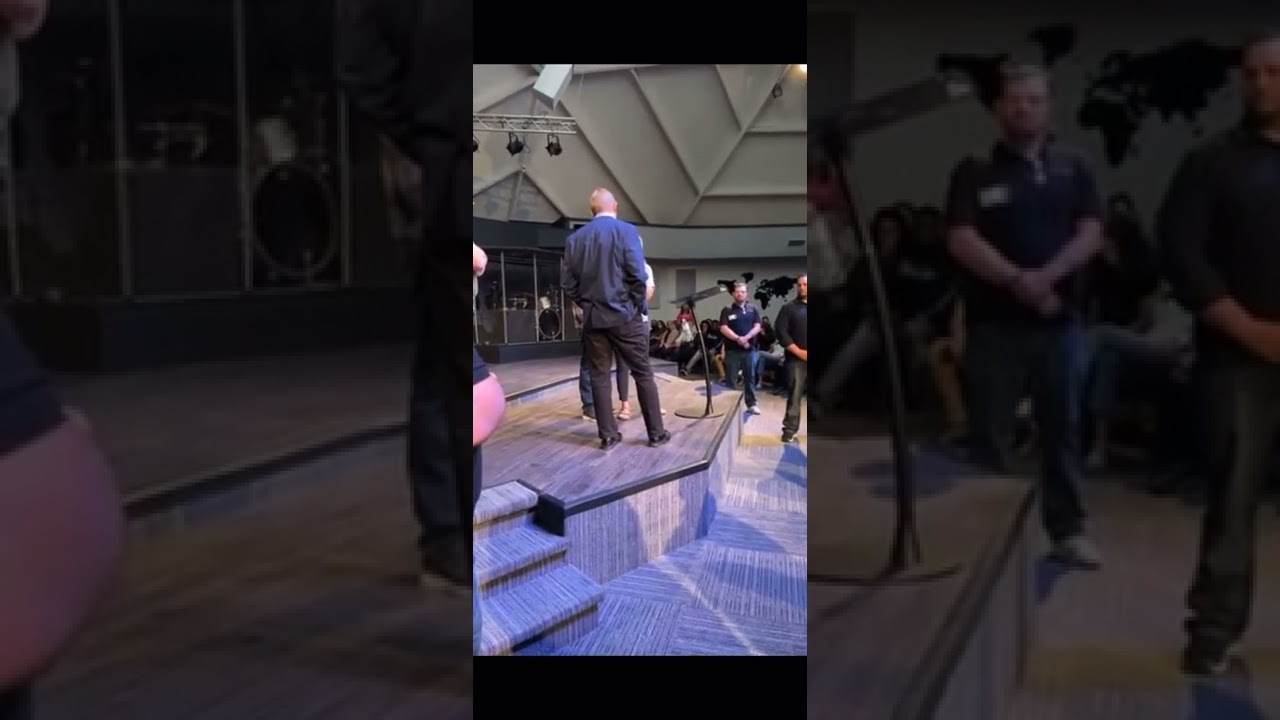
Now, I do not know the whole story of this church, this pastor, or this woman. But, I would argue this would be an example of a supposedly “godly man.” He did finally admit it before the congregation. This was New Life Christian Church, Pastor John Lowe II. It looks like he got away with it and will never be prosecuted.
Discuss which proverb in this session meant the most to you personally and why.
This is probably going to be overkill for this question, but this is how it shakes out.
Proverbs 25:24, “It is better to dwell in a corner of a housetop, than in a house shared with a contentious woman” and Proverbs 27:15-16 states, “A continual dripping on a very rainy day and a contentious woman are alike; whoever restrains her restrains the wind, and grasps oil with his right hand.” These are very true sayings and I would argue is the reality for many men in this world today. Whether their wives are embittered, have sour dispositions, are argumentative and contentious, or are actively or passive aggressively attempting to usurp the authority of their husband (Gen 3:16), or they have fallen prey to the mind virus of feminism or woke ideology, too many men are either not exercising their leadership role or are unable to because their wives have taken on the role of leader in the home. It is a sad commentary on society today.
Proverbs 26:11 says, “As a dog returns to his own vomit, so a fool repeats his folly.” This proverbs always has a special place in my heart, for it was quoted by Peter in 2 Peter 2:22 and this chapter and especially this verse was instrumental in ripping me out of the delusion of Buddhism and placing me in a God-centered reality where I could clearly hear the gospel and accept Christ as my Lord after believing that God raised him from the dead.
Proverbs 27:1 states, “Do not boast about tomorrow, For you do not know what a day may bring forth.” This is similar to what Jesus said in Matt 6:34. I’ve always found this to be a struggle for me as I am constantly planning and preparing for the future.
Proverbs 27:17 says, “As iron sharpens iron, so a man sharpens the countenance of his friend.” This, of course, is a very popular verse from Proverbs. It illustrates the reality of the church and her mystical purpose while we are on earth.
Proverbs 27:20 states, “Hades and destruction are not filled completely.” I always find it fascinating when I encounter someone (most people) who do not know about or accept the intermediate state, our imprisonment in Hades (torment or paradise) and our disposition there until the Judgment (or the resurrection and rapture). Too many people have swallowed the doctrine of the emptying out of Paradise (but not Torment) because of the single phrase in the single verse, “To proclaim liberty to the captives” (Luke 4:18; Isa 61:1-2). There is nothing written in context anywhere that speaks of Jesus “releasing” those who are in Paradise. He does tell the thief that “today you will be with Me in Paradise” (Lu 23:43). The fact that this proverb tells us that Hades is never going to filled would indicate that people are continually added to it. But, of course, the argument could be made that this only consists of the lost.
Proverbs 28:6 says, “Better is the poor who walks in his integrity than one perverse in his ways, though he be rich.” I have walked this kind of life for most of my adult years. I have not have a successful career, I have not made a lot of money. But, I have had a spiritual life that I still to this day cherish. I’ve been fortunate enough that God provided the means for me to be able to devote myself entirely to the study of the Bible, and now he is actively using that in ministry in many different ways. Integrity is the central theme of Proverbs.
Proverbs 28:9 states, “One who turns away his ear from hearing the law, even his prayer is an abomination.” This is a stark reality that is hard to hear for some, that if we will not listen to the message of the Bible, if we stubborning reject it, then our prayers are useless. That would mean those in the JW camp, those in the Mormon camp are unable to have effective prayer. Prayers do go unanswered.
Proverbs 29:15 says, “The rod and rebuke give wisdom, but a child left to himself brings shame to his mother” and Proverbs 29:17 states, “Correct your son, and he will give you rest; yes, he will give delight to your soul.” This is very true and a difficult task to execute in our given culture and socio-political climate today. No one has an appetite for correction. Not in school. Not our children. Not in the church. But the reality is clear: correction of a child will produce a well-mannered adult. We see the opposite all the time; in the children we interact with that are not corrected. In the adults of the Millennial and Gen Z generations. Even those of the wealthy and elite families of the world, whose children are out of control, even the adult ones. But, no one wants to be corrected. And, I think this has a lot to do with the final proverb listed.
Proverbs 29:18 says, “Where there is no vision, the people cast off restraint; but happy is he who keeps the law.” I heard this from Dave Severn years ago while listening to one of his Amway tapes. It was a lecture he titled, “Pigs don’t know pigs stink” and it really affected how I saw the world, and what it means for a society to crumble. Little did I know that I would witness it over the last 30 years of my life. But, our western society has done just this. They have had no vision, they have had no revelation in their lives. They have rejected God, rejected the Bible, and wonder why they have no restraint and why the are so unhappy and empty. I am grateful to my God for changing me, even against my will, so that I would have the revelation of his Word, and that I would forever has the thirst to pursue it and him.
How is God taking away the dross in your life?
Dross is technically the refuse of smelting metals. The NLT calls it “impurities.” I would argue this is anything that God cannot or chooses not to use in my life for his Glory. Those things have been removed from my life over the years. My desire to succeed in business and acquire wealth. My obsession with survival skills and wilderness survival. My fixation on women. My desire to murder and kill from a very young age. All of these things God has altogether taken from me or he has redirected them into ways in which he can receive the glory. My predilection to the macabre and murder and death he has redirected into books to reach the lost. My obsession with the opposite sex he has refocused toward my wife. My desire to found and run and succeed at a business he has re-channeled into the founding and running of a writing ministry. To remove my greediness for material gain, he has given me a minimalist heart.
God is doing a work in me, even when I would rather he not do it. I am amazed at this point in what he has done and what he is still doing.
What is required if you want to make sure that you can hear God?
1. We need to be reborn, transformed, by the Holy Spirit, to be baptized by the Holy Spirit, indwelled by him, and sealed for the day of redemption. If we do not have this, we are incapable of obeying God. But, a caveat: I would argue that even those who are ardently opposed to God and even those who discredit his existence, they can still hear God. If they could not, I could never have been saved.
2. We need to confess with our mouth that Jesus is Lord and believe in our heart that God raised him from the dead. This is the means by which we achieve #1.
3. We must willingly submit to the direction and guidance of the Holy Spirit in our lives. Otherwise we are simply kicking against the goads (Acts 26:14).
K-W-L Self Assessment: L- Describe what you LEARNED from this session.
Nothing to add.
Lecture 7
Discuss “hidden messages” and “dark sayings” found in the Bible. How are they useful? How are they hazardous?
Dark Sayings – πρόβλημα which means “anything thrown forward, projecting, riddle, ambiguous saying” and occurs only 10 times in the OT and is translated either riddle or problem. A hard question. It occurs 17 times in the Old Testament. Num 12:8, where the Lord is saying how he does not speak to Moses in dark sayings but face to face, plainly. Ps 78:2 is the other one, where it references Asaph stating, “I will open my mouth in a parable; I will utter dark sayings of old.”
Missler would connect this to Equal Distant Letter Sequences (EDLS) and other “macro-codes.” I would see some legitimacy in some of this but not in the bulk of it. I am optimistically skeptical and cautious. I have researched these in the past (the TORAH code) and it turned out to not be as cut and dried as it was presented. One that I do consider very significant is Genesis 5 and the gospel being tucked away into the definitions of the names in Hebrew. Of course, this is rejected out of hand by Dr. Heiser and he is a Hebrew scholar. I find this particular one creditable nonetheless.
Gematria is another form of these “hidden secrets” that Dr. Missler talks a lot about. It is a Kabbalistic method of interpreting the Hebrew scriptures by computing the numerical value of words, based on those of their constituent letters. He does this to compare the gospels to illustrate that each one of the books was written first. He breaks down the number of nouns, the number of adjectives, the number of consents, and the list goes on and on. I find it interesting but not mind altering.
The hidden secrets in the Bible that I prefer are decoding those things that we have been hidden for the diligent to find. Finding solutions to supposed contradictions in the biblical text. Determining a wide-spread type in or throughout the Scripture (i.e. Joseph as Christ, or the spiritual types in Jacob and Esau).
I also enjoy the greater philosophical ramifications that the Bible presents to us, and I very much enjoy socratic teaching and learning. I like to pump the depths of Scripture to excise from it everything that is truth, whatever rings true, such as the work of Sam Harris, Jordan Peterson, the Church Fathers, Josephus, the Eastern Fathers, the Monastic Fathers, and on the list goes. Theology and Philosophy are inextricably linked together for me. I cannot separate them. My philosophical work does certainly inform my theological work. Then my theological work informs and frames my right doctrine. This becomes my spiritual practices in life and the ethic and ethos in which I live by.
Give examples of riddles or enigmas found in the Scripture. How did Jesus use them?
We are told that Jesus used nothing but parables when speaking to the people (Mark 4:34). He asked the Pharisees, saying, “What do you think about the Christ? Whose Son is He?” They said to Him, “The Son of David.” He said to them, “How then does David in the Spirit call Him ‘Lord,’ saying: ‘The LORD said to my Lord, “Sit at My right hand, Till I make Your enemies Your footstool” ’? If David then calls Him ‘Lord,’ how is he his son?”” In my estimation, this is either Remez (allegorical significance, but it does not really contain any allegory), or Sod (containing a mystical or hidden meaning).
Likewise, Jesus said in John 6:54, “Whoever eats My flesh and drinks My blood has eternal life, and I will raise him up at the last day.” This, certainly, was not meant literally (Peshat). It was allegorical and possibly mystical in nature.
One that I like the most is Re 10:3-4 where John writes, “When he cried out, seven thunders uttered their voices.Now when the seven thunders uttered their voices, I was about to write; but I heard a voice from heaven saying to me, “Seal up the things which the seven thunders uttered, and do not write them.” I would argue this is certainly Peshat (literal), but it is also Sod (mystical) in the fact that we have no idea what John was referring to. We do not have nearly enough information to even make a guess. What/who are the seven thunders? What did they say? What is their function? Why did the voice from heaven tell John to seal up the words uttered by the 7 thunders? We have no answers to this. Additionally, this could possibly be Remez, or allegorical, and the 7 thunders could be some spiritual, extra-terrestrial, alternate dimensional being that we have no capacity to even comprehend (I refrain from exercising Remez unless there is a really good reason for it – it is explained this way in Scripture, or it is blatant, simply because there has been way too much abuse of Remez throughout church history).
What is the difference between the Eastern and Western mindset when it comes to prophecy? Give an example of each.
I would presume Dr. Missler here is speaking of the difference between the Hebrew mind and the Greek mind when it comes to prophecy. The Greek mind considers prophecy to be prediction and fulfillment, while the Hebrew mind considers it to be pattern. The Greek idea would be Paul’s prediction that the rapture will not occur until the falling away happens and the antichrist is revealed and sits in the holy of holies in the temple and declares himself to be God (abomination of desolation). This would be prediction, fulfillment. The Hebrew idea would be the use of the story of Abraham being instructed by God to take his son Isaac up on the mountain and sacrifice him. All the points along this story arc had to be fulfilled perfectly so that it would foreshadow what God himself would do in the first century when he sacrificed his own son on the cross (presumably, in that same place). This is prophecy by pattern or typology.
Now, if Dr. Missler is referencing the different predictive patterns between the Western Church and the Eastern Church, that is a little less clear. I know the Western Church (Roman Catholic, Protestant, etc) tend to predict using logic, reason, Peshat predominately, though they do use Remez and the protestants especially focus on Derash (Application). The Eastern Church, though, speaking primarily of the Eastern Orthodox, approach scripture and prophecy more from a hermeneutic that utilizes Sod over all other (maybe not over the literal). They leave room for the mystery of Christ, and do not attempt to explain everything using logic and reason, but are open to the movement of Christ in the life of the individual, through spiritual transformation and mystical manifestation.
What does the phrase “God arrives to be consumed” mean?
This is referring to Proverbs 30:1, “The words of Agur the son of Jakeh, his utterance. This man declared to Ithiel—to Ithiel and Ucal.” This is straightforward in the literal interpretation, but Dr. Missler uses the definitions of these names to claim either they have a second meaning or that they never should have been rendered as proper names but as descriptors. He claims that Ithiel means “God arrives or comes” and Ucal to mean “to be consumed.” So, he states that this means the Collector (of the hidden sayings), son of David, declared, “God has come to be devoured.”
I would say, this is provocative. It runs in the same vein as Genesis 5, as the definitions of the name, when put together, describe loosely the gospel of Jesus Christ. If Proverbs 30:1 is true in this interpretation, it has a hidden meaning here describing how God arrives on the earth, enters our dimensionality, and is “consumed” by judgment, so that others might be able to live (this last part is implied). Before I could accept this I would have to do more study on it (Acts 17:11).
Define wisdom and who is wisdom personified? Give biblical references to defend your answer.
It is argued in Proverbs and elsewhere that Jesus is Wisdom and especially that he is described in Prov 1:7; 9:10. I do see in 1 Cor 1:30 that Jesus “has become wisdom for us” but I don’t see in the proverbs passages that this is actually Jesus. I think, somehow, there is an entity that is known in the supernatural realm as “Wisdom.” She is feminine in nature, and she and all the statements about her in Proverbs and elsewhere are correct and accurate. Jesus has “embodied” wisdom; γίνομαι means “to acquire, experience a state.” So, it is not like our become, where the substance essential to the quality of the identity has been transformed (i.e. a rabbit becomes a turtle). Instead, this word would indicate that Jesus took on the additional qualities of Wisdom and he did it for us (or it was done from our perspective, that Jesus became this for us, so that we might apprehend it, but that no actual acquisition was taken). Paul became all things to all men so that he might save some. This does not mean he became a Galatian when speaking to the Galatians, but he behaved and acted as they did, just as he would the Jews (though I would argue not to the extreme that Peter did).
Explain how Jesus uses Psalm 110 in His argument with the Pharisees. What was the end result of His teaching?
This has already been elaborated on in a previous question above. The end result was that no one dared ask him any more questions because they either were confounded by his wisdom and knowledge of the Scripture, or they were perplexed by him and confused and did not understand what he was talking about.
K-W-L Self Assessment: L- Describe what you LEARNED from this session.Xxxx
I have nothing else to share.
Lecture 8
How does the woman, profiled in this chapter, fit today’s society? What are the practical applications for us? Do you know many? Any? Do you know any men that deserve one?
The Proverbs 31 woman is oft discussed among Christians today. This woman is sought after but rarely found. Especially so in our current generation and age. We are told her worth is highly priced. We are told that her husband trusts her completely and that he will never miss out on gain because of her. He receives only good from her because she is willing to work with her hands, is industrious. She rises early and goes to bed late, she is entrepreneurial, she provides for her family, prepares their meals, is intentionally strong, and has a healthy view of her own work. She is gracious and merciful to others and her family is well prepared for every possibility. Partly because of her, her husband has a good reputation. She watches over her family, and is anything but idle. Her children and husband both have a good testimony of her and she fears the Lord more than she desires beauty and charm.
The immoral woman, on the other hand, flatters with words, is wondrous, forsaking her companion, and her house leads to death, her path to the dead. None who follow after her will return from her snare (Pr 2:16-19).
In this last chapter of Proverbs, Solomon was instructing his young sons, warning them to guard against the seductress, against the adulterous, and the prostitute. He started out well, and in a great position with God, but he ultimately needed in apostasy. He did not finish the race well. He mired himself or allowed himself to be mired in pagan worship, tempted by the women he married. He had 1000 wives to be exact, unable, apparently, to live without the comforts and companionship of women. But they drew him away from God and he did not take his own advice.
How does this woman fit into society today? I would argue that she does not. Most modern women have been taken by the feminist ideology, if not the woke culture. They are hell bent on usurping the authority of their husbands, despite this being part of the curse (Ge 3:16). Women have been deceived again (1 Tim 2:14), that they can live their lives without marriage, without a husband, with out children, that they can pursue school, career, and that all the rest of it can and will come later. Unfortunately, what many women have found is as they reach middle age, there are no men to marry. They are passed their childbearing years, and most of the men who they would desire are already typically married, have gone through their first (or second) divorce and are now more prone to marry younger (sometimes much younger) because they may want to restart with new children.
The practical applications is: we need to not only throw ourselves at God’s mercy and ask him for a spouse (if we, indeed, are called to marriage. Otherwise, I would say we should avoid marriage at all costs). Then we need to be keen on associating with the right groups of people. Do not expect that if you lay down with dogs that you will find a wonderful wife living among them. They will be dogs. Sadly, our current generation no longer values marriage, children, family, or the pursuit of morality in any real sense. Young women who turn of age today have great difficulty in finding a good mate, and the young women are, likewise, finding it difficult. They say there is simply no one available, no one who wants to marry, no one who wants a family, and most are consumed by their devices, by drugs, by pornography, by the current culture that praises independence and iniquity.
I know several godly women, but this is for two reasons. After my first marriage ended, I resolved in myself that I would never marry again. But, after 13 years, God told me that I needed to prepare for a future wife. Three months later I met her after I put a profile online that stated I was not interested in “dating” but that God had told me this and that I was focused solely on a godly marriage. I then listed all the qualifications and characteristics that I desired in a wife. Of course, my intention was that I would never find a biblical woman who actually met this qualifications, in hopes that God will relent and let me return to my single life in the woods. But, within a week, a woman reached out to me stating that she was looking for the same thing I was. My wife and I were an instant connection, built on Christ first, built on communication first. We know we were drawn together for the glory of God, that our marriage is focused on raising orphans and caring for widows, and for ministry to the church and to the world.
I know a few other godly women: our pastor’s wife, an elder’s wife, a deacon’s wife, come to mind. But, this is because we associate with people who are also people of the book. In normal society, I would argue there are no godly women anymore.
Am I deserving of my wife? No. But, God has determined that I should have a wife and that she should be the woman he gave me. In this I am wholly grateful and humbled. I know he has called us to ministry and I know those things could not would not get done without her being in my life. She is my mainstay in a world that is fallen and absurd. May it be his will in all things.
Discuss the proverb(s) that surprised you the most.
I was intrigued by the concept of wisdom in Proverbs. I will set aside the idea that Jesus is wisdom personified, as I’m not completely convinced this is the case (1 Cor 1:30). But, Wisdom is presented as feminine, with the word occurring 45 times, meaning generally “knowledgeable, experienced, efficient.” It intimates practical sagacity, mental acumen, functional skill, moral, upright living which stems from a right relationship with the maker.
It states in Proverbs 9:10, “the fear of the Lord is the beginning of wisdom” and this is bound up in the same statement, “the fear of the Lord is the beginning of knowledge” (Proverbs 1:7). This means to be wise biblically is to have a proper relationship with God.
As James tells us, there are two kinds of wisdom: that from this world and that which is from above (James 3:13-18; 1 Co 2:1-8). Jesus is the wisdom of God (Pr 8:22-31; 1 Co 1:24, 30; Co 2:3), the embodiment of the text of Proverbs 8. But, the word in 1 Co 1:30 is γίνομαι which means “to come to acquire or experience a state.” So, in this sense, Jesus “became” wisdom either “for us” in the sense that he took on, put on, the additional qualities of Wisdom, or it is that Jesus appears to have “become wisdom” for us. I would argue there is an actual supernatural entity known as Wisdom and that she is feminine in nature and sex and she was an integral part of the process of creation.
What ingredients are needed for a happy home?
First and foremost, a happy home (I would argue that there is no such thing as happiness, but I would substitute here “fulfilled” or “purposed” or “contented” or “driven” home or “godly” home) requries both the husband and wife to each have a healthy relationship with God. This relationship should have formed outside of their relationship for each one, given the state of our fallen culture today (there is no elevating risk entirely but you can reduce or manage that risk), and they should be purposed with a mandate by God that their marriage is to serve a purpose beyond that which is common, such as to alleviate loneliness, or selfish ambitions of procreating or especially sexual pleasure.
Secondly, it requires the two to embrace and fulfill their biblical goals in the marriage. I am not referring to cultural norms or standards (i.e. the husband works and the wife stay home, or the husband builds things and the wife teaches the children), but that they embrace the biblical mandates of their genders: husband are to love their wives as Christ loved the church and wives are to be obedient and not in rebellion to their husbands or to their gender.
Third, this family unit, when children are entrusted to it, need to be willing to implement consistent discipline and instruction for the long term. Raising children is a call to discipleship, for no one is brought into this world or born into the faith of Christianity. We must hear the gospel, and then we must respond to it, given the draw if there is one. Fathers and mothers serve a crucial role in this process, but must be sure not to indoctrinate and, instead, leave room for the work of the Holy Spirit.
Make a list of what Proverbs says about laziness.
Proverbs has nothing good to say about laziness, whether it involves a man or a woman. See Prov 6:6-11; 10:4, 26; 13:4; 15:19; 18:9; 19:15, 24; 20:4, 13; 21:25; 22:13;
24:30-34; 26:13-16.
In Proverbs 12:24 it says, “The hand of the diligent will rule, but the lazy man will be put to forced labor” and verse 27 states, “The lazy man does not roast what he took in hunting, but diligence is man’s precious possession.”
What is the key verse in Proverbs? In your own words describe what it means to fear or adore the Lord.
The key verse in the entire book of Proverbs (and, by extension, the entire Bible) is Proverbs 1:7, “Ἀρχὴ σοφίας φόβος θεοῦ” or “the fear of the Lord is the beginning of knoweldge“ and Proverbs 9:10, “ἀρχὴ σοφίας φόβος Κυρίου,” or “the fear of the Lord is the beginning of knowledge.” Oddly, the word σοφίας is used in both verses, so it should be rendered “knowledge” or “wisdom” but not both. Of the 52 times this Greek word appears in the Bible, it is always translated “wisdom.” (In the Logos word study it shows that one verse, Lu 1:17 (φρόνησις) should be rendered “understanding” but in the actual NKJV text it is still wisdom). But, it is important to note, that in the Hebrew there is a distinction between “Daat” and “hakmah.” But, the definitions at least seem to reminder them as synonymous.
So, this verse(s) is/are stating that, in order to have any kind of genuine knowledge, or to have any kind of genuine wisdom, one must first have a right understanding and relationship with God.
Why does God hate pride? What does His hate list look like? Which one of these do you struggle the most with?
He hates pride because it always causes a fall (Pr 16:18). It is from the flesh. It was the first ever sin (Isaiah 14:13-14) [I’m not sure how we know this with any certainty. It would be more accurate to say it was the first sin in this iteration. We do not know what came before the creation of the world, nor do we know when the events of Isaiah 14:13-14 took place (before or after creation)]. Pride engenders and empowers and alights, enflames the flesh. It is idolatry of the self (Psalm 10:2; Pro 8:13; 11:2; 13:10; 14:3; 21:24) .
God’s hate list (Pr 6:16-19) is:
A proud look
A lying tongue
Hands that shed innocent blood
Heart that devises wicked imaginations
Fee swiftly running toward mischief
A false witness that speaks lies
He that sows discord among his brothers
I would argue that in some instances I would have or could have had a struggle with having hands that shed innocent blood. If it had not been for God saving me when he did I probably would have at some point ended up hunting people.
I also wonder if my ministry “work” does not cause more harm than good. I have thought this for many years, as the evidence seemed to point to it. But now, there seems to be benefit from my teaching and from all the studying I have done over the years. Even my writing seems to be on the verse of being launched into the publish sphere for peoples betterment.
K-W-L Self Assessment: L- Describe what you LEARNED from this session.
Nothing to add.
Conclusions
This was a good study overall. I’m still working through Proverbs in our Sunday school class. I imagine it will take another year to finish. We are managing half a chapter a week, and there are 52 weeks in a year. We are in chapter 14 right now. There are approximately 34 weeks remaining, and we need to probably add 10 more to that for when I’m away or when we go slower than expected. That would be 44 weeks so just shy of a year.
I would certainly recommend this course to anyone who wants to find out more about this book and Wisdom Literature of the Bible overall.
Until my next assignment….

Please consider supporting my writing, my unschooled studies, and my hermitic lifestyle by purchasing one or more of my books. I’m not supported by academia or have a lucrative corporate job – I’m just a mystical modern-day hermit trying to live out the life I believe God has called me to. So, any support you choose to provide is GREATLY appreciated.
Excerpt from Our Daughter:
“Okay, mom,” Randy said.
“You behave yourself and be nice. You’re lucky to have company while you wait for the doctors.”
The woman turned and started back the way she came.
“The nurse said it would be twenty or thirty more minutes, so we’ll eat quick and be back up here before they take you in, okay?”
“Okay, mom.”
“Sorry for him,” the woman said to Katie as she walked by.
“He’s funny.”
Katie grinned.
As the woman left, Katie noticed the boy moving around again on the bed. Before she realized what was happening, the tiny lump disappeared and she could hear the faint sound of bare hands and feet on the tile floor.
He was low crawling under the beds toward her.
A moment later, Randy popped his head out from under the nearest hospital bed, craning his neck around to look up at her.
“Hello, there,” Katie said.
Randy disappeared back under the bed, the bed sheet draping down almost to the floor. Katie could still see three little fingers pressed to the tile.
“What are you here for?” Katie asked, readjusting her seat in the chair, trying to get the ache in her chest to lessen.
For whatever reason, the wheelchair was really uncomfortable.
“Why are – “
Randy’s voice trailed off for a moment as he looked around.
“Why are you here?”
“I’m getting my leg fixed,” Katie said. “See?”
Randy poked his head back out from under the bed and looked at the leg she was pointing to.
“What’s wrong with it?”
“The doctor said it’s broken,” Katie said. “Shattered.”
“Ouch.”
“Yeah. Ouch.”
“Can you feel it?” Randy asked, able to stay out from his hiding place.
“I can feel it, but it’s not too bad,” Katie said, then tapped the IV in her arm. “This thing is giving me medicine of some kind for the pain. At least that’s what the nurses said.”
“Why are you – “
Randy stopped mid-sentence.
He scooted out from under the bed entirely and slowly crept over to er on all fours.
“What are you, some kind of spider?” Katie asked, giggling a little.
“What are you?” Randy echoed.
He was now only about a foot away from her chair and sat there, his legs folded up under him, gawking up at her.
“What are you staring at me for?”
“I’ve never – “
Randy put out a hesitant hand and ever so gently touched her arm.
“Are you some kind of ghost?”
He looked around again.
“Are you – ”
He leaned in, talking in a whisper.
“Are you dead?”
A nurse came around the corner and stopped abruptly, spotting the empty bed in the far corner where Randy should have been.
“Randy Andrews,” the nurse said, her hands now on her hips. “You get right back into the bed and you stop playing around, please. They are ready for you in surgery.”
Katie watched as Randy scrambled on all fours under the beds and back up onto his, pulling the sheet back over top of himself again.
She started to ask him about his question, but couldn’t get the words out before his parents appeared at the door.
Katie sat there quietly, watching Randy stare back at her from under his sheet. She glanced over at his parents and the nurse, noticed Randy’s dad had no hair on the top of his head.
Are you dead?
What kind of question was that?
The snap of the wheel locks being disengaged on Randy’s hospital bed jarred Katie out of the confusion she was in.
The doctor she’d first seen was now at the door, waiting for Randy.
He was his surgeon.
They wheeled Randy out of the room, his parents following right behind, disappearing to the left, heading for his operating room.
The pre-op room was empty again.
Dead.
Are you dead?
What kind of crazy question was that?
The nurse came back through the double doors.
“It won’t be long now,” she said.
“Okay.”
Katie tried not to think about the dull ache growing just behind her sternum.
The nurse disappeared around the corner as Katie watched the double doors to the operating rooms slowly shut.
Buy my book Our Daughter and begin the adventure of a lifetime, as you uncover the mysteries behind Katie Cadora’s new life after the horrible accident that stole her mother away from her. Will she find sure footing again? Will the pain ever stop? Will she discover the secrets her new foster family are keeping from her? Is the boy’s question right? Is Katie Cadora actually dead?
Click here and grab your copy today and jump into this Witch Gnostic Heresy trilogy with both feet!
But, trust me when I tell you, there are deceivers in our midsts! Get started in this bone chilling suspense novel right away and find out why….sometimes….you’re just better off DEAD!

What do you think?