


The next course I selected as part of my Unschooled Master of Theology program was the KI course, Genesis part 2, which covers the second half of the Book of Genesis. Here are the Discussion Questions for the entire course along with my responses.
As a reminder, you can find all of my course assignments for the uThM here.
So, let’s get started….
What Do I Already Know?
I just reviewed my notes from the first course of Genesis part 1. It was eye opening. First and foremost, I do not know if I will now have the leisure time I had available back when I finished that first course. The notes and answers to the discussion questions were quite elaborate and detailed. I’m certain it took several weeks of undivided focus. But, I do have several hours each morning and there is really no rush.
About Genesis part 2. It covers chapters 9-50. There are many accounts in this portion of Genesis. The post-flood world, Tower of Babel, the account of Abraham, his son Isaac, his son Jacob, then the story of Joseph and the family finally all being reunited in that foreign land.
I know it is said that they went down to Egypt as a family but left as a nation. Likewise, Joseph is an important type for Jesus, the Messiah to come.
Abraham is the foundation upon which the age of grace is built. It was by faith that Abraham was accounted for righteousness, because he believed. In this, then, we see that Abraham was saved, yet, he was not necessarily part of the church, the mystery of God. So there are different kinds of saved groups in the Bible: OT saints, NT saints, and Tribulational saints. Then there is also the distinct group known as the Jewish people, which, according to Ezekiel 37, will at some point experience a corporate resurrection and will then, at the last moment before their destruction against Satan, be saved, they will see Jesus who saves them, they will see clearly who he is and what they have done, and they will repent, and they will mourn, and God will have mercy on them and will save them by grace just as we were and are being saved by grace through faith.
So then there will be a population of multiple peoples in the new heavens and the new earth and the supernatural realm. It is unclear who will be where or where they will be. Earth? On another planet? In another part of the galaxies or universe? In the supernatural realm (other dimensionality)? It simply is unclear and not enough information is provided.
But, Genesis is a collection of stories about individuals in all their faults and idiosyncrasies and a single story about a family that moves from their origin story into the beginning of their 6000+ year destiny as the example. The example of what not to do. The example of how we should be with God. How we should become more than we can possibly become on our own efforts. Genesis, along with the rest of Scripture, according to Paul, has become our lesson, our instructor, our teacher, our tutor (Ga 3:24-25).
It is the beginning of instruction for the fallen human race. It is our origin story. It is paired with John 1:1, “in the beginning…” It began what ends in Revelation: our redemption story and the culmination of our being revealed as sons of God and will step into whatever awaits us in eternity.
What Do I Want to Learn?
I would like to get a clearer picture of the entire book, from Gen 1 – 50. I would also like to know of the different interpretative points throughout the book: what sections should be literal, what should be p’shat, remez, d’rash and sod. Because I am not teaching this course any time soon, I will be able to complete this second half just for the sheer enjoyment of it.

Lecture 13
What is your opinion about capital punishment? Is it appropriate today? Does the Law of Christ abolish this practice?
We find the prohibition to murder in Ex 20:13 and capital punishment as the demanded consequence in Gen 9:4-7; Ex 21:12, 14-17; 22:18-19; 32:27-28; Lev 24:17. It is the concept of “blood for blood,” the concept of lex talionis, the Law of Retaliation. God demands this expressly “for in the image of God he made him.” It was not simply a law of man or encoded only in the Law of Moses. It originates far back in the beginning, during the first era of human government, between Noah subsequent the flood to the dispersion at the Tower of Babel.
The argument can be made that since Jesus did not come to do away with the law (of Moses) but to fulfill it (Matt 5:17), then capital punishment would still be enacted today, since Jesus’ ministry and the Law of Christ would not change its enforcement. There would also, though, be an argument against the Christian, who is entered into the body of Christ and supposed to be bound by the Law of Christ (which is stricter than the Law of Moses), being involved in the affairs of the state, being he is a sojourner and no longer a citizen of earthly systems, but a citizen of heaven (which is to come). We, in the Law of Christ, have a prohibition against even anger with our brother, let alone murder. And we are called “out of” (2 Co 6:17) and to be separate from the world. Likewise, we are not to participate in retribution as described in Ro 12:19; He 10:30.
We do see the judgment of the secular government being instituted and maintained by God, though, in Ro 13:1-7. Even the worst forms of government are approved and installed and sustained by our Father. Their actions are either condoned or condemned by him. But, nonetheless, they are, while enforce, the Lord’s arm.
Personally, I think the eroding of the criminal justice system and the removal of the death penalty has made crime worse. Then again, there is the belief that we should be attempting to rehabilitate people and separate them as individuals from their crimes. It is entirely, at least for the Christian in the age of grace, based on personal conviction. Some are fine and at ease with killing animals and the carrying of weaponry and even killing another person in self-defense (or even in aggression). Then there are others whose conscience does not allow them to even kill a bug let alone another human being.
I, personally, lean more toward allowing God his place, but do see and understand the need for the death penalty. It is not something that was lifted at Christ for the world. He had nothing to do with the system of things that were instituted at the fall or after the flood. He came to begin to draw people to himself, and to build up a kingdom from among the masses. His kingdom was not of this earth, otherwise, as he stated, his disciples would have rose up and fought (John 18:36). I am personally bound by Ro 13:1-7 and Matt 6:14; Ro 12:20 and the law of Christ, to love. To forgive.
Then again, I would find within me the instinct to arm myself and my family, given the current state of the world and specifically the prevailing cultural, social, and economic instability in the United States, certain that I would have no qualms with defending myself or my family if pushed to that point (Lu 22:36; Mat. 10:22–25).
Should grape juice be substituted for wine during communion? Defend your answer.
There are many intimations in the Bible toward consuming alcohol (for medical purposes), such as Judges 9:13; Ps 104:15; Pr 31:6. This would rule out the argument for a lifestyle of forced prohibition by the church authority in any form. Drinking wine or alcohol is not prohibited anywhere in the Bible, only the lack of moderation in its pursuit (Jn 2:10;1 Tim 5:23). Intoxication tends to lead to sin, and to the loss of control (Gen 19:33), Ahasuerus (Est 1:10, 11), Belshazzar (Dan 5:1-6).
Then again, I would not be comfortable with the service of actual wine during the service, for my own personal preference and for the sake of those who do have addiction issues with alcohol. We are to consider others before ourselves, and I believe doing this would serve as more of a stumbling block in our day and age than a help.
Cite two places in the Bible that a “bow” is a token of a covenant. How does this relate to Israel?
In Genesis 9:8-15 we find the rainbow being used as a sign of peace between God and his creation. It was a promise made by God that he will never destroy the earth (or those living on it) again by water. It has only in recent times been misappropriated by the progressive left for their perverse purposes.
Likewise, the antichrist is pictured Re 6:2 as having a bow. There are also mentions of it in Re 4:3 and 10:1.
Where is the United States represented in Bible prophecy? Why has America escaped the judgment of God to date?
This is an interesting concept that I’ve dabbled in over the years. On the one hand, most would agree that the United States is not really pictured in the Bible or in Bible prophecy. This leads to the extrapolation that the United States will not exist as a nation or an economic or military or cultural force when the end times comes. This is a fine presumption and we can see, especially given our current economic and military and governmental corruption how we could be quickly dispatched or driven back to the Stone Age, etc.
But, then there are others like Irvin Baxter and other televangelist hucksters who would argue that America is found rife in Bible prophecy using allegory and symbolism.
Personally, I do not see America in the literal prophecies of the Bible. There may be a case for allegorical or Sod (hidden secrets) of the Bible. But, my issue with America not being in the Bible and with it being presumably in the Bible in code or allegory is to presume that we know the beginning from the end. We do not. Only God knows the time or hour of Jesus’ return (Matt 24:36). It could be any day, any moment. It could be another 1000 years still before we reach the culmination of all things. It is presumptuous of us to assume that the United States is anything other than a blimp on the screen of human history. The Roman Empire lasted for 1000 years. The US has survived not even 250 and is already coming apart at the seams and its systems of government beyond corruption with an elite ruling class and the masses without power or voice.
Why has America being spared judgment by God? Two-fold possibilities. 1. America is being protected because of her protection she provides Israel. Once this is finally removed, our protection will be removed and then we will be judged. 2. We are gathering up for the day of judgment our condemnation as a perverse and wicked nation.
There are a lot of great things that still occur in America. We have freedom of religion (not sure if this is a help or a hinderance to the Holy Spirit). We have freedom of assembly. We have freedom of information (presumably not disinformation). But, a time will certainly come (maybe not) where America will be no more and a new power will take over the earth. There is the belief that global governance is making its way west, having originated in the Middle East, then moving to Rome, then to Europe, the the US. The 21st century is thought to be the Asian Century with China taking the lead in global power and governance. Then it will move again to the Middle East, taking up residence finally in Babylon.
This all will take a great deal of time, or it might happen quite quickly, within just a few hundred years. But we will all certainly be long gone (unless they defeat the presumption of death or inhibit the aging process). Not only this, but the third temple must be rebuilt, if the antichrist is to step into the holy of holies and sit on the throne of God and declare himself God.
We can see through human history that we live in a much different culture and time than most of those who have gone before us. Life just a few hundred years ago was radically foreign to today. It would not be a stretch to find in 200, 300, 500 years, an entirely different earthen system, different governments, different cultures, different social systems on earth. There might, as the postmillennialists hoped, a time where the church does evangelize the entire world and brings about a theocracy that isn’t an abomination. Then again, there might just as easily be a moment in which our enemies destroy America with a single nuclear warhead detonated over our skies and causes an electromagnetic pulse that sends us back 100+ years to where we 98% of Americans die from starvation and disease and the remaining 2% relive various versions of the Stone Age again.
History is abound with accounts of current events being applied to Biblical prophecy that remain presumably unfulfilled. This is a tendency of the modern, western Christian and it detracts more than it informs. Prophecy was never intended to predict, it was always intended to be used to teach in retrospect. It points to the messiah. It authenticates the message of the Bible after the fact. We are not to interpret the Bible based on the evening news.
Give a biblical argument to defend the statement that Jerusalem is the City of God.
We find Jerusalem always being protected by God. It is the glory of God. He gave that location as an inheritance to the Jewish people for a perpetual inheritance. One that would have no end.
This new city is a return to the Garden of Eden (Re 22:2-5). And it has always been protected by God.
Give a biblical argument to defend the statement that Babylon is the City of Man (or Satan’s).
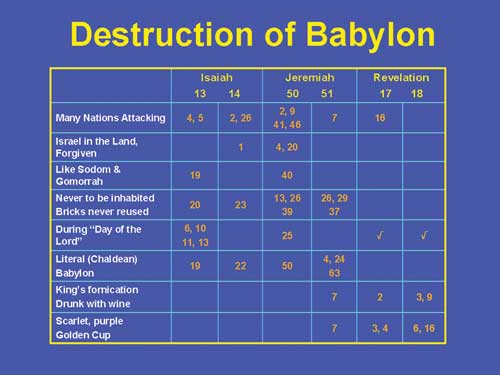
Babylon was the original seat of authority on earth, with the implementation of Babel, which God ultimately destroyed. It is seen in Revelation and elsewhere how this city must be judged and destroyed (Is 13:19-20; Jeremiah 50:39-40; RE 17-18). It cannot be argued that this has already taken place, since it is currently occupied today. The fall of Babylon in 539 B.C. was without a battle, and yet is presently being rebuilt.
K-W-L Self Assessment: L- Describe what youe LEARNED from this session.
I found it interesting that there were 70 nations from Noah [Ham, Shem, Japheth] (Ge 10). But Missler pointed out that it was 70 families that entered Egypt, but it was not, it was 70 people from one family group (Ge 46:10). The boundaries were established (Deut 32:7-8). I find it riotous that Stephen in Acts 7:14 is clearly quoting from the LXX when he states there were 75 people in the family to enter into Egypt instead of the typical 70.
Dr. Missler stated that the Tower of Babel was not an ordinary structure but was an astrological temple and this was where the zodiac was first corrupted. I’m not certain how he knows this. There was no evidence in support of it given. I can only assume it is speculation unless more data is provided.

Lecture 14
What does the following phrase mean, “that we may reach up unto heaven”? In what ways are people today trying to do this very thing?
In Genesis 9:1, God again, after the flood, commanded the human race to multiple and spread throughout the earth and fill it. It was an echo of Genesis 1:28, where Adam and Eve were originally commanded to “fill the earth and subdue it.” But, instead, the post-flood humans established themselves at Babel, built a city, and also a tower to “reach the heavens.”
Its a fascinating observation made in the lecture that the inherent nature of city and metropolitan living is evil. Most modern cities do prove this out, with the larger the city proving to generate more sin. Living in rural America is very different than living in the city (though this is academic for me, for I’ve never actually lived in a city as my main residence).
This phrase has more to do with the stars than the supernatural dimension we call heaven. Rather than trying to transfer from our physical dimension to the spiritual or supernatural one, the people of Babel who, the text reads more accurately, built a tower whose “top is in the heavens” were most likely more concerned with astrological examination and exploration.
Dr. Missler claims in the lecture that this tower was the roots of the later established Babylonian religion and it is a perversion of the Jewish Mazzaroth, which eventually was transferred to Rome and became known as the Zodiac. Originally, this symbolic symboling in the stars displayed God’s plan of redemption (Job 38:12), but was perverted at the tower or temple of Babel.
What do Isaiah 13 and Jeremiah 50 have to do with modern day Iraq today?
The first world dictator was considered to be Nimrod, and his group moved east, to the plain of shiner, or Bab-El, where they built their tower to heaven (an astrological temple) and established their city. This has grown in juxtaposition to Jerusalem throughout history, Babylon serving as the city of Man while Jerusalem, the city of God.
In 539 BC, Cyrus took Babylon and it fell without a fight. But, the Bible has made two predictions concerning Babylon that this fall does not fit. In Isaiah 13:19-20 we are told that Babylon will be overthrown like God did to Sodom an Gomorrah. That no one will ever inhabit its walls again, no one will pitch their tents there, no one run their sheep there. In Jeremiah 50:39-40, we are told that wild beasts and owls will dwell there, and will never be inhabited again.
Of course, the issue is that Babylon has been inhabited throughout human history and is still inhabited today. Saddam Hussein spend a fortune in his work to rebuild the city palaces. And the descriptions of Babylon in Re 17-18 indicate that there will be a major shift in the future from power residing in New York, Rome, and Paris to the Mesopotamia city seat, just so the prophecies in the Bible can be fulfilled with her destruction.
Would the United Nations have an interest in literal Babylon being restored? Why?
The UN would actually like to move out of New York due to the cramped conditions and the prohibited price of real estate. This would also juxtapose world influence against Jerusalem, with the UN being in Babylon.
Would the Shiites or the Roman Catholic Church have an interest in literal Babylon being restored? Why?
The Shiites do desire to establish Babylon as a capital in opposition to Jerusalem. Likewise, the Roman Catholics would want the re-establishment of Babylon to solidify its plan of redemption: that is including the Muslim contingent, for the will also be saved along with all Catholics.
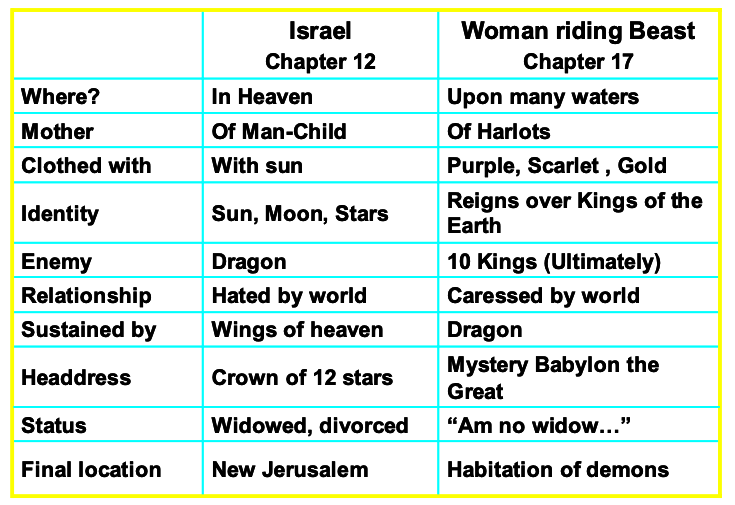
In Revelation 17-18, we see a connection between Mystery Babylon and the Roman Catholic Church, but it is unclear just what that connection is. There is, of course, much evidence even today pointing to the paganism of Babylon being reflected in Roman Catholic practices. This is outlined in detail in Dave Hunt’s book, “A Woman Rides the Beast” and also the KI briefing packet: “Kingdom of Blood.”
It is fascinating that the history of the church, both Catholic and Protestant, is awash in the blood of the saints via self-inflicted damage. Whenever Christians ascend to power, they become the worst of tyrants, an abomination, and a dirge. Attack on home bible fellowships moved quickly to burnings at the stake, excommunications, etc. European history is framed by the struggle of temporal power between the Vatican and the kings of the earth. Dr. Missler stated, in one afternoon, one Pope murdered more Christians than all the Roman emperors put together. This gives more context for the saying, “drunk on the blood of the saints.”
The religion of Babylon left at its destruction by Cyrus in 539 BC, but that religion only moved to the capital of Persia, then was overtaken by the Greeks, then by the Romans. It ended up in the religion of the Vatican and pagan Rome is the transplanted religious system of Babylon, just with Latin names.
When the Church married the world in 400 AD under Constantine, and Christianity was enforced as the state religion under Theodosius. This caused the loss of the concept of regeneration, and all the pagan festivals and religious ceremonies were transferred into orthodoxy and given Christianized names.
This system will eventually keep moving westward, originating out of the Middle East and ultimately returning to it. The great whore of RE 17-18-19 is the Babylonian religion. Babylon will become a center for religion and trading. It may one day eclipse Rome, Paris, and New York. The 20th century belonged to the American seat of power. Before that, Europe. The 21st century is thought to be the Asian century, with China taking the lead in global governance and world domination. It will shift again to the Middle East, and ultimately to Babylon.
What is the thread that connects the Church of Thyatira, the parable of the Woman and the Leaven (in Matthew 13) and Babylon?
This connecting thread is found in in Zechariah 5:5-6, which states that two women like creatures with wings of a stork (meaning sinful), carry the Harlot back to the land of Shiner, and the basket is returned to its base. This means that Babylon would be both a supercity of trade and a center for religion, which the Vatican religion is simply Babylonian religion with Latin names.
The seven letters in Revelation parallel the seven parables in Matthew 13. The fourth parable is the one of the woman who hid leaven in 3 measures of meal. Leven is always a type of sin or falsehood and three measures of meal is always considered the fellowship offering. Thyatira is said to tolerate the woman Jezebel.
What did the tower represent? What were the zodiac connections? Is there a Jewish “zodiac?” If so, what is its name and its purpose?
As already discussed, God desired for people to disperse over the entire world and fill it. The tower and its accompanying city, stood as direct rebellion of this command. The people all spoke the same language, they had no limitations in their unification and abilities. They were seeking to unravel the mysteries of the sky and the stars, building a tower or a temple in which stood in the heavens so they could examine the universe. These people were attempting to pervert the Mazzaroth, or, in their searching perverted it, later producing the Zodiac. This was all under the leadership of Nimrod, the first world ruler. Originally, the Mazzaroth served as a sign of the gospel hidden in the stars. But, this has all been lost in the modern era.
K-W-L Self Assessment: L- Describe what you LEARNED from this session.
I wonder how much Abraham was Jewish in his life. He was circumcised. He has always been considered the Father of the Jewish people. Yet, he did not have the law. He did, apparently, have the Sabbath. We know, even if not a Jew, he was approved by God, and it is through Abraham that all of us have access to the promise of God.
Another fascinating note in the lecture is how, despite the churches’ rejection of evolution (not so much today, but…), we still reside and operate often within an evolutionary or materialistic, atheistic worldview. While rejecting macroevolution, we at the same time consider humanity as getting better and better with the passage of time. The issue with this is genetic and temporal evidence begs to differ. We see more diseases today than in the past, if for no other reason than we are living longer than those in the recent past. Copies of copies proves that defects are introduced into the code. Previously, first cousins could easily marry with no issue. In Abraham’s day, a man could marry his sister if he were so inclined and there would be no issues. This is outlawed today if for no other reason than the risk of harmful birth defects. Those of the past did not have our technology (this is disputed in the book We are not the First), but they were much more intelligent than us, they lived a great deal longer (hundreds of years rather than being caped at 100 years).
It is a very important point concerning prophecy, that it is intended not to predict but to confirm. It is for the glory of God, not for man to predict the future. We are to find out what the Bible says and then see what happens (exegesis) rather than find out what is happening and try to force that onto the Bible (eisegesis). The latter is a reading into the text what you want it to say, while the former is the proper determining of what the text actually says.
Lecture 15
Why does Dr. Missler state that Genesis 12:2-3 is the primary hope for America? How have these verses impacted your life?
In this verse, God states, “I will make you a great nation; I will bless you And make your name great; And you shall be a blessing. I will bless those who bless you, And I will curse him who curses you; And in you all the families of the earth shall be blessed.” This means that:
1. They will be made into a great nation.
2. They are blessed by God.
3. Those who bless Israel will be blessed.
4. Those who curse Israel will be cursed.
5. In Abraham everyone will be blessed.
America has historically supported and provided aid to Israel. Since her re-establishment in 1948, we have sided with Israel by default, against the majority of the rest of the world in declaring Israel’s right to exist.
But, for America, the handwriting is proverbially on the wall. By every estimation, we should be considered condemned by God, with our culture and behavior having been weighed in the balances, and found wanting. Yet, America continues to hold on. Yes, there are signs over the last 20 years and especially the last 10 of the cracks in the facade of culture and institutional establishments, but there is still no judgment for the carnage America has wrought on the globe.
Personally, I do not share the view that this verse is a hope for America. I think America is doomed to be wiped from the earth. I am convinced that we will be destroyed by either an external force (like China, Russia, Iran, etc) or by our own foolishness (CRT, Wokism, Relativism, Communism, Socialism, etc). I think we will be set back abruptly by an EMP weapon detonated at high altitudes over the west coast and east coast simultaneously to knock out all major infrastructure. Then there will be an occupying force sent in (or it is possible that we will just be left to face mass starvation and carnage). About 98% of the American population will be dead within a year, and the 2% will be transported back to the Middle Ages virtually overnight.
Our country is guilty of mass atrocity, of exporting sin and licentiousness and wickedness around the globe, for mass murdering the unborn, for abandoning the elderly, for indoctrinating our children, for destroying any redeeming value in our culture or institution.
Dr. Missler states that it is part of Israel’s destiny to stand alone against the world, and so the support she receives from America will eventually erode away. America will lose its position as leader of the free world. The 21st century will become the Asian century.
How has this impacted my personal life?
1. They will be made into a great nation.
This promise has little to do with me and has little impact on my life directly or indirectly, other than the significant impact of the Jews bringing salvation to the gentiles through their rejection of Christ (He 7:22; Ro 11).
2. They are blessed by God.
The blessing they have received by God I would call certainly mixed. Our ways are not his ways, certainly. It appears to me as if God has, rather than blessed Israel, he has punished them, set them up as an example for the rest of creation of what not to do, and has left them with nothing but a promise of more suffering and eventual corporate redemption. They are the custodians of the Word of God (both the OT and the NT), the oracles of God.
3. Those who bless Israel will be blessed.
This is an intriguing idea. My wife does not agree with this statement. She is convinced that God was speaking directly to Abraham and that it has nothing really to do with us. I would wonder, though, if my life has not been blessed because I stand in solidarity with Israel, if only in intellectual terms. I do not know. I assume I will come to that knowledge at some point in the culmination of all things.
4. Those who curse Israel will be cursed.
Same as #3.
5. In Abraham everyone will be blessed.
This, of course, is one part of the Abrahamic covenant that I certainly receive a blessing from, the greatest of all blessings. The messiah, the christ, comes through this part of the promise. It is through the faith of Abraham that we all have access to a saving grace in Jesus, who is that messiah.
How will the Great White Throne Judgment be connected with the Abrahamic Covenant?
I actually think this is quite fascinating idea. The nations of the earth will be judged. Every human creature ever created will stand before God and his Christ at the Great White Throne (Matt 25:31-46. Gal 3:8; Re 21:11). This is why Paul states that we will all stand before the judgment seat of Christ (2 Co 5:10; Matt. 16:27; Acts 10:42; Rom. 2:16; 14:10, 12). I would disagree with Dr. Missler’s assessment that there are two separate judgments, that of the Church at the Bema seat and then that of the rest of the world at the Great White Throne. I would argue that both occur at the Re 21:11ff account, at the culmination of all things.
Why is the tent an emblem for Abraham? What does that mean? Is the tent an emblem for your life? In what ways?
The tent is symbolically the picture of the sojourner. Abraham never set down roots, never found permeant residence. And this is the life of the Christian, the church, to be pilgrims in this fallen world. We are to be strangers on this earth, in this life. We are not to be conformed to this world (Ro 12:2).
As Dr. Missler stated, there is no possibility for genuine worship until we come to a place in our life where we are no longer residents of this life. If we try to save our life we will lose it and if we lose our life for the sake of Christ we will save it.
When Lot lifted his eyes … what did he see? How did this affect his choice? What spiritual lesson can be learned from this? How does Satan use our eyes?
He saw all the plain of the Jordan, that it was well watered everywhere. He pitched his tent toward Sodom. He established himself there. He became a permeant resident there. We see that Lot perceived the world primarily through his eyes while Abraham listened to God and heeded his instruction. Lot was involved, was invested, was a coconspirator (while refraining from being an active participant) in the sins of Sodom. It often makes me wonder why Lot chose to live in the city like he did, in civilization, in the mire of human depravity. It was obvious there was debauchery on an institutional level in Sodom. So, why would Lot choose this as a place to raise his daughters, and live with his wife? It makes me wonder why anyone chooses to live in metropolitan areas. It reminds me of the book, Family Happiness, by Tolstoy, where the young bride finds that she very much enjoys the attention she receives from high society life. Yet, she learns the lesson that the sheen on that world is often a facade and the depravity runs deep and is despondent and indifferent to anything real, anything lasting.
Abraham walked by faith. Lot by sight. His issue is he saw something in community that was good in his sight, good in his mind. This is similar to what Eve went through, for she “saw that the tree was good for food, that it was pleasant to the eyes, and a tree desirable to make one wise” (Ge 3:6). This is deception at its core. We assume that it is good, but it is actually dangerous and even deadly.
Our spiritual lesson is this: we need to watch and be sober (1 Th 5:6; 1 Pe 5:8), or as Jesus said, “Take heed, watch and pray,” or Peter “gird up your minds, be sober, set your hope fully on the grace of Christ” (1 Pe 1:13).
Satan pursues us by every avenue, every end he can find. It does not relent. He does not waiver. As Dr. Missler stated, Abraham walked by faith, lot by sight. Abraham was heir of the world (Ro 4:3), Lot dwelt in a cave and all his possessions were destroyed (Ge 19:30) and his legacy is that of perversion and incest.
What is a covenant? What is the difference between a conditional and unconditional covenant?
Ge 13:14-15 – to you I will give it, and to your seed for ever. This is the perpetual covenant of the land to the Israelites. It was unconditional, meaning that there was nothing on the human side of the equation that would affect the covenant provisions. This is important because all of the promises we derive originate from and through Abraham, the father of the faithful. All of those promises are based on God and what God does and on God’s character and his nature and not on Abraham, his behavior, or even our own.
Another unconditional covenant that God made with a group of people is the promise to the land. He states in Ge 15:18, “To your descendants I have given this land, from the river of Egypt [the Nile] to the great river, the River Euphrates.” Within these borders contain the eastern eighth of Egypt, all of the so-called Palestinian lands, Lebanon, the western half of Syria, all of Jordan, western half of Iraq, the northern quarter of Saudi Arabia, and the top quarter of the Red Sea. It is interesting that Israel has never possessed the entirety of this promise in her history, nor in modern day. Yet, I would argue that after the Ezekiel 17:10-11 “dry bones” resurrection of every Israelite who has ever lived, they will take possession of the entirety of the land God promised them.
The last of the three covenants made in the Bible is God’s covenant with David, that through him the Messiah would be produced (2 Sa 7:13). This covenant is also unconditional, in that there his nothing David could have done or did, nothing he could have failed to do, to invalidate this promise God made to him. Additionally, this covenant (possibly unlike the first and certainly unlike the second), has been fulfilled in Jesus who the New Testament writers claim was and is the Christ, the one who was prophecies by the third, Davidic Covenant.
Another covenant made between God and men is the Mosaic Covenant. This is an example of a conditional covenant (Ex 19, 24). It was pronounced after the Israelites spent 400 years enslaved in Egypt (30 years under the rule of Joseph, 400 under the rule of a despot Pharaoh who did not know Joseph or the Jews – Acts 7:6; Ex 12:40).
This kind of covenant required stipulations from both parties for the promises outlined therein to remain in effect. God promised to defend Israel, to make her a holy nation, if Israel would keep God’s laws. If they did not, God would use the nations surrounding Israel to punish her.
There were several unconditional covenants in the Bible: (1) Abrahamic (Genesis 17:7), Palestinian (Genesis 13:15; 15:18), Davidic 2 Samuel 7:16), and New (Jeremiah 31:36). There are also conditional covenants in the Bible: Adamic (?), Mosaic, the New, and Everlasting. Some would argue that the New Covenant of grace is unconditional, but this cannot be the case if it is restricted to those who must confess Jesus as Lord and believe that God raised him from the dead. This requires some qualification from the second party in the covenant relationship, and, thus, it must remain conditional.
The Everlasting Covenant contains promises to the Israelites that do require one stipulation, “I will pour on the house of David and on the inhabitants of Jerusalem the Spirit of grace and supplication; then they will look on Me whom they pierced. Yes, they will mourn for Him as one mourns for his only son, and grieve for Him as one grieves for a firstborn” (Zech 12:10; Jer 50:4; Joel 2:28-29). It is built upon what God will do to Israel (pour out on them the Spirit of grace and supplication), but it also requires that they “turn from their transgression” (Isaiah 59:20–21; 27:9).
Who was Melchizedek? Why is he so unique? How is he a “type” of Christ?
Melchizedek is a mysterious figure in the Bible, and he would be a very minor character if not for the writer of the letter to the Hebrew (Paul). Melchizedek shows up only twice in the Old Testament (Ge 14:18-20; Psalm 110:4) and only in the Hebrew letter (He 7:1-11; 15; 21).
He is identified as both a king and priest of God, which is different from the hierarchy established by God for Israel throughout the Bible, which held the priestly and royal lines separate (He 5:7; Isa 32:17; Col 1:20; Ro 3).
It is to Melchizedek that Abraham gave tithes after his battle against Chedorlaomer (Ge 14:17). This individual administered for Abraham both bread and wine, and several aspects of this character are significant for the Christian. First, he came first, before the Levitical Priesthood, indicating the Order of Melchizedek being superior to that of the Levitical Priesthood. Second, he does administer the bread and wine, which to Christians is a precursor to the last supper of Christ, and to our memorial of that event in the love feast, the eucharist (communion). Third, it is pointed out that Melchizedek has no birth or death listed, and lastly, he possessed the same privilege that Christians enjoy, they are both priests and co-rulers with Christ in the afterlife (1 Pe 2:9; Re 1:6; 5:10).
K-W-L Self Assessment: L- Describe what you LEARNED from this session.
Dr. Missler states, “Great victories can lead to great challenges or tests.” This is very true and echoes clearly what Jesus said, “to whom much is given, from him much will be required” (Luke 12:48). This is seen most clearly in giving of wealth, status, and influence to an individual. This could be in every day life, in ministry, or in general or specific occupation. But, more often than not, that which is given greatly endangers the receiver, as they are tempted to either put their trust in that which is given (rather than the giver), or they abuse, misuse, or squander that which is given on their sins, wickedness, and pleasures rather than on the kingdom of God. I’ve always said, money most often is given to condemn an individual rather than aid or help them. They would often be more helped by being poor in material wealth and rich is spiritual wealth.

I wanted to make a snapshot of this Panorama of History because it is a succinct representation of the entire history of humanity, from the initial creation to the restoration of Israel. It shows the Genesis story, the Nation of Israel, the 400 year gap between the OT and NT, the Diaspora of Israel who is rejected from God during the age of grace, and then her restoration. It shows a timeline of 6000 +/- years and some of the major events throughout history. It is a great chart.
I found it interesting that Abraham is mentioned 75 times in the NT, and he is venerated by the three major religions of the world. He is not only known as the father of the faithful, but also is called a Friend of God (James 2:23; Ge 17:18; John 15:15). Daniel was the only other OT saint known in this fashion: as the beloved prophet. John from the NT was likewise loved by Jesus. So, apparently, Jesus (and God by proximity) has favorites within his creation.
While Abraham was given an everlasting covenant (not the everlasting covenant), he did continue to struggle between the flesh and the Spirit. His name and renaming is a type of the indwelling of the Holy Spirit for us in the insertion of the Ha (the Spirit) into his name from Abram to Abraham. My question would be, does this mean Abraham is part of the church, or does he remain part of Israel at the resurrection(s)? Will he be resurrected with all Jewish people in the Ezekiel 37 restoration, or will he be resurrected and subsequently caught up with the rest of the church?

I find it fascinating that people could marry their sisters and brothers and first cousins in biblical times. This would indicate that the gene pool back then was not as contaminated as it is today, which is a strike against the idea of information added in successive iterations of evolutionary theory. The reality is, information is always lost in the duplications through time, not gained.
Abraham was Sarai’s half brother (same father different mothers). Isaac married his 2nd cousin, Rebekah, which is actually considered legal even today. Jacob married Leah & Rachel, his first cousins.
When we get to the issue of Lot, we find that there is issue with the events surrounding the cave and his daughters. Through this event the Moabites and Ammonites were produced, a stigma of incest hanging over their heads.
I find it interesting that in a list of all the prohibited relationships in the Bible, while marriage to a man’s mother or mother-in-law is forbidden, there is no prohibition of a father marrying his daughter or a step-daughter marrying her step-father (even though there is such a prohibition for the step-son marrying his step-mother). This could be used to argue that the events of Lot’s daughters in the cave would be legitimate, at least during the OT times.

This is an image of a chronological list of individuals in the Bible, their ages based on both the Masoretc and Septuagint texts. It illustrates not only the continual decline of ages throughout the history of those in the OT, but it also places the story of Job, based on his lifespan, in between Nahor and Abraham, or possibly between Serug and Terah. This is stronger evidence to the placement of Job before the existence of Israel, rather than the evidence of negation in that the law nor the temple were mentioned in Job (why would they be? Job was a gentile from the land of Ur). Even Abraham and Terah were idol worshiping gentiles (but, to be fair, there was no distinction at this point). Abraham is not referred to as a “Hebrew” until Gen 14:13-14. By both Gen. 39:14; 40:15, the Hebrews were a distinct people group. Some claim that this is in reference to Abraham being a descendant of Ever (a forefather of the Hebrew people). It literally means, “one who has come from the other side,” or the other side of the Euphrates. The UBS Handbooks claim that the name would be unnecessary for Jewish readers to include, thus, the document probably originated from outside of Israel. There is also claim that it was added later by editors.
I do like Dr. Missler’s definition of “hutszpa,” the guy who kills his mother and father then throws himself on the mercy of the court because now he is an orphan.
Dr. Missler also stated, “We all need altered lives, just like Abraham, who went around building altars wherever he went.” I find this intriguing. Abraham is claimed to be a pagan, but quickly he becomes known as a Hebrew. Joshua 24:2-3 states that Abraham and his father’s family “served other gods.” But, then in Genesis 12:1, God spoke to Abraham and said, “And Yahweh said to Abram, ‘Go forth from your land, and from your kin and from your father’s house, to the land which I will show you.’” It is possibly that the Terah clan were familiar with Yahweh, but there is no direct evidence of this. The indication that they served “other” gods would intimate they were gods other than Yahweh. Genesis 31:53 would indicate they did serve Yahweh. But, the NET Bible unilaterally distinguishes between the individual’s “gods” by using capital “God” for Abraham’s and lower case “god” for Nahor and Terah, insinuating these are different gods. We do know that the multiplicity of gods did permeate into the descendants of Abraham, at least to Laban, who daughters stole his idols (Genesis 31:19). It seems the while Laban was polytheistic, he did worship and serve the God Yahweh as well.
This is a very true statement, “It is possible to be accurate but also untrue, to be correct but to also lie.” This is in reference to Abraham claiming that Sarah was his sister rather than his wife. It would be considered a sin of omission, and, while it did enrich Abraham and became a frequently used tactic, it does not serve as an example of how to conduct oneself in the face of opposition or when under the threat of someone taking one’s prized possession. Ultimately, if not for God’s supernatural intervention, Abraham’s actions would have led to Pharaoh having sex with Abraham’s wife, committing adultery with her, against her, and against Abraham. Abraham would have then been considered “acting in concert” in adultery. It is, I think, an example of how God has our best interests at heart, even when protecting us from ourselves.
Dr. Missler asked us to complete an assignment. Here are the requirements:
1. Outline Stephen’s sermon to the Sanhedrin.
2. Extrapolate where he was going with his argument (hint: they always blow it the first time).
This is found in Acts 6:8 – 8:1.
1. God appeared to Abraham, telling him to go to Canaan. And God promised Abraham and his descendants land before he had any land and before he had any progeny.
This is quintessential faith. It is the faith of Abraham, the faith modeled for us that we must have in Christ in order to be saved, to be inducted into the church, the mystery of God that is unfolding in us and through us in this moment in time, in the last 2000 years and in untold number of years to come in the future until the fullness of the gentiles is complete. It is expressed perfectly in Hebrew 11:1, “faith is the substance of things hoped for, the evidence of things not seen.”
2. God then gave Abraham circumcision and he had Isaac and Isaac Jacob and Jacob the twelve Patriarchs. The patriarchs sold Joseph into Egyptian slavery out of jealousy, but God turned this into good for many, including the patriarchs. Joseph saved them all and the entire family entered into Egypt.
It is through a family that God brought Abraham to Egypt, through his progeny, from Isaac to Jacob (by way of Joseph as a picture of Christ) to the 12 patriarchs into the land of Egypt for the specific purpose of building a race of people, distinct from all others. Though bondage, they are redeemed, just as in our bondage to sin and the fallen state, our world, our existence, our fallen creation is spiritual Egypt and we are held captive by sin. But God redeemed Israel, having entered a family, but leaving a nation. And, again, this was done all by the hand and provision of God. Not by any effort from man.
3. The Israelites grew and prospered in Egypt until another Pharaoh, stranger to the Jews, came to power, and he subjected them to slavery, exposing their children. Moses was born, being exposed to die, but was instead rescued by Pharaoh’s daughter and raised as an Egyptian. At the age of 40, Moses killed an Egyptian who was cruel to Israelites, tried to make peace between Israelites, but eventually fled into the out of fear. At the age of 80, Moses was told to by a voice in a burning bush to free God’s people from Egypt, which Moses did. It was this same Moses who promised the Israelites that another would come just like him and they should listen to him.
This is the gospel. It is the redemptive narrative in prophecy. It is Moses standing as the type of Christ, the savior, the redeemer of God’s people. He brought them into bondage so that he could redeem them from bondage. He is trying to illustrate his mighty power, to make known his name throughout all the world, throughout all his creation. Again, this is all by God’s hand and not man.
4. The Israelites, though, have a tendency to do the wrong thing, worship false idols, not trust in God, and even in their wanderings for 40 years, despite all the miraculous events that God did for them, they did not believe.
And, I do believe, this is Stephen’s point. Israelites, Christians, the rest of the world. It does not matter who it is, the fallen state is the inability to serve God. Despite the miraculous, we tend to follow after our own idols, the things that we desire, the vices we are enslaved by. We are irreconcilably incapable of turning and serving God. It is only God himself who could fulfill the Law of Moses, who could become a our propitiation, who could become the all in all.
5. Even David, a man after God’s own heart, asked to build God a temple, which his son, Solomon, eventually built, even though God has no need for a house for himself.
David and Solomon both, a man after God’s own heart and the wisest man to ever have lived or ever will live, neither of them could recognize that God does not need a house for himself. All of creation is his dwelling place. Yet, David did conceive of it and his son realized it. And yet, it even rebuilt, stands only as a shadow of what is real and lasting and true about the creator.
I think Stephen’s point is, we keep missing the mark, but thanks be to God, he carries us across that expanse. If we surrender to him, he will lead us, he will be our God and we his people.
6. This is the plight of the Israelite (and all fallen people). They are stiff-necked and uncircumcised in heart and ear. They always resist the Holy Spirit. They persecuted all of the prophets, despite receiving the law from the angels. They refused to keep it. They killed all who prophesied of the Messiah. It is, in fact, Jesus whom they themselves had murdered.
The assignment is to extrapolate from here what Stephen might have been leading to, to basically finish the sermon he was unable to finish. This is what I would say:
7. And it is this one, Jesus, who you have hung on a cross, who was buried and has now been resurrected and has ascended and now sits at the right hand of the Father, who will again rescue you and I both. We are sinners who are saved by grace, by unmerited favor. We have no hope in ourselves. We have not the capacity to make up the difference. The chasm is simply too great, too deep, too debilitating. Our best efforts will and do fail.
8. But, just as the OT examples show us again and again, of God redeeming his people with unconditional covenant, with continued intersession, so too, our people, this nation, will endure a period of time of suffering and loss, while the mystery of God is brought in. But, once the mystery is finished, once the fullness of the gentiles has come in, then our Father will once again turn his attention back toward our people, and when he returns for us all, when he comes back to judge the living and the dead, and the veil has been lifted from our eyes, then we will see what the prophet has spoken to us from old, “I will pour on the house of David and on the inhabitants of Jerusalem the Spirit of grace and supplication; then they will look on Me whom they pierced. Yes, they will mourn for Him as one mourns for his only son, and grieve for Him as one grieves for a firstborn” (Zech 12:10).
9. Turn now, and “Seek the Lord while He may be found, call upon Him while He is near“ (Isaiah 55:6). He is closer to you now than he has ever been in times past. His mercy is without end. Trust and know that God does have a purpose for you in his kingdom. And he is now calling out of our people a first fruit of those who are being redeemed.
Lecture 16
Comment on your experience in terms of Dr. Missler’s phrase: “God helps those who come to an end of themselves”?
The phrase he is referencing in this discussion is “God helps those who help themselves” which is found nowhere in the Bible. It first originated from English political theorist Algernon Sidney, and was later used by Benjamin Franklin who popularized it.
But, Dr. Missler states, instead, that God helps those who come to the “end of themselves” because this is what God is looking for in redeemed people. He is building a kingdom of selfless creatures who are willing to die for another, who would sacrifice for the good of another, who would emulate Jesus, who is the ultimate example of laying down his life for his friends.
God will use us, will provide for us everything we might need, and will lead us to serve his glory, but we are tasked to first surrender our own lives, our own aspirations, our own desires, our own earthly dreams – all for the sake of the benefit of the other.
For the longest time, especially in my 20s and 30s I was craven for success. I wanted to be a successful business man, I wanted to make a lot of money, I wanted to invent something, or build a business – something, anything to become successful. Feel successful. But, God maneuvered me through several crises until I was able and willing to lay down all of those earthly aspirations and simply say, “Here I am, Lord.” As Paul put it, “I have learned in whatever state I am, to be content: I know how to be abased, and I know how to abound. Everywhere and in all things I have learned both to be full and to be hungry, both to abound and to suffer need. I can do all things through Christ who strengthens me” (Phil 4:11-13).
He stripped a way my desire to have a family, to have a wife. He removed my desire to have success, to feel successful, accomplished. He removed my thirst for wealth. He put me in a place where everything I had, everything I had worked for, was in jeopardy and could have, appeared as if it would be sold off to collectors and I would be homeless.
But, once I was free from those aspirations, once I laid down everything and recognized that Jesus was my Lord, and that God was a good God and that he gave good gifts. “And he said: “Naked I came from my mother’s womb, And naked shall I return there. The LORD gave, and the LORD has taken away; Blessed be the name of the LORD” (Job 1:21). I realized, probably for the first time in my life, that come what may, God was in control of me and my circumstances. I had nothing to fear. If he was going to make me homeless, then there was a good reason for that. If he was going to make me sick, there was again a reason for it. Job is our example for living the godly life in calamity and suffering. We are to do likewise, “In all this Job did not sin nor charge God with wrong” (Job 1:22).
But, I found, once I laid all this down and surrendered to God’s lordship of my life (something the rest of the world believes to be foolishness), God gave back everything that I thought I might lose. Not only did he spare me bankruptcy (miraculously), but he also allowed me to keep the lake property. He then abruptly took away my isolation and contemplative life and exchanged it for a married one with a family. But with that, he gave me a ministry that matters, he equipped me all those years and now it is paying dividends in ways I could not have even conceived just a few years ago. Then, in this new life, he again gave me back everything that I thought I would have to lose, give up. He gave me an understanding wife, one who loves my writing, one who loves my books, one who puts first our ministry – my ministry – and sacrifices her time with me so that others might be served. Additionally, God worked it out for us to not only use my house in town (I always thought it was a mistaken purchase), but now we are moving back to the lake property and the life we are dreaming and building is leaps and bounds grander than I had envisioned or had brought into existence.
I struggled for a very long time in my early years with working and with the distractions of the acquisition of wealth. But, once I stopped focusing on money, God gave me so much money that I could not spend it all. Then, when he brought me a wife, she came not only with her own salary (which was substantial) but she also came with a salary for myself – and it affords me the freedom to focus on ministry and writing and homeschooling the children.
I thought a few years ago that I had the best job I could possibly have. I only worked 2 days a week. I worked in an office by myself. I worked on the weekends. I could not image it would get better, other than selling my house and moving to the lake property and living like a peasant for the remainder of my life on my meager savings (not that this would be bad). But, instead, God has equipped and provisioned me for so very much more. He has given me a wife who not only loves me, but she puts first all our desires for ministry and study and is truly devoted and a genuine helpmate (just as I had prayed for).
It was not until I came to the end of myself that God was able to work with me, and then he began to reward me and make provision for me beyond what I could possibly imagine. It is true what he says, “your Father knows the things you have need of before you ask Him” (Matt 6:8).
What was contained in God’s everlasting covenant to Abraham? What impact does that covenant have in our world today?
Contained in the covenant was that “In your seed all the nations of the earth shall be blessed” (Gen 22:18). Buried in the Torah was a prophetic statement that in the future, at the specified time (also by prophecy), God would bless everyone by sending Jesus to die for us and subsequently redeem us.
The response, of course, is the world denies, objects, casts aversions, is dismissive, and will rarely tolerate the good news of the gospel, let alone turn from their ways and repent. But, despite their stumble against the stumbling block, those who God has called, those who he draws to Christ, these will be called (who were already predestined), justified, and ultimately glorified. For God’s word does not return void (Isa 55:11).
What does the phrase “the circumcision of the heart” mean to you?
This is the answer to those who would find salvation in the law, in ordinances, in the keeping of prescriptions. Paul told us, “he is a Jew who is one inwardly; and circumcision is that of the heart, in the Spirit, not in the letter; whose praise is not from men but from God” (Ro 2:29). It is what God desires from us, “God is Spirit, and those who worship Him must worship in spirit and truth” (John 4:24). For, he tells us, “we are the circumcision, who worship God in the Spirit, rejoice in Christ Jesus, and have no confidence in the flesh” (Phil 3:3).
There is no confidence in the flesh, in our own abilities, in our own works, regardless of how lofty, how noble, how exceptional they might be. For, the only works that are accredited to us as righteousness are those works predestined for us to walk in, those works that were written beforehand, before we even existed (Ps 139:14; Co 2:11-14).
What is the problem with the meal which Abraham serves to the three men at the Mamre? This meal is symbolic of what?
This meal is not kosher. The mixture of milk and meat point to this fact. And it is not enough to say that Abraham predated the law and torah and prophets, since Ge 26:5 tells us “Because Abraham obeyed My voice, and kept My charge, My commandments, My statutes, and My laws.” This is either revisionist history or somehow Abraham was able to keep the laws before they were even codified.
I am certain that Abraham was not a Jew. He was a Hebrew (Genesis 14:13). He was a gentile and he was the one the first century Jew looked to as the founder of their faith and ethnicity (Matthew 3:9; Luke 3:8; John 8:39; Acts 13:26; Galatians 3:7).
This meal is symbolic of our fellowship with God, in the Eucharist, in daily life, in fellowship with other believers. The preparation of the meal is our act of service to others in hospitality and ultimately to God.
What is the truth that lies beneath Abraham haggling with God concerning the righteous in Sodom? What does this teach us about the nature of God?
Abraham was most likely concerned for his nephew, Lot, but at the same time concerned enough about the issue of Lot’s righteous standing before God that he never pushed lower than ten people in the city. It could be argued that God would have gone down to just one righteous person, as he technically did when the angels stated, “Hurry, escape there. For I cannot do anything until you arrive there” (Ge 19:22). The angels’ work was predicated on Lot’s safety. So, in answer to the proverbial unasked question, “Suppose only one should be found there?” This would have been answered with, “I will not destroy it for the sake of one.”
This speaks to God’s character and his motivation, “The Lord is not slack concerning His promise, as some count slackness, but is longsuffering toward us, not willing that any should perish but that all should come to repentance” (2 Pe 3:9; Ezek. 33:11).
What lessons can we learn from Lot’s wife? What tempts you to “look back”?
Jesus warned us, “No one, having put his hand to the plow, and looking back, is fit for the kingdom of God” (Lu 9:62). Paul tells us in 2 Tim. 4:10, that we should not love this present world. Jesus even tells us, “In that day, he who is on the housetop, and his goods are in the house, let him not come down to take them away. And likewise the one who is in the field, let him not turn back. Remember Lot’s wife. Whoever seeks to save his life will lose it, and whoever loses his life will save it” (Lu 17:31-33).
Lot’s wife looked back because she longed for the way of life they were leaving behind. Her husband was a judge at the gate of the city. They had prominence. They had daughters. They must have been well off. Now it was all crumbling down around them and there was nothing that could be done. But, they were told, “Escape for your life! Do not look behind you nor stay anywhere in the plain. Escape to the mountains, lest you be destroyed” (Ge 19:17). But, it was not just Lot’s wife, but also her husband who was hesitant to leave behind what they had built over the years, for Moses said of them, “And while he lingered” (Ge 19:16). They did not want to go, but Lot’s wife was unfortunate to suffer the indirect consequence of her desires to remain where she was.
What temps me to look back? Fear. Fear of the unknown. Fear of possibilities. Fear of failure. To me, looking back is quitting. It is surrendering to the fear and allowing it to shortchange my opportunities, my potential, and it steals my dreams and my goals and aspirations. But, God has been working on me the last several years, and especially the last three years. Moving me into marriage, into family, into ministry – these are not thing I would have ever done for myself on my own. I wanted none of them. Yet, I’m finding they are beneficial. They may not always be pleasant, and I do sometimes look fondly (notice I didn’t say look back?) to my former life of isolation, solitude, and deep contemplation, and unfettered study. But, I know those days are gone. They were truly a wonderful gift God gave me in those years. In most of my life. But, he did the same thing with Moses (80 years), with Paul (14 years), Abraham (5 years after the initial call, but 25 years when Isaac was born), and Joseph (13 years).
I do have the strong feeling, conviction that now is the time God has called me to be fruitful. Why or how he is doing that, I am not certain. I know he has called me to his service in the local church (which is frustrating for me), he has called me to the service of married and family life (also can be frustrating, but also very rewarding), he has called me to personal ministry in developing a writing and teaching ministry (which I never thought would ever have happened).
I feel at a point where I’m given the all clear to proceed. He has given me provision. He has given me a wife who supports my work and ministry. This is now a time and a season in which I have no desire to look back. But, I do not know what will become of all this. There may and quite possibly will be periods of trouble, of calamity, of various trials. James says I am to “count it all joy” when I fall into all these kinds of things (James 1:2).
I’m in a position where God has provided everything for me. I’m not certain there is a reason for me to look back.
K-W-L Self Assessment: L- Describe what you LEARNED from this session.
By Genesis 14, when Abraham went to rescue Lot from captivity, Abraham already had a standing army of 300 men who had been born in his own house. By this point, Abraham was a very, very wealthy man. Maybe the wealthiest in the world at that time. He moved and settled in Mamre before the record of Lot’s rescue (it actually appears as if Mamre was a person, “Mamre the Amorite” – Ge 14:13). Subsequently, when he was visited by the three, he was already wealthy. But, it would appear that he was camped by the “trees of Mamre” alone. The NIV does refer to “tents” but there is no actual mention of other tents in the account, and this particular Hebrew word is singular, not plural. The LXX is no help, in they translated it, “And, after decamping, Abram, having gone, settled beside the oak of Mamre.”
Lecture 17
What is Talmudic Judaism? How does it differ from Mosaic Judaism?
This is the Judaism that was created in 90 A.D. at the Council of Jambia, at which time the Jewish people had to reconcile their faith and their religion and their very way of life with the reality that they no longer had a homeland or a temple from which to exercise their religious ordinances. The Mosaic Law was, of course, delivered by angels to Moses (Acts 7:53) from God, and was written by the very hand of God on stone tablets. This was the law that served the Israelites from their desert wanderings to the promised land, to Jerusalem, and to the coming of the Messiah, which they rejected. The Talmud consistutes the Mishna and the Gmara, the oral aspects of the Mosaic and the discussions, arguments, and understandings pertaining to the law.
The Babylonian Talmud was codified by around 500 AD, the Jewish Talmud around 400 AD. The Torah and the Prophets and the Writings, on the other hand, were codified at least by 150 BC (the time the Hebrew Bible was translated into the Greek Septuagint). It was written, of course, much earlier than this and codified at least in various individuals scrolls. The Dead Sea Scrolls contains several scrolls or partial pieces of the OT books, which is dated to at least 300 BC.
Make a list of the similarities between Christ and Isaac.
There are several similarities between these two individuals found in the biblical account. First, they were both only begotten sons (Ge 22:12; 16; He 11:17). Both were named by God (Ge 17:19; Matt 1:21). They were both loved by their fathers (Ge 22:2; Matt 3:17). They were both burnt offerings (Ge 22:2; Eph 5:2). Both were sacrificial lambs (Ge 22:7-8; He 11:19). Both were silent after their “deaths” (Ge 22:7-8; Isaiah 53:7; Luke 23:9). Isaac and Jesus both return for their brides (Ge 22:5).
List a few examples of “Gentile” marriages in the Bible and what they might signify?
Boaz and Ruth – Boaz, of course, was a Jewish man who was well respected in the community. He married Ruth and extended the lineage of her previous husband who had died. She was a gentile, but it was their their lineage that Jesus was born (Ruth 4:13-17; Matt 1:1-5).
Salmon and Rahab – This union was built upon Rahab’s faith. She was a gentile, a Canaanite, and had protected the spies who came in to inspect the land. She is mentioned in Hebrews 11:31 as having exercised faith by protecting them. She was the mother of Boaz, the direct lineage of Jesus who is the Christ.
Solomon and 700 Wives – Solomon married many woman (700 of them) and had over 300 concubines (1 Kgs 11:3). They were from a variety of regions, the daughter of Pharaoh, women of Moabite, Edomite, Sidonian, and Hittite origins (1 Kgs 7:8; 11:1). Unfortunately, despite penning the Proverbs, which speaks at length of protecting oneself from the influence and snare of the immoral woman, Solomon was influenced by his many wives and began worshiping other gods because of them.
Joseph and Asenath, the daughter of Potiphera priest of On’ (Genesis 41:45) – We know that Joseph stayed true to God and would have influenced his entire family to be true as well, preserving a remnant to continue the Messianic plan. Joseph became a type for Jesus in Scripture, an example, a model by which we can now look back and see God’s inspiration of Scripture beforehand.
Compare Ruth 3 and 4 to Genesis 24.
Ruth 3-4 covers the circumstances surrounding Ruth finding a new husband and having provision from the Lord, the sequence of events that led her to finding Boaz, and ultimately marrying him. At the end of the book, we receive the genealogy of Ruth and Boaz, being their son Bed, who as the father of Jesse, the father of David, who became King. Genesis 24, records another impossible account of union, the finding of a wife for Isaac, Abraham’s online legitimate son. Abraham sent his servant to his homeland to procure for him a daughter in law. Through serendipitous events, we see God working in their lives. By the end of the story, Isaac has gone out into the field to meditate (ponder, chat), and his wife arrives. He marries his bride, and it is through their union that Jacob is born and he is the father of the twelve nations of Israel.
Both stories illustrate the grand providence of God, the ultimate creator, the one who brings about all of our lives and the events that we are tasked to complete, the circumstances that shape us (Ps 139:16).
What does it mean to you to take the Bible seriously?
I consider myself a literalist when it comes to hermeneutics. While I understand Dr. Missler’s hesitancy to use this term, given the propensity of critics to use such terminology against us, I personally see nothing wrong with saying that we follow a “literal” interpretation of Scripture. This is in stark contract to the allegorist hermeneutic utilized by Origen, Augustine, and the majority of the church throughout church history and now in the modern era. The literal, plain, straightforward reading of the text was the predominate hermeneutic from the inception of the church to the fourth century. It was only changed by the infusing into Christian theology and thought the philosophies of the Greeks.
To take the Bible seriously is to consider the message of the Bible both understandable and accessible. It is to hold to a high level of scriptural integrity, that the message of the Bible is truly inerrant and infallible, that the message of the Bible is the ultimate and final authority in the individual believer’s life, that it is sufficient to accomplish its purpose for “doctrine, for reproof, for correction, for instruction in righteousness, that the man of God may be complete, thoroughly equipped for every good work” (2 Ti 3:16).
Why was Isaac “edited” out of the record in Genesis 22?
Dr. Missler claims this was done so as to extend Isaac as a type of Christ, that just as Jesus was gone for three days after he was sacrificed by his father, so, too, Isaac was gone from his father and everyone else until three days later. I personally do not know how much of this I accept as credible. But it will be an interesting question once everything is said and done and answers are revealed. I will have a lot of questions about the Bible then.
K-W-L Self Assessment: L- Describe what you LEARNED from this session.
Law of first mention is a controversial idea in Christianity and biblical hermeneutics. It states that the first mention of a word or concept in the Bible is significant to defining the meaning of that term. It is used fast and loose by many scholars and many more amateur Bible “experts.” Answers in Genesis claim it is “demonstrably false,” that context determines meaning of words in language, not first mention. The greatest issue is a particular Greek word could have multiple different meanings, just as is the case in the English language.
Personally, I am skeptical of this interpretative approach.
Lecture 18
What are the dangers of parental favoritism in the family? What about spiritual insensitivity? Deceptions?
Parental favoritism is divisive and breeds contempt and bitterness. It ultimately drove Esau to marry poorly in his parents’ eyes. “When Esau was forty years old, he took as wives Judith the daughter of Beeri the Hittite, and Basemath the daughter of Elon the Hittite. And they were a grief of mind to Isaac and Rebekah” (Genesis 26:34-35) and again “Esau saw that the daughters of Canaan did not please his father Isaac. So Esau went to Ishmael and took Mahalath the daughter of Ishmael, Abraham’s son, the sister of Nebajoth, to be his wife in addition to the wives he had” (Genesis 28:8-9). It is not clear from the text if the first set of wives were intentionally antagonistic on Esau’s account, but it is certain the third wife was. In their dealings, they lost both of their sons.
The incident where Jacob stole his brother’s blessing (and the birthright before it) are examples of deception based on parental favoritism. Isaac favored his son Esau, because he was a “guy’s guy” and he loved the taste of meat. It was superficial conditions by which Jacob was judging the character of his children. Rebekah favored Jacob, though it is unclear why. He was a tent dweller, so it is possible that he was around more, smelled less offensive than his brother, and was a “momma’s boy.” Regardless, it is clear from the events, Rebekah was just as deceitful as her son, Jacob, was capable of being.
As Dr. Missler points out in the lecture, all participants in this account were at fault: Isaac attempted to thwart God’s plan by blessing Esau (regardless of the prophecy already given at their birth); Esau broke the oath he had made with Jacob (concerning the birthright); Rebekah and Jacob conspired to achieve God’s blessing by deception (it always works well when we try to help God along). The results were hatred and separation. Rebekah and Jacob won, but the cost was great and they received nothing that God would not have done anyway. Their family was left shattered, yet God purposed in them, despite themselves.
I hold this akin to teaching false doctrine simply for the sake of tradition or uncomfortableness. I make a habit, especially recently, of killing peoples’ sacred cows. I’ve even been told a time or two in a Bible study to stop talking because they didn’t want to hear what I was saying about this or that folk theology that they had been clinging to. Just because it makes things easier to accept, just because it makes the pieces fit better, doesn’t mean it is biblical or accurate. Truth is uncomfortable, but it is nonetheless true. Deception affords us nothing but to blind us and two blind people will fall effortlessly into a ditch (Lu 6:39).
Did God accomplish His will through the deceptions within the family or despite them? Were they necessary or were they distractions?
God certainly used them to accomplish his will. Not only this, but God preordained that his pronouncement would be fulfilled by their rebellion and attempts to thwart that pronouncement. It was the same when God told me that I needed to “prepare for a wife” and I, instead of preparing, put a profile on an online dating site, convinced that I could show God that there were no biblical women left in the world in the age we live in today. It was my ardent hope that I would leave the profile up for several months, even a year or more, and then by the end of it, when no one was willing or interested in me or in the requirements I had for a wife, then he would take away the feelings he had inflamed in me, and I could be left to solitude, study, and a hermit’s life. But, despite my rebellion, God used that rebellion to bring about his purposes anyway.
The question is: if I had not put the online profile on the website, would I still have married my current wife, or would God have brought a different wife to my door some other way? There are an endless possible iterations that could unfold, and there is no way of knowing which one would have been possible. I am of the belief, though, that none of those iterations are feasible since God works together all things for the good of those who love him. If he was working together the good for myself and for my future wife, and this is the result of that good working through us, then this is the ultimate good we can expect from the situation. No other person would have been or could have been substituted for the best option. This is the very best option possible.
It is the same when we consider the possibilities of us meeting earlier in our lives. Why couldn’t we not have met when we were teenagers? Why not when we were in our 20s? Why not in our 30s? Why not before my wife married her first husband and had to suffer eight years of misery? Why not before I married my first wife and experienced a marriage built on lies? Why did the older kids miss out on having a father, when I was available and could have been there for them? How different could it all have been. But, we are left with the acknowledgment that the way things have turned out, this is the very best there is possible. There are no better alternatives because God has promised for us the ultimate good and this is what we have received. For right or wrong, for good or ill, it was not advantageous for us to be together until I turned 48 years old. I supposed Moses would ask the same questions about the 40 years he spent in the desert. Why all that time wasted?
Discuss the alternative approaches to studying the Word of God and their respective strengths and weaknesses.
Dr. Missler listed several different ways of studying the Bible. They are: Archaeological (Historical), Theological (Doctrinal), Comparative (Integral with NT, etc), Devotional (Personal), Observation (Who, What, Where, When), Interpretation (Why, Primary implications), and Application (So what: How about me?). I would arrange these as follows: Observation, Comparative, Theological, Devotional, Interpretive, Archaeological, and then Applicative. Observation is the first and foremost approach, as it provides the most straightforward, literal, direct reading of the text and the exegetical meaning. Comparative would include cross-referencing Scripture with Scripture, and thus allowing the text to interpret itself. This would be the next most important approach, as we need to know what the full counsel of God says on a particular subject before we establish said subjects. Theological would be third, as it is a systematic establishment of doctrine, the formulation of a clear articulation of what is found in Scripture. Next would be Devotional, for we must consume the Word of God, live by it, be immersed in it. It is only by a slow, methodical, consistent, persistent consumption of the Bible that we are to be modeled and shaped by the Holy Spirit. Next would be the Integrative, or answering the why question about what the Bible says. We need to know the answer to why, otherwise the Bible is reduced to a set of arbitrary rules that no one is willing or able to follow. I would include Archaeological, but actually would insert this in Integrative or Theological. It is an assessment of facts, artifacts, documents, and other items in the context of history. Maybe this would be better defined as a Historical approach. Lastly, I would list Applicative, though I leave this most often to the Holy Spirit working in the individual lives of the believer.
I personally struggle with the idea that most people in the church need to be hand fed the Scripture because they simply will not read it or study it for themselves. Ephesians 4:11-16 is clear, though. There is a needed for the fivefold ministry, which are explicitly pointed inward toward the church and the building up of the saints. Teacher is certainly in that collection of gifts.
List all the events that took place at the well of Lahairoi? This is a place where God answered prayer. Name one area of your life where you need prayer?
Beer Lahai Roi is a place first mentioned in Genesis 16. God had promised Abram children, but it had been years and still no child had come. Sarah suggested that Abraham take her handmaid, Hagar, as a concubine and have a child for them through her. This sparked a long stretch of this family’s attempts at helping God fulfill his promises by their own merit and effort.
Later, in Genesis 16:7-14, we see this is the same place where Hagar flees from Sarah after the cruel treatment she receives from her. It is near Beer Lahai Roi that the angel comes to Hagar and pronounces his destiny as a mighty warrior and king.
Later, we see in Genesis 24:62, Isaac, waiting on the return of the servant who was to find him a suitable bride from their homeland, he was dwelling near Beer Lahai Roi (in Negev), and left there and went into the field and it was here that he met Rebekah for the very first time.
Lastly, in Genesis 25:11, this location is mentioned again about Isaac living in this area, because God had blessed him after his father’s death.
What examples are there of “the elder shall serve the younger”?
There is a long list throughout the Bible of the elder serving the younger. Seth over Cain; Shem over Japheth; Isaac over Ishmael; Jacob over Esau; Judah, Joseph over Reuben; Moses over Aaron; and David over all his brothers.
We see in Romans 9:11-13, Paul spells out the situation between Jacob and Esau and the significance of the proclamation made at their birth (Genesis 25:23). “When Rebecca also had conceived by one man, even by our father Isaac (for the children not yet being born, nor having done any good or evil, that the purpose of God according to election might stand, not of works but of Him who calls), it was said to her, “The older shall serve the younger.” As it is written, “Jacob I have loved, but Esau I have hated.”
This is a difficult passage for many people to accept. First, it dispatches freewill altogether. For, as Paul cites in Romans 9:20:21, “Indeed, O man, who are you to reply against God? Will the thing formed say to him who formed it, “Why have you made me like this?” Does not the potter have power over the clay, from the same lump to make one vessel for honor and another for dishonor?”
The Faithlife Study Bible concludes that this Hebrew word for “hate” is an “ancient Near Eastern covenant term to denote rejection.” But, a word study for this word does not bear this out. It is typically translated as “hate, scorn, decrease in status, enemy.” So, I would argue the word here is hate as it is rendered.
According to Paul, this is the purpose of predestination, to bring about God’s purposes in and through us. He has a plan. He has written beforehand everything that we will ever do. “In your book they all were written, the days fashioned for me, when as yet there were none of them” (Psalm 139:16).
What does the name “Jacob” mean and how does he live up to that name?
Jacob has several different root meanings and a primary definition. It can denote “May he [God] protect,” “Heel,” “Deceitful, sly, insidious.” It is often connected or defined as the “one who grabs the heel” or “one who trips up.”
While I was still a young believer in Germany, I came to Sunday service one morning and a friend and brother came over and sat next to me. He had just had their first child, a baby boy, and I asked him what they named him. He stated, “Jacob.” I smiled and replied, “the supplanter?” My friend gave me a strange look and relied, “Jacob doesn’t mean that.” I turned by Bible to Genesis 25:26, and then put my finger on the note in the margin which, for the name Jacob, stated, “Supplanter or Deceitful, lit. One Who Takes the Heel.” After showing him this, he sat there for a moment, then excused himself. I didn’t really think much of it until a few weeks later when they had come back from visiting family in the states. He had his son’s birth certificate and I happened a glance at the name, which was now odd spelled “Jakob.”
At that I thought to myself, “this would be an example why God challenges us to be intimately familiar with the word of God, not just generally acquainted with it.” It would be, like in the tv sitcom, Big Bang Theory, when Sheldon asks Penny, “Why do you have the Chinese character for “soup” tattooed on your right buttock?” Penny replies, “It’s not “soup” it is “courage.”” Sheldon replies, “No it isn’t, but I suppose it does take courage to demonstrate that kind of commitment to soup.” Penny did not know Chinese and was not informed well enough by anyone who would know Chinese to avoid being made a fool. The same was true of my friend, though he did sidestep by the simple exchange of the letter “c” for the letter “k.”
K-W-L Self Assessment: L- Describe what you LEARNED from this session.
The account of the Rich Man and Lazarus. – there is no evidence that Jesus took those in Hades with him when he was resurrected. The first verse used to support this is Ephesians 4:8–10. This verse is translated in the NKJV, KJV as “led captivity captive.” But in the NLT, ESV, NASB it is translated “led a host of captives” or a “crowd of captives.” The former would indicate that Jesus took “captive” the “captivity” that was literally capturing each human when he or she died. This is Hades. In the latter, it indicates a group of captives were set free. Interestingly, this phrase in the Greek is actually just two words: ᾐχμαλώτευσεν αἰχμαλωσίαν. It is literally: “he led captive captivity.” The word ᾐχμαλώτευσεν occurs only once in the NT, but 34 times in the Septuagint. The LXX is typically translated “take captive,” “captured in the course of,” “uncover,” “captivity,” “take prisoner,” or “take away.” The word αἰχμαλωσίαν occurs 3 times in the NT, all translated “captivity” (Eph 4:8; Re 13:10). It occurs 88 times in the LXX, and is translated, “captivity,” “body of captives,” “exiles,” “deported,” “booty.” The second verse used is Matthew 27:53, which states that many saints were likewise resurrected after Jesus was resurrected. The only difficulty with this is, there is no direct correlation between the Ephesians verse and this verse. There is no connection between those in Hades and those who were resurrected. There is also no additional information provided concerning these resurrected individuals. We can only assume, like the other handful of people brought back to life by Jesus or the apostles, they eventually died again and their souls returned to Hades to await judgment. Paul, in Eph 4:8 is actually quoting from Ps. 68:18. These are it. These three verses make up the sum total of this doctrine and, yet, it is based on two Greek words that really do not mean what they are often translated to mean. In the end, I’m left with the logical conclusion that everyone who dies and is separated from the body and the spirit (the spark of life), enters Hades and remains there (in one side or the other) until the Judgment (Re 20:11ff) when Hades is emptied out and everyone who is not a believer is resurrected (Christians are resurrected just before the rapture).
Lecture 19
Explain who the Rephaim were. Why were they a danger to God’s plan?
Dr. Missler claims that the Rephaim are the Nephilim after the flood (Ge 6:4). This is fine, but I’m not sure where the evidence is for this. He says that the Golan Heights, Hebron, and the Gaza Strip were all places that Joshua failed to exterminate this group of individuals (Joshua 15:14). He lists Rephaim, Emim, Horim, Zamsummim, Arba, Anak and his seven sons (Anakim), Og, King of Bashan (Deut 3:11; Joshua 12), and Goliath and his four brothers (2 Sam 21:16-22; 1 Chr 20:4-8).
These are considered “unnatural offspring,” though I’m not sure what the abomination would entail. Why would the product of procreation between an angel and a human be so terrible? Is it because of what it produced, the “mighty men of old, men of renown.” Noah was known as being “perfect in his generation” (Genesis 6:9) which infers no blemish in the genealogy or genetics. Missler points to Jude 6, 7; 1 Peter 3:19, 20; 2 Peter 2:4, 5, but these do not lend any credibility to the “and afterward” claim or the definition of Rephaim. There is support for the angelic view in the Book of Enoch and these NT passages, and in the Church Fathers (Philo of Alexandria, Justin Martyr, Irenaeus, Athenagoras, Tertullian, Lactantius, Amrose, and Julian) as well as modern scholarship, (G.H. Pember, M.R. DeHaan, C.H. McIntosh, F. Delitzsch, A.C. Gaebelein, A.W. Pink, Donald Barnhouse, Henry Morris, Merril F. Unger, Arnold Fruchtenbaum, Hal Lindsey, and Chuck Smith). But, again, no support for the Rephaim being the Nephilim.
These were an issue as they are somehow part of Satan’s plan to corrupt Adam’s lineage (Genesis 6), then Abraham’s seed (Genesis 12, 20), the destruction of the male line (Ex 1), the Israelites altogether with Pharoah’s pursuit (Ex 14), destroying David’s line (2 Sam 7), Haman’s attempted genocide (Ester 3) and on and on it goes.
Review the ways that the “Land Covenant to Israel” is being challenged in today’s current events.
The Abrahamic Covenant was a land grant to Abraham’s descendants “From the river of Egypt to the great river, the River Euphrates.” They were sent down to Egypt as a family, were subjected to bondage as a result fro 400 years (Acts 7:6; Ex 12:40), but were promised a great possession. This was an unconditional covenant (Genesis 15) because it was divinely cut or “barath.” This included dividing a sacrifice together in a figure 8, where the terms of the covenant were repeated during the process. It was reconfirmed by an oath (Genesis 22:15-18), confirmed to Isaac and Jacob (Genesis 26:2-5), and Hebrews 6:13-18 states that the covenant was immutable.
This covenant was challenged during the Babylonian Captivity, again by Haran when he tried to wipe out the Jewish race, and again in 70 AD when the Romans sacked Jerusalem and destroyed the Temple. It is also systematically, culturally, and ideologically being challenged today by the majority of the world as most nations align themselves with the European Union, the United Nations, and the Middle East in opposition to Israeli occupation of their promised land. Even today, they have very little of the land promised to them by God. And, a patch of land that has little strategic, political, or natural resource, it is one of the most hotly debated, most hotly contested piece of real estate in the world.
Review the ancient tribal hatreds and why there will not be any real peace in the Middle East until the Prince of Peace comes.
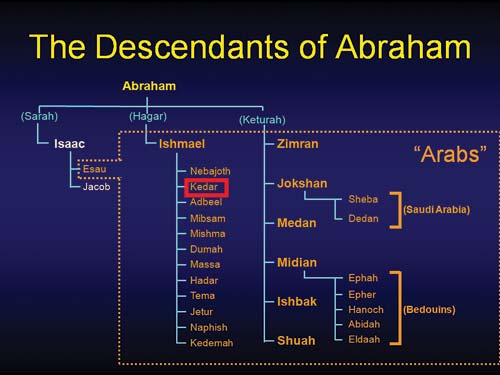
Israel will celebrate her Independence Day on the Fourth of Iyar, which is May 4th on our calendar (May 1995). (The modern state of Israel was born on May 14, 1948 on our calendar, but it was the Fourth of Iyar on hers.) The celebrations this year, however, will be less festive given that Israel is now in all out war with her neighbors and Iran.
What was thought to be a watershed election in 1996-1997 turned out to be just another election in a long sequence of uneventful elections, where continued power was seen corrupting 100% of those who participated and wielded power. It now has come to the point that it does not matter who is in power, what party a politician belongs to, as they use the same tactics, lie the same ways, and live only to ingratiate themselves. This is also the problem with predictive prophecy and trying to “predict” when something will happen. The notes say that there is an important election in Russia (to see the Magog Invasion). This, of course, did not happen. It is now 2024 and Russia is engulfed in a proxy war with the Nato and the US through by way of destroying Ukraine in the process. They want to have buffer states between themselves and the west to ensure protection in the future so that it would be harder to attack them. They have, essentially, won. No one has stopped them, and Ukraine will fold at some point (once all able-bodied men are dead). There was an election in Israel that Brought in Netanyahu, but then he was voted out on criminal charges, then voted back in again. There was a major “peace negotiation” when Trump got into office. He pulled off the unimaginable, getting the factions to the table and moving the US Embassy to Jerusalem. But all their work was stalled or dismantled when he was voted out of office and Biden, the criminal, was illegally voted in through fraud and deception.
There is coming a time in which Israel will become “a burdensome stone for all people: all that burden themselves with it shall be cut in pieces, though all the people of the earth be gathered together against it” (Zechariah 12:3). Despite all the attempts made over the years, there will be no peace in Israel or Jerusalem until the Antichrist comes and he makes the covenant with them. But this peace will be fleeting and ultimately violated (1 Thessalonians 5:3-4). Israel will survive. They must, for he has promised it and he has put himself on the line for it. It is not for their own sakes (Ezekiel 36:22ff), but for his own glory and for his own integrity.
What does the Bible say about making vows?
There are a lot of vows in the Bible. Jacob made a vow (Ge 28:20) and God reminded him of it later on (Ge 31:13). It was stated in the law that vows had to be perfect for them to be accepted by God (Le 22:21). The sum of it was, we should pay all vows we make, even if we regret making them. Better to never vow at all than to vow and not pay in full (De 23:21; Job 22:27; Ecc 5:4-5). The most interesting of the vows in the Bible, though, is Judges 11:1ff, the story of Jephthah and his vow to offer up on the pyre the first “thing” to come out of his front door on his return home. When he arrived, it happened to be his virgin daughter who came out to meet him first (Judges 11:30-31). She was his only child, but the text says “I have given my word, I cannot go back on it” and “he carried out his vow with her which he had vowed.”
Names get changed in the Bible. Give three examples and explain what is noteworthy about the changes?
Abram was changed to Abraham. This is because God added the Ha in the middle of him, which is a type of the Christian being reborn and receiving the indwelling of the Holy Spirit (Genesis 17:5).
Jacob/Israel (Genesis 32:28; 35:9–10). Jacob’s birth name, Jacob, means “supplanter, deceiver”; it was given to him because, when Jacob was born as the second of a set of twins, “his hand [was] grasping [his twin’s] heel” (Genesis 25:26). True to his name, Jacob grew up as a conniver, deceiver, and cheat, and he eventually supplanted his brother’s position as heir to the birthright.
After Jacob’s struggle with the Lord at Peniel, the Lord gave Jacob a new name: Israel. And God gave the reason: “Because you have struggled with God and with humans and have overcome” (Genesis 32:28)
Simon/Peter Matthew 10:2, Mark 3:16, and Luke 6:14 all record that Jesus changed Simon’s name to Peter. The literal meaning of the name Peter (Petros) is stone, boulder, or rock. In Matthew 16, we get the explanation of why. Jesus asked His disciples (not just Peter) a question about who people think that Jesus is (Matthew 16:13). The disciples listed different opinions that have been circulating. Some think Jesus is a prophet. Some think Jesus is Elijah reincarnated. Jesus responds by saying, “But who do you say that I am?” Peter then says, “You are the Christ, the Son of the living God.” Jesus responds, “I also say to you that you are Peter, and upon this rock I will build My church; and the gates of Hades will not overpower it.” Careful analysis of the context demonstrates what Jesus is really teaching. While Peter’s name means rock, it is actually Peter’s confession about who Jesus is (Jesus is the Christ, the Son of the Living God) that Jesus will build His church upon. Jesus Himself is the Messiah, the Son of the living God. Christ declares that He will build His church upon the same confession that Peter made in Matthew 16:16 of properly identifying Jesus.
Both we and Jesus receive new names at the end of all things (Revelation 2:17; 3:12).
Names also have meanings. What does your name mean? Does that have any significance to you?
Names can mean all sorts of things. This kind of work is troubling in and of itself, as it is unclear if the meanings of biblical names is at all significant, and then to extend that into our modern usage of English names (or other languages) can be a little disingenuous or even dangerous.
My name is Steven Shane Veach, and it carries with it some interesting and even disturbing meanings. My first name, Steven, literally means in Greek “crown” or “the crowned one.” It is similar to the Στέφανος (stephanos) in the Bible. Shane comes from the Irish name Sean, which is derived (somehow) from the Hebrew name John, which means “God is gracious.” I would be surprised, though, if that meaning extends into all three names. Veach is a little more ominous, Meaning to “throw, kick, propel an object forward toward its destination, but to leave it woefully and embarrassingly short of its intended target.” That’s a bit of a mouthful. It is said that the Scottish name Veach (our line is, surprisingly Scottish) originated from Norman descent, and was brought to Scotland by way of the Norman Invasion in the 10th and 11th centuries. It comes from the Latin which means “cow” and basically leans “herdsman.”
So, if I put these all together, then my name would mean “the crowned one” to whom “God is gracious,” who “herds cows.” Or a royal person who receives God’s grace herds cows.
Now, I would like to look at another name that has significance for me. Isaac Hunter. It is just the first and last name, but you could, I suppose, throw in Christopher as a middle name, for Isaac Christopher Hunter.
Isaac means “he will laugh” based on Abraham laughing at the mention of him having a child in his old age (probably also includes Sarah’s laughing as well). The name Christopher means “bearing Christ.” The name Hunter means “one who hunts, or a pursuer.” This would come out as “the one who laughs at bearing Christ, pursues or is a pursuer.” If just the two names, it would be rendered, “the one who laughs at pursuing.”
Personally, I do not put a whole lot of stock in the meanings of names. But, in a few instances I think they can be significant. One of those is in Genesis 5. I absolutely love this message built into the ten name genealogy in the first book of the Bible.
This can be found here: https://youtu.be/AtltULXrYWw?list=PLGhnTxL3AJd4xPgtcdc9VgfEVZhOHMML3&t=2756
Dr. Heiser’s rebuttal of this interpretation can be found here: https://drmsh.com/allegorical-interpretation-names-genesis-5/
K-W-L Self Assessment: L- Describe what you LEARNED from this session.
I don’t think I have anything to add here.
Lecture 20
What was the real significance of the all-night wrestling match?
The main significance of this story is the changing of Jacob’s name to Israel, the transformation of the man, the deceiver, to Israel, the God wrestler. This name means a “striving with God” or “he who perseveres.” It has the connotation of one who “wrestles with God,” and Missler attempts to connect this description to the Christian as well.
Also, Missler points out that this event resulted in a dietary restriction for the Jewish people that is still enforced today: limiting them from eating the tendon of the hindquarter.
Are there “strange gods” co-existing in our lives? What are we to do with them?
In Genesis 35:2-4 we see Jacob telling his family to “put away the strange gods that are among you.” They gave these idols to Jacob and he buried them under the oak tree in Shechem. This was a purifying ritual for them, a necessary cleansing, a sanctification to fulfill his vow.
As Dr. Missler states, God does not allow rivals. He desires singular loyalty and no magical charms or personal or family gods to come between him and his creation. And they needed to purge these distractions and the objects of their affection before God could have the relationship with them that he wanted to have.
Today, especially in the West, we live in a very atheistic society and culture. So, idols in the traditional sense are not really as common as it might have been during Jacob’s day or even during the first century. But, we do have them. Buddha, Joseph Smith, the various cult leaders who typically claim to be the second coming of Christ, the watchtower society, any other false god or religion. But, even more sinister are the idols that appear not to be religious in nature. The striving for amassing money, the pride of the self, the craving and gratification of the flesh, the pride of life. Even the things in life that are good and right and pure can be perverted and twisted into idols of hands.
For us, it is a process of drawing nearer to Christ. It does us little to put away these idols by our own merit. It would be fine to do so. But, if we put them away without replacing them with anything, there will be an increasing temptation to return when things begin to get difficult. There is a reason why so many people have these false gods today. We are creatures who have an innate desire and draw to worship. We will worship something, if not God, then it will either be ourselves or someone else or multiple others or things in this life. That takes an endless number of forms. But, if we first pursue God, then he will draw near to us and we will be able to put down that which is counterfeit naturally and without effort. For it is Christ who does the heavy lifting when we surrender to him. His yoke is easy, it is light. We when come to him we have rest.
But, the temple exemplifies our own souls. They had compartments around the outer court that allowed for the priests to store their personal effects while they were ritually clean inside the temple and the holy of holies. But, these compartments because the storage containers for the priests’ idols that they clung to. They would each morning put them away before going to work. Then, in the evening, they would come back for them again and again. This is reminiscent of what Christians typically do with our lives. We get up early, get dressed up in our Sunday best, and go to Sunday school, then the main service, and then out to lunch after for “fellowship.” Then Monday comes and it is back to business as usual of cheating on our wives, of beating our children, and striving above all else to get a bigger toy than the neighbor even if it means going into excessive debt to finance it.
We must instead worship God in spirit and in truth, for this is what the Father desires.
What is your definition of mercy? Why should we tremble at the concept of justice?
My definition of mercy is, I think, similar to Dr. Missler’s. Mercy is not getting what you deserve, but grace is getting what you don’t deserve.
God’s mercy is great because he operates from a different rubric than human mercy.
His mercy extends to us in ways in which we do not deserve. For God, being rich in mercy, loved us and made us alive with Christ while we were still dead in our trespasses. It is in his mercy that God, despite the judgment against us, does not give us what we deserve (condemnation in Gehenna). But, it is by grace that we are saved, and, thus, we get in grace what we do not deserve, the free gift of eternal life.
Our fear should be tangible, for not only is the fear of the Lord the beginning of knowledge, but to whom much is given much is required (Luke 12:48). We are told in Phil 2:12 to work out our salvation with fear and trembling, for it is, according to Hebrews 10:31, “a fearful thing to fall into the hands of a living God.”
God’s justice demands a high and perfect price; a price we simply cannot pay. If not for Jesus’ willing sacrifice, we would all be subject to the eternal consequences of our sin and our corporate sin from Adam. There is, without Jesus, no hope of salvation. There is no hope for redemption in any other (Acts 4:12). Our fear of God should be great and should run deep and should be profound. For we all deserve it, even though some will not have to suffer such a fate as this.
What was God’s point when He asked, “Where art Thou?” and “What is thy Name”?
In Genesis 3:9, God asks, “Where are you?” Ἀδάμ, ποῦ εἶ. “Adam, pou ei?” Where you? They heard God walking in the garden in the cool of the day. In verse 10 Adam says, “I heard your voice in the garden and I was afraid.” So, it would indicate that the trigger was God’s voice while he was in the garden. It is unclear if he was talking to himself, to someone else, singing, or something else.
It is interesting that God does not let on that he knows what has happened to them. Surely he knows before it even occurred, for “in the day that you eat of it you shall surely die” (Ge 2:17), but he does not intimate any foreknowledge in his conversation with Adam. Did he not know it was Satan or the Serpent that tempted Eve? Did he not know that Adam ate along with his wife? How could he not know?
I think there must have been surprise, curiosity, even concern, if God is capable of any of these emotions, since this must have been the first time he came into the garden and found it empty, found the man and his wife gone.
And how does sin, how does the sin of the fall (original sin), separate us from God exactly? We are not certain what the mechanism even is that produced sin, that exercises it.
But, thanks be to God, he seeks us when we would have nothing to do with him. He asks, “Where are you?” to each one of us. He interrupts our lives in such unique and inspiring ways. Yet, he gives us all the free gift of mercy and of grace. Certainly, he gives more grace to some than he does to others. Some by nature or circumstance, need a whole lot of both. But, he states it perfectly in John 15:16-19; John 6:70; 13:18; 1 John 4:10, that he chose us from before the foundation of the world. Thus, what we do is prewritten (Ps 139:16), and we are predestined (Ro 8:30) to be conformed to Christ. He seeks after us (Eph 1:4). “There is none who seeks after God. They have all turned aside” (Ro 3:11-12).
Give two definitions for the name “Israel” and give examples (both past and present) of how this name fits
The first definition is “he who strives with God.” It denotes one who “perseveres” a “wrestler with God.” His first name, Jacob, is defined as “deceiver” and “heel catcher.” This first name is a fascinating depiction of the kind of person Jacob was. The ends, for him, justified the means. He was deceptive. He was tricky to handle. He was the kind of person that if you gave him an inch he would take a mile. He also conspired with others to defraud his own family. With a friend like Jacob, no one would need enemies.
Israel, though, was a transformation under God’s watch. He wrestled with God and secured his blessing. Whether his opponent was God the Father, Jesus, or an angel, it was clear that he was going to win at all costs. And he did. He secured his blessing, he secured a future for his people, and he saw his family reunited, his son Joseph brought back from the dead (figuratively), and they found a safe place and amenable accommodations in Egypt.
In the end, Israel has become a type of the church, a type more so of the Christian, who, in the beginning, are always the villain. We are always in a precarious position. We are selfish. We are fleshly. We might spend a greater part of our lives in sin, in depravity, in self-preservation. But, once we come face to face with our creator, once we are able to acknowledge him, and then once we engage with him and wrestle through the issues we have with him, we come out the other side servants of the most high God.
Define “ambassadorship” and relate that to the Third Commandment.
The third commandment, “Thou shalt not take the name of the Lord thy God in vain” (Ex 20:7; Deut 5:11) has been used traditionally as a prohibition from filthy or coarse language. But, I would agree with Dr. Missler, that it doesn’t really have much to do with or anything to do with language or vocabulary or being considered offensive to others. We can find prohibitions in other places in the Bible that encourage us to control or tame our speech (Ephesians 5:4, Colossians 3:8). But, this verse, this commandment, has more to do with the kind of representation we have of Christ to the world.
We are told we are “ambassadors for Christ” (2 Co 5:20; Eph 6:20), and in this responsibility, we are to represent our King well. Much better than we actually do. I would not argue, as Matsen flippantly does, that because we are ambassadors we are not under any authority in our “host” country (meaning the world) and, thus, the laws don’t apply to us (even though there is some truth to this concept – Acts 5:29). But, when we take the name of Christ, we then represent him to the world. Our witness will be meted out more in our actions, in those moments that we think no one else is looking, and we will have to give an account for how our representation helped or hindered the spread of the gospel. .
To take his name “in vain” is to take him falsely. We see this all the time. People who are Christian in name only. Who live like the rest of the world, yet they go to Church religiously, they talk about the Bible but do not read it or incorporate it into their lives. There actions betray them as just anyone else and not one who serves a king.
Likewise, Missler discusses the issue of our collective ambassadorship. How are we doing? What would be our report card if Jesus decided to write our church a letter? Which of the seven churches in Revelation 2-3 would our report card resemble? Do we collectively serve a particular program, a particular idol (money, fame, service, business, culture, tradition, denomination, etc) or do we serve the Christ, our Lord who is our master and King?
K-W-L Self Assessment: L- Describe what you LEARNED from this session.
Nothing to add.
Lecture 21
Discuss the many ways that the Book of Ruth is a foreshadowing of God’s program for the Church.
The book of Ruth is to be considered the most important book of the Christian faith as it describes the ultimate love story between Boaz and Ruth, a Jewish nobleman and a Gentile bride, separated by the insurmountable chasm of the law, society, and “cleanness” between them, yet within this impossibility, God makes a way for the exception to rule (Matt 17:20; 19:26; Mark 10:27; Lu 1:37; 18:27).
This book is a model for what Jesus would later do on the cross for the church. Boaz is a type for Christ, Ruth a type for his “gentile” bride, Naomi a type for Israel. The unnamed servant that introduces Boaz and Ruth is a type for the Holy Spirit. We see this unfold through the chapters: Ruth cleaving to Naomi (Chapter 1), Ruth gleaning from the fields of Boaz (Chapter 2), Ruth and Boaz at the thrashing floor (Chapter 3), and Redemption of both Land and Bride (Chapter 4). For this to have taken place, Naomi (Israel) had to be exiled from her land. The law (nearer kinsman) could not do what grace did (through Jesus Christ). Ruth did not replace Naomi, but Ruth learns about Boaz through Naomi (Ro 3:2; 9:4; Deut. 4:5–8; Ps. 147:19). Yet, at the same time, Naomi meets Boaz through Ruth (the gentile bride). It is Boaz who confronts the nearer kinsman (the law).
This book introduces the concept of the Goel: Kinsman-Reedeemer (Law of Redemption, Lev 25:47-50; Law of Levirite Marriage, Deut 25:5-10). It is the Hebrew word תִּגְאַל֙ (goes) and the Greek word ἀγχιστεύεις (rights of a kinsman). This is what the entire gospel is predicated upon. The act of the near kinsman (Jesus) who takes for himself a bride from the gentiles, the bride of the near kin, to perpetuate the line. This is the “grafting in” of the gentiles, the wild olive branches (Ro 11:19). Dr. Missler stated that the Goel must not only be able to perform his duty, but he must also be willing to do so.
This process transpires at the threshing floor, where it is Ruth (the gentile bride) must first approach the redeemer (Jesus), in Ruth 3:8-9, she approaches and requests “I am Ruth, your maidservant. Take your maidservant under your wing, for you are a close relative.”
In the last chapter, we see the interchange between a nearer kinsman who is unable to fulfill his obligation (the law), and it is then Boaz’ opportunity to fulfill it. He redeems the property (the land) as well as the gentile bride (Ruth), and we find in the end of the book, the genealogy of Perez (who was the one who drew back in Gen 38:29). His descendants were: Hezron, Ram, Amminadab, Nahshon, Salmon, Boaz, Bed, Jesse, and David. This is significant because Salmon is the husband of Rehab the harlot (Matt 1:5; Joshua 2ff; 6:22-23), and it is through David that the genealogy of Jesus is established (Luke 3:23–38): Jesus, Joseph (through adoption), Heli, Matthat, Levi, Melchi, Janna, Joseph, Mattathiah, Amos, Nahum, Esli, Naggai, Maath, Matttathiah, Semei, Joseph, Judah, Joannas, Rhesa, Zerubbabel, Shealtiel, Neri, Melchi, Addi, Cosam, Elmodam, Er, Jose, Eliezer, Jorim, Matthew, Levi, Simeon, Judah, Joseph, Jonan, Eliakim, Melea, Menan, Mattathah, Nathan, David, Jesse, Obed, Boaz, Salmon, Nahshon, Amminadab, Ram, Hezron, Perez, Judah, Jacob, Isaac, Abraham, Terah, Nahor, Serug, Reu, Peleg, Eber, Shelah, Cainan, Arphaxad, Shem, Noah, Lamech, Methuselah, Enoch, Jared, Mahalalel, Cainan, Enosh, Seth, Adam (the son of God). There are some fascinating names mentioned in this genealogy of Jesus (Eliezer, Boaz, Judah, Jacob, Noah, Enoch, and Adam).
Interestingly, the Book of Ruth is always read at the Feast of Pentecost (Shavout). I am currently working on a family devotional for my wife and I to do with our kids – traditions and memories to from, and a means by which we can transfer our faith to our children if, indeed, they are being drawn by the Father to a saving faith in Christ. I think we will be adding this tradition to that, and we will make a point to read the book of Ruth together every Shavout, as a memorial for the giving of the Law of Moses and for a memorial for the redemptive story of the church.
On a personal note, when my wife and I married, we both wrote our own vows independently of each other. At our wedding, we discovered that not only did the Pastor who officiated include parts of Ruth in the vows, but we each also included the same section in our vows. I included, “Wherever you go, I will go, and wherever you lay your head, I will also; your people, they shall be my people, and your God shall be my God. Where you die, there I will die also, and there I will be buried alongside you, and will remain there with you until the end of days.”
Why do we suspect that Potiphar didn’t really believe his wife?
Potiphar was the captain of the guard for Pharaoh (probably Sesostris II – 1897-1879 BC). While he was incidental in the account, simply a mechanism by which God placed Joseph where he wanted him to be (in prison), it is clear that the captain had doubts about his wife’s claims. It is most probably this was not the first time such an event had occurred. There surely was talk and gossip in the household about the man’s wife and her behavior, which I’m sure he was privy to. But, the reality is, Joseph should have been killed for what he had been accused of. For right or wrong, just the very fact that Potiphar would want to save face among his peers and superiors, most everyone in his position would have had Joseph killed just for good measure. But, instead of doing so, he imprisoned him and forgot about him.
This was an opportunity given to Joseph to excel despite his circumstances, and God made him stand in the day of his trial; in 13 years of trial and imprisonment. Joseph did not grow bitter at his plight, he did not curse God and die as was the advice of Job’s wife. Instead, whatever his had found to do, he did it to the Lord.
Define the word “sojourner”. In what ways were the Patriarchs sojourners?
Sojourner in the Bible is found four times in the New Testament. In 1 Pe 2:11 it says that we are sojourners and pilgrims on this earth. Ephesians 2:19 uses the word in the opposite, “because you are no longer strangers and foreigners.” Acts 7:29 states that Moses fled and became a “dweller” in the land of Midian. Acts 7:6 speaks of descendents “dwelling” in a foreign land. The actual word is πάροικος (paroikos) or “temporary resident,” “alien,” or “stranger.” It occurs 4 times in the New Testament and 25 times in the LXX and carries the overall sense of a “foreigner.”
During the exodus from Egypt, the Israelites were considered sojourners in the wilderness (Psalm 105:12–13; 1 Chronicles 16:19). They remained there for 40 years, but it never was considered to be their home (Numbers 14:33–34). Abraham also was considered as such in Egypt (Genesis 12:10), as well was Mary, Joseph, and Jesus when they fled to Egypt when Herod was trying to kill their son (Matthew 2:13–15). Paul also sojourned from place to place, never settling anywhere, but seemed intent on spreading the gospel to the known world, to a particular region of the world before he ultimately was martyredl (Acts 13:1–3, 13–14, 51).
Peter titles his first letter to sojourners (1 Peter 1:1), which were persecuted Jews who had converted to Christianity and were forced to leave Jerusalem because of persecution from the hand of their own. He also urges the sojourners and exiles to abstain from the passions of the flesh (1 Peter 2:11).
The idea of the sojourner is one who is not a citizen of this world but who serves a different government, a monarchy, a king. Jesus said his kingdom was not of this world, that it was to come, that it was coming and of it there would be no end. We as sojourners behind enemy lines are not to be entailed by the world around us (Romans 12:1–2) but are to instead represent the values and standards of our King. We are ambassadors of Christ. Paul tells us we have “our citizenship in heaven” (Phil 3:20).
In what ways would you consider yourself to be a sojourner?
I have no ideations of this world or the things in it. There is nothing of it that I want, that I desire, aside from the will of the Father. I am here because he has chosen to keep me here. For many years I prayed that God would take me in my sleep so that I did not have to continue on this road, that I could escape this world and its misery through death, by entrapment in Hades, for if up to my own choice, to my own devices, I would never have been born.
But, God has grace and he has given me a purpose in his Kingdom and in his Church to teach, to serve, to reason with the saints, to encourage, to build up, to equip. Why he has done this I have no idea. Why he waited all those years until I was nearly 50 years old before he sent me out to work, I have no idea. Moses waited 40 years once he went into the desert after killing the guard.
If it was good enough for Moses I would venture to say it is good enough for me.
How was Joseph humiliated before his exaltation? Compare this to Jesus.
Joseph was sold into slavery, hew as taken to Egypt and eventually was imprisoned for a crime he did not commit. He was instead made the second in the entire Kingdom and a great family came to him, and a great nation was from his family.
Jesus, likewise, was sold into slavery by the Father, having to submit to death on the cross, then remained in Hades for three days, then was released because death could have no hold on him. Like Joseph, Jesus was made second in the Kingdom under God, and from him, through him, and for him, a great nation was produced (the Church), and this is his bride.
How did Joseph escape the temptation of Potiphar’s wife? How do you escape intense temptation?
First, Joseph was closely aligned with God. He was well versed in Scripture and he was a believer after Abraham. If we draw near to God, he will draw near to us. And he always gives us a way of escape, that we will be able to deal with the temptation and endure it. This is what happened to Joseph. He was tempted (but not beyond what he could bear and not more than what is common to man), and because of his close relationship with God, he was able to fight that temptation.
I had a similar situation that occurred when I was in my 20s (not remotely similar but it reminded me of it). I was working at a gas station and had just finished a graveyard shift. It was about 7am and my replacement arrived, who I would be working with for a few hours until I clocked out. It ended up being the boss’ girlfriend (the boss was also a woman by the way), and we started talking our normal chit chat when, after several minutes, the topic of relationships came up. My coworker stated that her girlfriend (our boss) had commented to her that she wanted them to “take me on” as an addition into their relationship.
I really didn’t know what to say. I went out and helped a customer. Then when I got back in and sat down on the stool, she leaned over me to ring up her sale.
I could have done what Joseph could have done – acquiesce to her advances – or I could do what the Spirit was immediately telling me to do – RUN!
Thankfully, I was in a place in my life at that time where I was deeply involved in prayer, in my spiritual life, in the study of the Bible, and somehow – miraculously – I was able to fend off this woman and her invitations. All I could think at that moment was, “Wisdom and understanding will keep you from the immoral woman, from the seductress who flatters with her words” (Proverbs 7:4-5). And “with great persuasion she entices, with flattering lips she lures. He follows her like an ox to the slaughter, not knowing it will cost him his life. Do not let your heart turn aside to her ways, do not stray into her paths, for she has brought many down to death, her slain are many in number, her house is the road to Sheol, ascending to the chambers of death.”
Joseph suffered a much worse fate than I did. I missed out on an opportunity for carnal pleasure (though I would argue now that this kind of thing is never actually as it appears and is never like we think it will be and always comes with strings attached and consequences we must later bear), but he was imprisoned and could have easily lost his life. In addition, Joseph has to spend thirteen years in prison, seemingly a life sentence without knowing when or if he would ever be released. There could have easily been a point at which he gave us, where he grew bitter and would do nothing except save himself or benefit himself. Instead, he rose to the occasion (prison is an occasion?) and “whatever your hand finds to do, do it with your might” (Eccles 9:10) and “And whatever you do, do it heartily, as to the Lord and not to men, knowing that from the Lord you will receive the reward of the inheritance; for you serve the Lord Christ” (Co 3:23-24). And all this God intended for good and not for evil (Gen 50:20).
K-W-L Self Assessment: L- Describe what you LEARNED from this session.
Nothing to add.
Lecture 22
What could be the significance of “two” in: a) the number of dreams in his childhood; b) the number of imprisonments; c) the number of dreams in prison; d) the number of Pharaoh’s dreams?
Dr. Missler at around the 7 minute mark stated that this was significant, but he gave no reason why. God does appear to do things in patterns in the Bible and the hepatic structure is possibly significant, but I do not put a great deal of stock into it. Joseph had two dreams while a child. He had two imprisonments. He had two dreams in prison. And lastly, the Pharaoh had two dreams.
It appears from Joseph’s own interpretation the answer is given, “And the dream was repeated to Pharaoh twice because the thing is established by God, and God will shortly bring it to pass” (Ge 41:32). This could be in line with 2 Co. 13:1, “By the mouth of two or three witnesses every word shall be established” ( Deut. 17:6; 19:15; Matt. 18:16; John 8:17; Heb. 10:28).
Was it appropriate for Joseph to charge for the dispensation of food to the hungry? Why or Why not?
This is an interesting question. We often speak of a Christian ethic, doing what is right for both the believer and non-believer alike. Thinking of the other before ourselves. Doing what is best for them over what is best for us. Yet, is this what Joseph did? Did he act rashly? Unethically? Was the cost to the Egyptians (and Canaanites) exorbitant? Was it unfair?
We have to look at exactly what Joseph did here:
1. Ge 41:56-57; 42:6 – Joseph sold grace during the 7 year famine to the people of Egypt. We also learn that he did not sell just to the Egyptians, but also to the people from Canaan, so we could assume from the use of
2. Ge 41:56-57 tells us that the famine was over the “face of the earth.” Vs. 57 tells us that “all the countries” came to Joseph for food. So he was not just selling to the Egyptians, but anyone who wanted or needed food.
3. Ge 47:13-26 lays out what Joseph did with the Egyptian people. He first sold bread or grain (to make bread) to the Egyptians (or anyone who would buy) and essentially bought up all the money in Egypt and Canaan. He then gave that money to Pharaoh. This cause the money to fail in Egypt, the economy tanked, and the people came to him pleading for a handout. Joseph suggested that they sell to him all their livestock in exchange for bread. They complied. The next year, the economy had not recovered, and they had no livestock and no food. They came to Joseph and offered themselves and their lands to him in exchange for food and seed so they could start growing food for themselves. Joseph agreed and took them as slaves and their land in exchange for food. He also gave them seed and established a Sharecropping agreement where they could use Pharoah’s lands to grow food in exchange for 1/5th of their produce. They could keep 4/5th for themselves.
There are basically two incidents here in question 1. When Joseph sold grain to anyone who was buying from the storehouse that he had collected during the 7 years of plenty. 2. When Joseph exchanged grain/seed/bread for their livestock, then themselves as slaves and their lands. This essentially transformed the economy and governmental structure of Egypt from a capitalist society to a socialist one, where the government owned the land and means of production and the people were slaves to the system.
Where any of these wrong on Joseph’s part? To answer this question, I think we need to first deal with the issue of predestination. Joseph tells his brothers, “what you meant for evil, God intended for good, to save many people alive” (Gen 50:20). We are told by him as well, “God sent me before you to preserve life” (Gen. 45:5). We are told in Psalm 139:16, “Your eyes saw my substance, being yet unformed. And in Your book they all were written, The days fashioned for me, When as yet there were none of them.” Likewise, “Moreover whom He predestined, these He also called; whom He called, these He also justified; and whom He justified, these He also glorified” (Ro 8:30). There is nothing that happens outside of the Father’s will (Matt 10:29-31). Everything is prewritten. We are simply walking in the works in which we have been called to in Christ Jesus (Eph 2:10). So, by the very fact that Joseph did what he did, and who can say Joseph was not being directed and guided by the hand of God, then it would have to be concluded that it was ethically right for him to do what he did.
Would it be ethical for us to do the same thing today? This would be judged ultimately by God and by our conscience, for that which we do or do not do outside of faith is a sin (Rom 14:23). Should we take advantage of the systems that are in place, make money, take advantage of the plight of other people around us? Scripture would say no (Rom 15:1; Ga 6:2; Phil 2:4; 1 Cor 10:24; 1 Thess. 5:14). We are not to do as we please, but to seek first the Lord’s guidance in all things we do, including with our personal life and our professional life as well (James 4:13-15). Joseph is our example to the extent that he served and surrendered to the will of God, in good times and in bad, and Joseph had more bad than good, but not in direct proportion. When the good came, it was exceptionally good and he ended his race well.
Joseph acted ethically because he operated in faith, just like Abraham. This extends to us only in that lesson: to operate in faith. It was ethical for him but the same behavior on our behalf might not be ethical at all.
Discuss the manner in which Joseph handled his brothers on their 1st and 2nd visits to Egypt. Why did he do what he did, and what was accomplished?
In his first dealings with his brothers it is unclear if Joseph knew his brothers would come. There is no mention of a new dream or premonition being given by God. It is actually hinted at in the naming of his first son, that Joseph had put his family and what had happened to him out of his mind (his son’s name was Manasseh, which means “to forget,” which Joseph said, “For God has made me forget all my toil and all my father’s house”).
But, when his brothers appears, I’m sure all those emotions and resentful feelings rushed back to the fore, as it appears as if Joseph was trying to exact some revenge in Genesis 42:1 when he puts his brothers in jail for three days. He devises a test for them to determine if what they are saying is true, even though he already knows it is. Mostly, though, I think he wanted to see his only full brother.
It is assumed that Benjamin was not part of the conspiracy of the older brothers to sell Joseph into slavery (Genesis 37:2ff). It appears as if Reuben was also not part of the conspiracy, given that he later came back to try and rescue his brother from the pit (Ge 37:29). Benjamin was born in Genesis 35:18. Joseph was 17 when he was sold into slavery (Ge 37:2). Joseph was 30 years old when he became second in Egypt (Ge 41:46). Joseph was 39 years old when his brothers came to Egypt (nine years after 7+2). Jacob was 130 years old when he went down to Egypt (Ge 47:9). This means Jacob was 91 years old when Joseph was born. We see in Ge 37:9-11 that Joseph’s dream was of 11 stars bowing down to him. This would include his brother Benjamin. But, if Benjamin was alive when Joseph was sold, he would not have been referred to as “son of my old age” (Ge 37:3). But, regardless, if Benjamin was already born when Joseph was sold, it is not likely that he would have been old enough to participate.
Genesis 42:21 tells us that the brothers were repentant for what they had done to Joseph all those years before, that they attributed their current circumstance to the sin they had previously committed. Joseph heard them speaking in Hebrew and saw that they were repentant of what they had done to him. Simeon, the second son of Leah, was left as collateral.
Genesis 45:1-15 Second visit, Joseph Revealed. He brings them into the fold and they are blessed by Pharaoh, and they move to Egypt.
Dr. Missler states that Joseph’s brothers had to be tested before they could receive God’s blessing. He states they had to be willing to acknowledge their crimes against Joseph and for their unbelief in his dreams. They had to have concern for the wellbeing of Benjamin, the last son of Rachel. If not, they could not participate in the fulfillment of the promises.
I don’t know if I would agree with this conclusion. It is true, as already pointed out, that the brothers were repentant for what they did against Joseph. But, there is no precedent for Joseph’s brothers needing to be tested to take part in the salvation of his brother. It is there, but not required.
What was accomplished? Joseph could see that his brother were repentant and he was able to forgive them. Joseph recognized that what his brothers had meant for harm against him God had been using the whole time to save people and to save even his brothers and their families. I think Joseph recognized that the events in his life were greater than his own opinions or feelings about them. They were divinely appointed.
List three occasions where we run across bread and wine? Can you detect a remez?
Bread and white is first mentioned in the Bible with Melchizedek (Ge 14), and Joseph has bread and wine in his interpretation while in prison (Ge 40). We also see it in Matt 26 and 1 Co 11 for the communion.
There is certainly something there. But I’m not comfortable establishing doctrine on it. Scripture is “spiritually discerned” (1 Co 2:14). It is not so cut and dried. There is universal truth, but there is also subjective truth based on perspective. There is our perspective. There is God’s perspective. There is Satan’s perspective. All of these are viewed through perception, and this is often faulty on our part. God’s perception is perfect. He sees things for how they truly are, for what they truly are, and even for what they could be. Sometimes we are given meaning in Scripture that is for us, personally applicable even though it might not be applicable for anyone else. I would argue this is Remez. Something hidden. The meanings of the Bible are multilayered based on perspective and perception. It is also delineated based on time and location. A particular passage may have more importance to someone living in the 21st century than it ever did in the 14th century. The same can be true of the 100th century.
List 5 examples of where we find “three days” throughout the Bible.
Laban put a three days journey between him and Jacob (Gen 30:36). Jesus was three days in the earth as was Jonah (Matt 12:40). Joseph’s interpretation include three branches that were three days (Gen 40:12). It was a three day journey into the wilderness for the Israelites (Ex 3:18). They subsequently journeyed for three days (Nu 10:33). The spies hid for three days from their pursuers (Josh 2:16). Ester fasted for three days (Ester 4:16), Jesus claimed he would rebuild the temple in three days (John 2:19), Paul was without sight for 3 days (Acts 9:9).
Lastly, the one I love the most, “Out of the eater came something to eat, And out of the strong came something sweet.” Now for three days they could not explain the riddle. (Judg 14:14).
What is the progression for Joseph’s exaltation? What is the biblical principle? Does this principle still apply today?
Most of Joseph’s circumstances in his life were out of his control. He had no say in being given two dreams. He had no say in being sold into slavery in Egypt. He had no say in being thrown into prison by Potifar. He had no control over the cupbearer remembering him or not remembering him. He languished in prison for 13 years! He had no control over giving Pharaoh an interpretation, nor did he control being appointed over the entire country. He did not control the famine, the dreams, the interpretations, nor his brothers coming to Egypt.
But, in all of this, Joseph applied a singular principle to his life, “whatever you do, do it heartily, as to the Lord” (Col 3:23; Ecc 9:10).
K-W-L Self Assessment: L- Describe what you LEARNED from this session.
Nothing to add.
Lecture 23
Review Joseph’s stewardship for Pharaoh and the impact it had on Egyptian history.
Joseph was a curious character. He had really no control over his life circumstances. Little was the result of his own personal will or volition. Yet, what Joseph did with virtually very variable in his life that he was confronted with was to do with it the very best he could and to serve his rulers with the utmost of his being (Eccles 9:10; Col 3:17). It was because of the actions and reactions of Joseph that he saved many lives, really the entire Egyptian nation, and many nations around about it during the famine.
But, regardless, his actions also resulted in the disenfranchisement of the Egyptian people. By the end of the famine, they had lost all their livestock, their lands, and even themselves to Pharaoh. The economy and societal structure of Egypt went from essentially capitalistic (private ownership) to socialistic (state owned enterprise).
Yet, when Joseph died, he was mourned by the Egyptian people for 2 1/2 months, which was just short of the length of time in which Pharaoh was mourned. So, despite the poor cultural status the Israelites had among the Egyptians (couldn’t even eat with them – Gen 43:32), such was overcome even after Joseph’s death. Or, he was considered to be one of them because of his long-standing involvement and dwelling in Egypt.
Regardless, Joseph was well loved and appreciated in the land. And, it was because of him (ultimately God), that Egypt was allowed to go on. And they marched along the paths of history 400 more years until they reached the point at which they were required to let go of their pride, their anger, and their cultural prejudice. But, they refused. Now what happened to them was terrible. They were basically cursed by God, and they lost such a great legacy, and today their nation is a pittance of what it had once been. And it is hard not to pass judgment on them and conclude that their current state is a direct result of their actions back then, when they should have let Israel go.
Joseph, though, was not necessarily a hard taskmaster or an unscrupulous person. He was, in essence, a servant at heart, regardless of his circumstances. When he was sold off by his brothers, he served his master. When he was imprisoned, he served the jailer. When he was brought before Pharaoh, he simply told the truth and was rewarded for it. When he was second in the kingdom, he did what was ultimately the very best for the kingdom. But, essentially, he served his master, Pharaoh, and he did what was best for his master, while still preserving the life and survivability of the masses. Unlike what the Egyptians did to Joseph’s descendants after him, Joseph provided for the people, fed the people, and, while he did enslave them to a new social and economic system, the tax going forward in the new system was not draconian (his tax was 20% of their profits, the tax in the US today is closer to 36% and in some countries much, much higher.
So, in the scope of human history, the stewardship of Joseph saved countless lives and established Egypt, for good or ill, as a superpower for many generations to come. While it did not work out for them in the end, God did use the Egyptians in a very mighty way and their deeds and responses to his interventions have been recorded for all eternity in the Word of God.
Contrast the bypassing of the firstborn for four generations.
God again and again illustrates the point that he works with the remnant of a people and not typically the best of the best. He passed over Cain and used Seth instead. He passed over Japheth and selected Shem, passed over Ishmael and chose Isaac, Esau and chose Jacob, Reuben for Joseph (Judah), Aaron for Moses, and God passed over all of David’s brothers and instead selected David to be King.
James says, “God resists the proud but gives grace to the humble” (James 4:6). Jesus says, “Blessed are the meek, For they shall inherit the earth” (Matt 5:5). We see this idea of the remnant over and over again in the Bible (Rom 9:27; Zech 14:2; Micah 4:7 8:11), as God’s preference.
Why does the Holy Spirit seem to have a “grudge” against the Tribe of Dan?
Dan literally means “judge” and was the first tribe of Israel to establish a major practice of idolatry (Judges 18:30; 1 Kings 12:2–33). In 931 BC, Jeroboam set up a golden calf in the major city (of Dan) so that the people could worship it. They originally did not prefer the territory they were allotted near the Mediterranean Sea when the land was initially divided up. It is presumed that it was the idolatry of Dan that disqualified them from service in Revelation (Genesis 49:17; Deuteronomy 33:22; and Jeremiah 8:16). By the time of Solomon, they had assimilated with the neighbors, the Phoenicians, and they had pretty much lost their identity (2 Chronicles 2:14). By the time of Ezra, their population had significantly declined (previously one of the most populous tribe) and they were pretty much by this point wiped out (Dan not listed in 1 Chronicles 4—7; Revelation 7). Dan’s horrible decisions throughout their history have led Irenaeus and Hippolytus as well as many modern Millennialists to conclude the Antichirst will come from the tribe of Dan.
God is trustworthy but His sense of timing may be different than ours. Share with us a testimony of this truth.
This is an interesting question. God’s timing is significantly different than my own. I am, by nature, very impatient and do not like waiting for things to come to pass. I do not like the struggles of life, or the drama that comes with human interaction. Much of my time on this earth, especially the last 13 years, and most definitely the last 8 years, I have spent cutting out all of the above. I have removed the need for things, the complications and enslavement of material possessions, and the inevitable trauma of human interaction. I was near the point of my departure, into the wilds, into a life immersed in nature, to live close to the land, to live simplistically, to live without care, to live a stripped down, rudimentary life devoted to Christ, committed to the deep, enduring study of the Word of God.
But, God had different plans. He desired different things for me. When I was in my 20s I desired the things that I have now: wife, children, family, home life, homeschooling my children, living on the lake, living in a boat, being active in the local church, teaching in the church, teaching as a seminary professor, writing novels, etc. I would have wanted all these things then, but God had in store a different time for these things to come to me. It took nearly 46 years. Likewise, he chose for my wife and I not to meet until we were in our late 40s. Not when we were 15 or 16. Not when we were in our early 20s. Not when we were in our 30s. We have gone over it and over it again and again – every single possible iteration where we married earlier in our lives would have been, from our perspective, so much better. Yet, we must come to terms with the reality that God saw it best to keep us apart until now. Why? Is it possible that this is the only iteration in which we could be together? Is it possible ever other iteration either has us destroying each other, ourselves, or other people? We know what we are promised, “all things work together for good to those who love God” (Ro 8:28). Regardless of our own sense of timing, our own predilections, our own emotives, our own sense of morality, God doe work everything for our benefit. What happens, happens, because it is the best for us (even the bad). God’s timing is perfect.
What does it mean to be an earthdweller versus a sojourner? Which are you?
Earthdwellers are those who not only live on the earth (for we all live on the earth) but they embrace all that is worldly, all that is cultural, and all that is essentially against God. They will be the ones who experience the wrath of God when it is poured out onto the earth in the second half of the tribulation (the Great Tribulation). This will be a time when God judges the earth and exacts retribution for those who have been martyred for him (Re 3:10; 6:10; 11:10). They are the individuals who will in mass be deceived by the anti christ, who enslave them to the worship of the beast (Re 13:14). They are the object of heaven’s evangelism of the earth, though they are the ones who do not receive it (Re 14:6). We know from Re 17:8 that their names are not written in the Book of Life.
Sojourners, on the other hand, do not imbibe the earth and its system and its rules and its philosophies. They are like the pilgrims who wandered for generations in the desert (Ex 12:40; Le 25:23), living in a place but not being of a place. Peter calls us who believe “sojourners” and “pilgrims” (1 Pe 2:11).
One lives for the world, for the pleasures of it, for immediate gratification, and simply for that which is common to man (pleasure, family, career, money, fame, legacy, etc). The other has sacrificed this worldly life in hopes of another, better life to come. He seeks the eternality of God, the revealing of the Sons of God. In a phrase, the Earthdreller is the child of the flesh while the Sojourner is a child of the Spirit.
Read 2 Chronicles 7:14 and share with the class your response to its challenge.
I know this is often used as a clarion call for revival in American Christianity. But, we must take this in context. God appeared and spoke to Solomon at night, declaring that Solomon should build God a house at that particular spot, that when he brought calamity to the land, they would respond by humbling themselves, praying, seeking his face, and turn from their wicked ways. If they would do this, then he would hear them, he would forgive them, and he would heal their lands.
If we are to take this as being applied to the church, then we must establish for ourselves a temple. We must wait for calamity, and then we must respond with the above. This is not talking about a culture of people (i.e. the US) whose moral aptitude has eroded so much that they have lost their identity as a “christian nation” and are now being appealed to by the Word of God to turn from their ways. Context is king. We cannot twist scripture to our own ends.
K-W-L Self Assessment: L- Describe what you LEARNED from this session.
Nothing to add.
Lecture 24
Where have you found Jesus Christ in Genesis? List three places.
Genesis 5 – I would argue this is the most profound discovery I’ve come across in my studies to-date. Hidden in the ten names of this chapter is the gospel of Jesus written out in the definitions. I came across this many years ago when studying Dr. Missler’s materials in my early 20s, and it has stuck with me. There is some hard resistance from academia on this subject, though, specifically from Dr. Hieser. He has spoken out against this particular interpretation by Dr. Missler, though he will not go so far as to discredit Dr. Missler’s work because, in his view, someone who is building up the body of Christ as Dr. Missler has should not be judged by anyone but God himself. In his opinion, we must reserve judgment to God alone. As Paul says, “Only that in every way, whether in pretense or in truth, Christ is preached” (Philippians 1:18).
The names in Genesis 5 are: Adam, Seth, Enosh, Kenan, Mahalalel, Jared, Enoch, Methuselah, Lamech, Noah. The meanings of these names create a sentence:
Adam (Man is)
Seth (Appointed)
Enosh (Mortal)
Kenan (Sorrow; but)
Mahalalel (The Blessed God)
Jared (Shall come down)
Enoch (Teaching)
Methuselah (His death shall bring)
Lamech (The Despairing)
Noah (Comfort, Rest)
Written out this says: Man is appointed to mortal sorrow, but the blessed God shall come down teaching that his death shall bring the despairing comfort or rest. This is the gospel of Jesus Christ.
Genesis 18 – This is the account of three individuals visiting Abraham while he was camped by the terebinth trees of Mamre. They came and Abraham was very excited at the sight of them. He begged them to come to his tent and eat with them, then he fed them the best food and when they were finished, the three got up and two of them purposed to go down to the cities of Sodom and Gomorrah while the other, “the Lord,” remained to speak with Abraham. I would argue that this one that remained, the Lord, is none other than the reincarnate Christ.
Genesis 30-50 – tells the story of Joseph and he is a type for Jesus Christ. ( A.W. Pink lists 101 way in which Joseph is a type of christ). Jesus was the beloved Son of the Father (Matt 3:17; cf. Gen 37:3) who was rejected by his own people, and by his brothers explicitly (John 1:11, 7:5, 15:24; cf. Gen 37:4–5). Jesus left his exalted status to become a slave (Phil 2:7). Joseph became a slave because of the sin of his brothers (Gen 37:25–28, 36) and was later wrongly accused and left for dead in Pharaoh’s prison (Gen 39:19–20). Yet God showed special favor to Joseph in that lowly place (Gen 39:21; cf. Ps 16:10) and brought him out of prison, exalting him to a position of absolute authority (Gen 41:37–44) for the purpose of saving his people from certain death (Gen 50:20). Joseph and Jesus were both sold for silver (Gen 37:28; Matt 26:15), stripped of their clothing (Gen 37:23; Matt 27:28), bound (Gen 39:30; Matt 27:2) and condemned with two other criminals (Gen 40:1–3; Luke 23:22–23), one of whom received life and the other death (Gen 40:20–23; Luke 23:39–43).
What were the main lessons you learned in this tour through Genesis?
Everything is in the Father’s hand. Nothing is random or by chance. Nothing is left up to us to fill in the gaps. God has a plan and he is working that plan out miraculously through each one of us and for each one of us and because of each one of us. As Dr. Missler often states, we are both the pawn and the prize of this story, and it is being worked out on a cosmic stage.
How has this study impacted your life?
I’m not certain it has really impacted my life all that much. A great deal of it was review. But, I have been thinking quite a bit lately about Joseph and the Egyptians and the Israelites 400 years later and how the tide of public opinion changes so dramatically for and against this people group. When Joseph was sold into slavery, there was an apparent hatred and disgust for Hebrew people, since the Egyptians would not even eat with them (Gen 43:32). Yet, by the time Joseph died and despite the harsh dealings he meted out to them during the famine years (basically enslaving them all to Pharaoh), they mourned for Joseph almost as long as they would for a sitting Pharaoh. During his life the Egyptian people loved Joseph. After all, he saved them. He saved their children from starving to death. Even though he was responsible for transforming their entire economy (not really for the better), they still admired him.
Yet, it took less than 400 years (how long is really unclear) for the tide to turn, for the Egyptian people to hate the Israelites again. This family that came down to live in Egypt by God’s providence grew and became more numerous than the Egyptians themselves (Ex 1:9-10). There were several worries on their minds. They were concerned that the Israelites were “stronger” than they were (or possibly more numerous). They were worried that if they went to war the Israelites (who outnumber them) would join forces with their enemies and take them over. So, they essentially enslaved the Israelites just as Joseph had done to them 400 years before economically.
The length of time is double the entire history of America’s existence. We have as a country only been around for 247 years. It makes me wonder what is in store for us, for our children, and for our children’s children. Will we eventually be economically enslaved? Have we already been? Will a foreign power seize power and take over, oppressing us like the Egyptians did the Israelites? Will the set off an EMP in our atmosphere, rendering all of our electronics dead in an instant and setting us back to the Stone Age where 90% of our population will die in one year from disease and violence, with those who remain having to scrape together an existence that is subsistent at best? It does not take long for our circumstances to change inextricably. During COVID people in Lithuania found out very quickly that they would be kicked out of the homes, and not allowed to buy food or water or get medical care because they refused to take a vaccine. Overnight their lives were changed forever.
I wonder if this will happen eventually for us, too.
What is the most compelling reason you regard the Bible as true?
The first and foremost reason that I find compels me to believe the Bible is true is the intense personal encounter I had with the Scripture at the age of 17. It was not just reading 2 Peter 2. It was not how I was set up providentially during the time to be in that particular place at that particular time. It was not the content of the chapter. It is the utter unexplainable transformation that I undertook at that moment, where I went from not believing in God to abruptly and suddenly believing – knowing – that God was real and that the message of the Bible was true.
The second most compelling reason for my belief that the Bible is true is the insatiable thirst I received that night. Buddhism, which I wholly accepted at the time, was stripped away from me and was replaced by this thirst I could not shake. This thirst has stayed with me throughout the last 30+ years of my life. Even when I felt unqualified to carry the name of Christ, I still longed to be exposed to his word, to study his word, to pursue God. It is an inexpressible joy that I receive from immersing myself in the Bible, in studying it, researching it, consuming it. I could do it day in and day out, every day, for the rest of my life. It is what I have pursued formal education in. It is the kind of pursuit that I have traded much of the rest of my life for (giving up music, drawing, martial arts, even writing, etc).
Lastly, the third most compelling reason I have for the Bible being true is the Bible itself. It’s construction. It’s internal consistency. The fulfilled prophecy. The resonance I feel inside of my soul when I read it and study it. The truths found in the message of the Bible speak to my soul, they are discerned properly somehow.
What is the most compelling reason to take Jesus Christ seriously?
First, Jesus is the chief cornerstone that the builders rejected (Acts 4:11; 1 Pet 2:7; Ps 118:22; Mark 12:10; Luke 20:17; Matt 21:42). He is the stumbling stone, the rock of offense (Isa 8:14; Rom 9:33; 1 Pet 2:8). He is the first and the last, the beginning and the end, the alpha and the omega (Isa 44:6; Rev 1:11, 17; 2:8; 22:13).
But, more than anything else, the primary reason that is most compelling for me to take Jesus seriously and what he says in the Bible and the message of the Bible as a whole is the supernatural transformation I experienced as a teenager, just before I became an adult and struck out on my own. This experience not only has stuck with me, the transformation has never faded over time, and despite all of my best efforts I was never able to return to or regain my abilities in Buddhism and could never shake the conviction to abstain from training in the Martial Arts all these years. My thirst for his Word has never faltered, and I have only grown continually in his mercy and in the knowledge of Jesus, and my devotion has grown and matured over these long years, even in my solitude and separation from the physical, local church. Many if not most who separate from the body of Christ tend to slip back into a compromised state, unable or unwilling to pursue holiness. But for myself, I was able to thrive in this habitat and I can only attribute it to God. Everything that I did during this time he has subsequently used for his glory and for the benefit of others who are in my life and who I come in contact with now. My children. My wife. The local church. Articles that I wrote years ago I am now printing off to distribute to people who have questions. My ability to work on websites. My cars. My house. My property. My experience running businesses. My time here at KI. Everything is for a purpose and the purpose is in Christ.
This is the reason why I take Jesus at his word and soberly I try daily to work out my salvation with fear and trembling. There were not halfway with Jesus. What he taught was he was either Lord and God or he was a maniac and madman. He certainly was no good moral teacher.
What is the value of being a part of a Small Group?
I have extensive experience with small groups. When I was barely a believer for two years I found myself in Germany, attending a small missionary church in the community, and listening intently to Dr. Missler’s K-Ration tapes. I took his clarion call then to start small groups wherever God planted me and so I was hosting bible studies in the barracks all over the base, for single soldiers, for married soldiers, civilians, etc. When I returned home, I tried to serve churches but to no avail and moved on to house churches, hosting a fellowship in our home for five years. This because a magnet for self-proclaimed prophets and apostles and pedophiles looking to put their hands on the children. After this I swore off local fellowships and the local churches as not the biblical definition of the local church that Jesus was building. I pursued the contemplative expression of Christianity because it was something that I could do in isolation, in solitude, and individually. This lasted for 14 years, and especially the last 10 years after my move to the coast. 8 years were seriously devoted to becoming an idiorrhythmic hermit, working to move out to my own personal hermitage on the shore of an ancient lake, where I intended to remain in isolation until the day I died, and then, with any luck, the forest would come and reclaim me and what remained would disappear for ever, in the similar tradition of the Egyptian Desert Fathers.
But, God had different plans for my life. The year I was ready and preparing to make the final jump into the wilderness, God called me abruptly to family life, life amidst people, life of service in the local church. And again, after all these years, I find myself teaching Sunday school, teaching and leading small groups, and facilitating growth and change in a local body of believers. I also find myself launching a para-church ministry as well.
Small groups are the lifeblood of the church, since they are the church (my opinion). I still do not agree that the modern, structured, organized church entity, the 501(c)3 organization that is modeled after corporations rather than the biblical, organic church IS the actual church. I think the church that Jesus is building can be found there, one brick here and there, but the actual church is found in small, informal groups. And these are all connected together in a particular town and particular region. There is the church that “meets at Bob’s house” and the church that “meets in the back of that tire shop” and the church that “meets down at the river early in the morning.” These are all independent and these are all connected to the same body, the same vine.
If an individual is only connected to the body of Christ through the organized, open-to-everyone organization, especially the larger of those organizations, it is easy to be lost in the shuffle. To be placated by programs and passivity. But, in the small group, there is often individual growth, individual maturity, and love, one for the other. Then again, the small group is plagued with every kind of difficulty that the larger more corporate structures are plagued by because people are involved. The best, most perfect church is the one that has no one in it. When people get involved, that is when things get really messy.
K-W-L Self Assessment: L- Describe what you LEARNED from this session.
Nothing to add.
Conclusion
This has been a long ride, but I was finally able to finish the two Genesis courses, going through all 50 chapters of this massive story from Adam and Eve to Joseph and the founding of the Israelite nation. I have now three classes remaining to finish the Sliver level at Koinonia Institute. I’m excited to get done. Then it will be on to the Gold and then I will be finished with the program. It is a little surreal. When I started back in 2019, I never intended to actually finish the program, never thought I would be able to. The practicum requirement was too great a barrier for me at the time to overcome. I could not see any possible way in which I could serve a local church in ministry, let alone earn 30,000 K-Credits doing it. But, God is good and he has provided more than ample opportunity for me to do what was then unimaginable.
The work I’ve been doing at KI, the word the Holy Spirit has been doing within me on Jesus’ behalf, has been nothing less than remarkable. By the time I finish Gold and have the entire KI program complete, I should be in full-time ministry. I’m already serving at the local church as a teacher and organizer. I hope to be serving God and the church and the lost in the future through creative writing and teaching and who knows what else God has in store for us in this chapter of our lives.
He is good.
Until my next assignment….

Please consider supporting my writing, my unschooled studies, and my hermitic lifestyle by purchasing one or more of my books. I’m not supported by academia or have a lucrative corporate job – I’m just a mystical modern-day hermit trying to live out the life I believe God has called me to. So, any support you choose to provide is GREATLY appreciated.
Excerpt from Our Daughter:
“Okay, mom,” Randy said.
“You behave yourself and be nice. You’re lucky to have company while you wait for the doctors.”
The woman turned and started back the way she came.
“The nurse said it would be twenty or thirty more minutes, so we’ll eat quick and be back up here before they take you in, okay?”
“Okay, mom.”
“Sorry for him,” the woman said to Katie as she walked by.
“He’s funny.”
Katie grinned.
As the woman left, Katie noticed the boy moving around again on the bed. Before she realized what was happening, the tiny lump disappeared and she could hear the faint sound of bare hands and feet on the tile floor.
He was low crawling under the beds toward her.
A moment later, Randy popped his head out from under the nearest hospital bed, craning his neck around to look up at her.
“Hello, there,” Katie said.
Randy disappeared back under the bed, the bed sheet draping down almost to the floor. Katie could still see three little fingers pressed to the tile.
“What are you here for?” Katie asked, readjusting her seat in the chair, trying to get the ache in her chest to lessen.
For whatever reason, the wheelchair was really uncomfortable.
“Why are – “
Randy’s voice trailed off for a moment as he looked around.
“Why are you here?”
“I’m getting my leg fixed,” Katie said. “See?”
Randy poked his head back out from under the bed and looked at the leg she was pointing to.
“What’s wrong with it?”
“The doctor said it’s broken,” Katie said. “Shattered.”
“Ouch.”
“Yeah. Ouch.”
“Can you feel it?” Randy asked, able to stay out from his hiding place.
“I can feel it, but it’s not too bad,” Katie said, then tapped the IV in her arm. “This thing is giving me medicine of some kind for the pain. At least that’s what the nurses said.”
“Why are you – “
Randy stopped mid-sentence.
He scooted out from under the bed entirely and slowly crept over to er on all fours.
“What are you, some kind of spider?” Katie asked, giggling a little.
“What are you?” Randy echoed.
He was now only about a foot away from her chair and sat there, his legs folded up under him, gawking up at her.
“What are you staring at me for?”
“I’ve never – “
Randy put out a hesitant hand and ever so gently touched her arm.
“Are you some kind of ghost?”
He looked around again.
“Are you – ”
He leaned in, talking in a whisper.
“Are you dead?”
A nurse came around the corner and stopped abruptly, spotting the empty bed in the far corner where Randy should have been.
“Randy Andrews,” the nurse said, her hands now on her hips. “You get right back into the bed and you stop playing around, please. They are ready for you in surgery.”
Katie watched as Randy scrambled on all fours under the beds and back up onto his, pulling the sheet back over top of himself again.
She started to ask him about his question, but couldn’t get the words out before his parents appeared at the door.
Katie sat there quietly, watching Randy stare back at her from under his sheet. She glanced over at his parents and the nurse, noticed Randy’s dad had no hair on the top of his head.
Are you dead?
What kind of question was that?
The snap of the wheel locks being disengaged on Randy’s hospital bed jarred Katie out of the confusion she was in.
The doctor she’d first seen was now at the door, waiting for Randy.
He was his surgeon.
They wheeled Randy out of the room, his parents following right behind, disappearing to the left, heading for his operating room.
The pre-op room was empty again.
Dead.
Are you dead?
What kind of crazy question was that?
The nurse came back through the double doors.
“It won’t be long now,” she said.
“Okay.”
Katie tried not to think about the dull ache growing just behind her sternum.
The nurse disappeared around the corner as Katie watched the double doors to the operating rooms slowly shut.
Buy my book Our Daughter and begin the adventure of a lifetime, as you uncover the mysteries behind Katie Cadora’s new life after the horrible accident that stole her mother away from her. Will she find sure footing again? Will the pain ever stop? Will she discover the secrets her new foster family are keeping from her? Is the boy’s question right? Is Katie Cadora actually dead?
Click here and grab your copy today and jump into this Witch Gnostic Heresy trilogy with both feet!
But, trust me when I tell you, there are deceivers in our midsts! Get started in this bone chilling suspense novel right away and find out why….sometimes….you’re just better off DEAD!

What do you think?